**Lampang’s Kiln Whispers: Nighttime Ceramic Firing Rituals in Ancient Kilns**

Beneath the Stars: Lampang’s Ancient Kilns Come Alive at Night
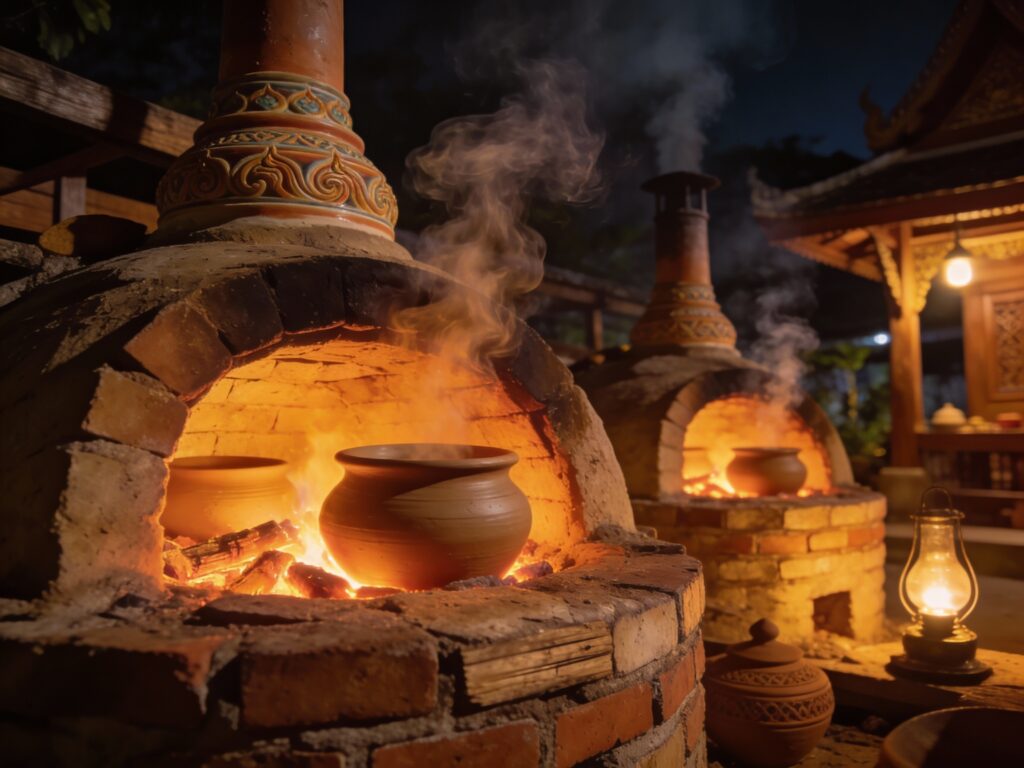
Step beyond the well-trodden paths of Thailand’s north and discover Lampang, a province where history whispers not just from temples, but from the very earth itself. Here, an extraordinary nocturnal ritual unfolds – the ancient art of wood-fired ceramic firing in century-old kilns. It’s a mesmerizing spectacle where fire, earth, and tradition converge under the cloak of night, transforming humble clay into luminous works of art.
Cathedrals of Clay: Lampang’s Ceramic Legacy
Lampang’s reputation as Thailand’s ceramic capital stretches back centuries. Its unique position along trade routes and abundant natural resources – particularly high-quality kaolin clay and dense forests for fuel – fostered a thriving pottery industry. But the true soul of this heritage lies in the towering, beehive-shaped kilns, some dating back to the late Lanna period and Burmese influences of the 1300s. These structures, known locally as “Tao Luang” (large kilns), are architectural marvels, built from brick and clay, designed to withstand immense heat and create the specific atmospheric conditions needed for the unique “Lampang Celadon” glaze.
- Enduring Giants: Many kilns, like those at the Dhanabadee Ceramic Museum, are still original or meticulously restored, standing as silent monuments to generations of craftsmanship.
- Wood-Fired Magic: Unlike modern gas or electric kilns, wood firing is unpredictable and labor-intensive. The type of wood, the firing schedule, and even the kiln’s position influence the final colours and textures, creating truly one-of-a-kind pieces.
- The Night Shift: Firing traditionally happened at night. Cooler temperatures helped prevent thermal shock and cracking as the kiln cooled. The darkness also made it easier to judge the kiln’s internal temperature solely by the colour of the flames – a skill passed down through generations.
The Ritual Unfolds: Fire, Smoke, and Transformation
Witnessing a firing is stepping into a living museum. The process is a carefully choreographed ritual:
- Preparation (Daylight Hours): Artisans meticulously stack hundreds of unfired pieces – plates, bowls, vases, and the iconic “Mae Mor” (Chicken Bowl) – deep within the kiln’s chambers. Every inch is optimized, with pieces protected by clay “saggers”.
- Sealing the Sanctuary: The kiln door is bricked up and sealed with mud, leaving only small stoke holes. This creates the crucial reduction atmosphere needed for the celadon’s characteristic jade-green hues.
- Igniting the Heart (Nightfall): As darkness descends, the firing master initiates the ceremony, often with a small blessing to appease the spirit of the fire. Wood (traditionally dense, slow-burning timber like teak or tamarind) is fed into the stoke holes.
- The Long Vigil: For 20, 30, or even 40+ hours, teams of stokers work in shifts. They constantly feed wood, monitor the flames (aiming for a specific “orange-peel” colour indicating the peak temperature of around 1250-1300°C), and control the draft. The kiln becomes a living beast, glowing fiercely, its heat radiating intensely, smoke billowing into the starry sky.
- Cooling & Revelation: Once firing ceases, the kiln is left sealed for several days to cool slowly. The anxious, then jubilant, moment comes when the door is finally broken open, revealing the alchemy: raw clay transformed into shimmering celadon, rich brown terracotta, or pieces kissed by ash and flame with unique, unpredictable “natural glaze” effects.
Experiencing the Kiln Whispers
For travellers, experiencing this ritual is profoundly moving:
- Sensory Immersion: Feel the intense heat on your skin, hear the crackle and roar of the fire, smell the wood smoke mingling with the night air, and watch the hypnotic dance of flames illuminating the kiln’s facade and the focused faces of the stokers.
- Living Heritage: It’s not a reenactment; it’s the continuation of a centuries-old craft. You’re witnessing skills preserved against the tide of modernity.
- Atmospheric Magic: The darkness amplifies the drama. The kiln becomes a beacon, its fiery glow casting long shadows and creating an almost mystical ambiance.
- Deepened Appreciation: Seeing the immense effort involved gives profound respect for every piece of Lampang ceramic. You understand why that simple chicken bowl holds so much more than soup.
Note: Firings are significant events, not daily occurrences. They require immense preparation and resources. The best place to potentially witness one (or learn about the process year-round) is the Dhanabadee Ceramic Museum in Mae Mo district. Always check schedules in advance!
Planning Your Nocturnal Pilgrimage
- Location Focus: Head to the Dhanabadee Ceramic Museum (Mae Mo, Lampang). This is the primary location preserving and demonstrating the traditional firing technique.
- Timing is Crucial: Firings are infrequent special events. Contact the museum directly well ahead of your trip to inquire about scheduled firings. Cooler season (November-February) might offer a higher chance, but confirm!
- Transport: Mae Mo is roughly 30km from Lampang town. Hire a songthaew, taxi, or rent a car/scooter. Ensure you have arrangements for returning late at night.
- What to Expect: Be prepared for intense heat near the kiln, uneven ground, and smoke. Wear sturdy, closed-toe shoes and comfortable clothing you don’t mind getting dusty. Bring water.
- Respectful Observation: Follow instructions from staff. Keep a safe distance from the working stokers and the blazing kiln. Photography is usually allowed, but avoid flash and be mindful not to obstruct.
- Beyond the Flames: During the day, explore the museum exhibits to understand the history, geology, and craftsmanship behind Lampang ceramics. Their showroom offers stunning pieces to take home.
Lampang’s nighttime kiln firings are more than just a manufacturing process; they are a profound cultural ritual, a whispered conversation between earth, fire, and human ingenuity passed down through time. To stand beneath the stars, bathed in the glow of an ancient kiln breathing fire, is to witness the very heartbeat of Lampang’s artistic soul – a truly unforgettable encounter with Thailand’s living heritage.