**Unearthing Ban Chiang: Pottery Trails and Ancient Whispers in Udon Thani**
Stepping Back in Time: The Enigmatic World of Ban Chiang
Nestled in the serene countryside of Udon Thani, Ban Chiang isn’t just another village—it’s a portal to a forgotten civilization. This UNESCO World Heritage Site, accidentally discovered in 1966, rewrote Southeast Asian history, revealing a sophisticated society thriving here over 5,000 years ago. As you walk its dusty paths, ancient whispers seem to rise from the earth itself.
The Discovery That Shook the World
Legend has it that an American anthropology student tripped over a tree root, uncovering pottery shards that would become one of Asia’s most significant archaeological finds. Excavations unearthed evidence of continuous human habitation from the Neolithic era to the Iron Age, challenging previous assumptions about technological development in the region.
Masterpieces in Clay: Ban Chiang’s Iconic Pottery
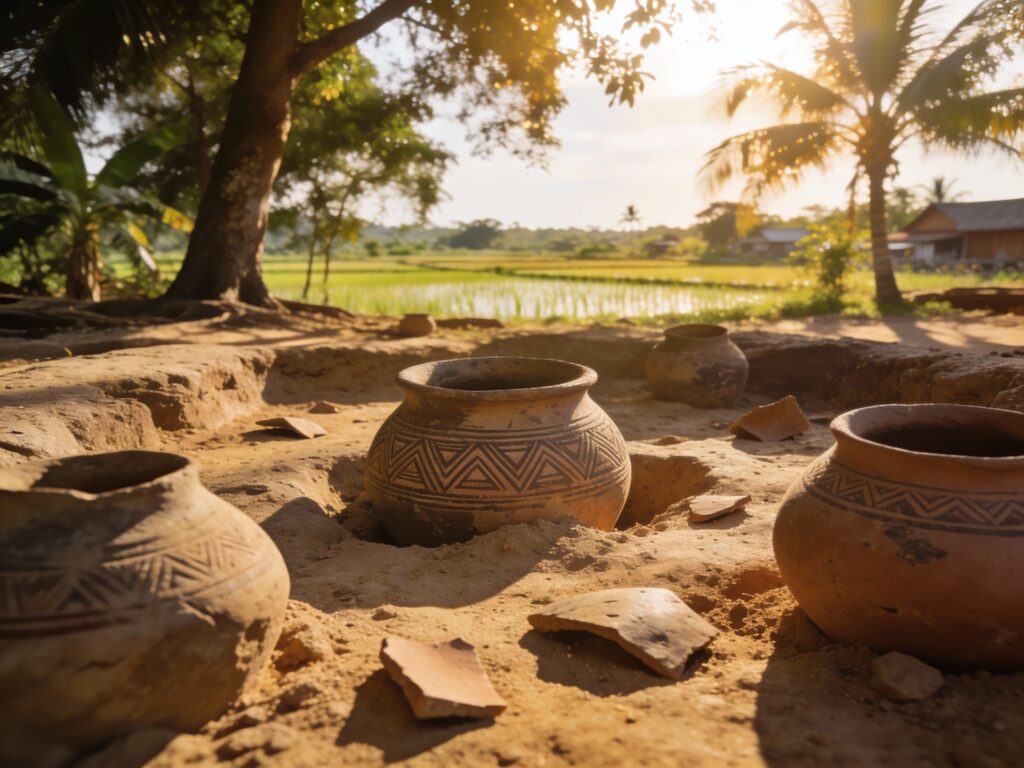
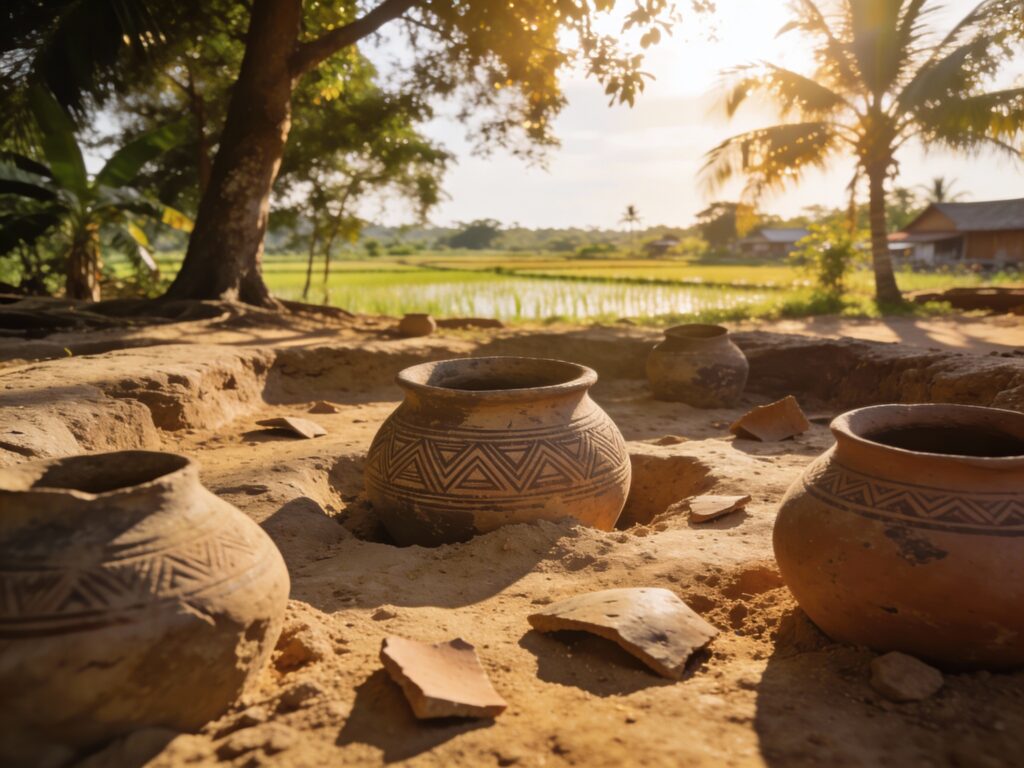
The soul of Ban Chiang lies in its exquisite ceramics. Unlike any other ancient pottery in Southeast Asia, these artifacts showcase distinctive features:
- Swirling Crimson Designs: Signature spiral and curvilinear patterns in iron-rich red ochre, often resembling fingerprints or cosmic symbols.
- Gradual Firing Techniques: Pioneering multi-stage kiln processes that created durable, thin-walled vessels.
- Ritual Vessels & Infant Jars: Elaborate burial urns for children, hinting at complex spiritual beliefs.
Remarkably, some designs echo patterns still woven into local Isaan textiles today—a testament to unbroken cultural threads.
Walking the Archaeological Trails
At the heart of the site, Pit No. 1 remains preserved under a striking modern pavilion. Peer through glass floors at stratified layers of history: skeletal remains curled in fetal positions beside pottery offerings, bronze bracelets, and rice husks—evidence of early agriculture.
Treasures of the Ban Chiang National Museum
Just steps from the excavation pits, this world-class museum contextualizes the discoveries:
- Life-sized dioramas depicting Bronze Age village life
- The famed “Rainbow Pot”—a perfectly preserved vessel with concentric rings in seven mineral pigments
- Neolithic tools demonstrating early metallurgy skills
Don’t miss the reconstructed burial sites, where artifacts appear exactly as archaeologists found them.
Journeying to Ban Chiang: Practical Wisdom
Reaching this remote wonder requires planning but rewards intrepid travelers:
- Getting There: From Udon Thani city, take a local bus (1 hour) or hire a songthaew. Self-drive? Follow Highway 22 east toward Nong Han.
- Best Time: Visit November-February when rice fields turn golden and temperatures hover around 25°C.
- Local Touch: Stay overnight in homestays to experience modern Ban Chiang life. Try kaeng om—a local herb stew—at village eateries.
Echoes Across Millennia
As sunset paints the excavation pits in amber light, you’ll understand why Ban Chiang transcends archaeology. Those delicate pottery swirls aren’t just designs—they’re messages from people who farmed this land millennia before Angkor’s stones were cut. In their artistry, we see humanity’s enduring urge to create, to ritualize, to say: “We were here.” That whisper across time makes Ban Chiang not just a destination, but a pilgrimage.