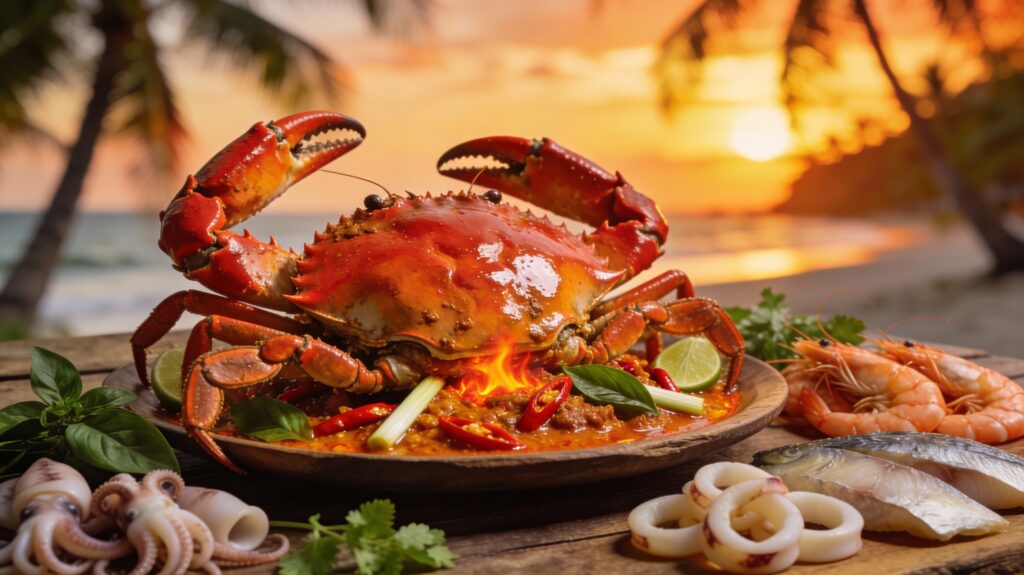
**Rayong’s Fiery Flavors: Volcano Mud Crab & the Art of Thai Seafood Alchemy**

The Siren Call of the Clay Pot: Rayong’s Culinary Volcano
Beyond the shimmering beaches and lush orchards of Rayong lies a deeper, more primal draw for the gastronomically inclined: the promise of fire, mud, and crustacean perfection. Rayong, a province blessed by the Gulf of Thailand’s bounty, has honed the art of seafood preparation into something akin to culinary alchemy, and its undisputed champion is the legendary **Volcano Mud Crab (ปูอบหม้อดิน – Poo Op Mor Din)**. This isn’t just a dish; it’s a spectacle, an experience, and a masterclass in Thai flavor layering.
Mud Crab Majesty: Rayong’s Prized Treasure
The star of this fiery show is the Mud Crab (ปูม้า – Poo Ma), a species revered throughout Thailand for its sweet, succulent, and incredibly dense meat. Rayong’s coastal waters, estuaries, and mangrove ecosystems provide an ideal habitat, resulting in crabs known for their exceptional quality and size. Unlike their ocean-dwelling cousins, mud crabs thrive in brackish waters, developing a unique flavor profile prized by chefs and connoisseurs. Securing a live, hefty specimen is the crucial first step in the Volcano Crab ritual.
The Alchemy Begins: Crafting the Flavor Bomb
The magic of Volcano Crab lies not just in the crab itself, but in the potent elixir it bathes in. This is where Thai seafood alchemy truly shines. Forget delicate steaming; this is about bold, unapologetic flavor infusion. The crab is typically cracked and cleaned, then nestled into a traditional, thick-walled clay pot (หม้อดิน – Mor Din). What follows is a symphony of ingredients:
- The Aromatic Base: Copious amounts of garlic, peppercorns (both white and black), and pungent root cilantro (culantro) form the foundation.
- The Umami Depth: Fish sauce provides the salty backbone, while fermented soybean paste (Tao Jiao) or shrimp paste (Kapi) adds complex, savory funk.
- The Sweet Counterpoint: Palm sugar mellows the intensity, creating a beautiful balance.
- The Liquid Gold: Often, a splash of Thai whiskey or local rice wine is added, not just for flavor, but to aid in the steaming process and tenderize the crab.
- The Secret Weapon (Sometimes): Many Rayong chefs add fresh river prawns (กุ้งก้ามกราม – Kung Kam Gram) to the pot. Their rich tomalley (head fat) melts into the sauce, adding an incredible layer of richness and seafood essence.
Sealing the Fate: The Volcanic Eruption
This is where the “Volcano” earns its name. Once the crab and the potent sauce are combined, the clay pot is sealed tightly with a lid, often using a simple dough made from flour and water to create an airtight vacuum. The sealed pot is then placed over high heat.
The transformation inside is dramatic. As the pot heats, pressure builds. The liquids inside boil furiously, steaming the crab in its own flavorful juices and the aromatic broth. The intense heat causes the sauce to reduce, concentrating the flavors dramatically. The trapped steam and pressure cook the crab incredibly quickly and evenly, ensuring the meat remains tender and moist while absorbing every nuance of the complex sauce. Finally, the pressure forces the rich, bubbling sauce to erupt dramatically when the seal is broken at the table – a true volcanic presentation.
The Grand Unveiling & The Art of Eating
The moment the seal is cracked open is pure theatre. A plume of intensely aromatic steam bursts forth, carrying the heady scents of garlic, pepper, crab, and fermented goodness. Inside, the crab shells have turned a vibrant orange-red, glistening with the thick, reduced sauce. The sauce itself is a masterpiece – deeply savory, spicy from the pepper, aromatic from the herbs, sweet from the palm sugar, and profoundly rich from the crab and prawn essences.
Eating Volcano Mud Crab is a hands-on, communal affair. Forget dainty crab picks; use your hands to crack the shells, scoop out the sweet, firm meat, and dip it liberally into the concentrated sauce pooling at the bottom of the pot. Every bite is an explosion of contrasting yet harmonious flavors – heat, sweetness, saltiness, umami – all clinging to the pristine crab meat. Don’t neglect the sauce-soaked garlic cloves or the prawns if present; they are treasures in their own right. Served simply with steamed jasmine rice to soak up every last drop of the incredible sauce, it’s a meal that lingers long after the last shell is discarded.
Where to Witness (and Taste) the Eruption
Finding authentic Volcano Mud Crab is part of the Rayong adventure. While some upscale seafood restaurants offer it, the most thrilling experiences are often found in:
- Local Crab Shacks (ร้านปู – Ran Poo): Dedicated establishments dotting the coastline and near fishing villages. Look for places bustling with locals and piles of live crabs on display.
- Seafood Markets with Kitchens: Places like Laem Charoen Seafood in Ban Phe or markets near Mae Ramphueng Beach often have attached kitchens where you can choose your crab and have it cooked to order.
- Riverside Restaurants: Especially along the Rayong River, where the crab connection is strong.
Pro Tip: Call ahead! Volcano Crab is often made to order due to the live crab requirement and cooking time (around 30-45 minutes). Specify “Poo Op Mor Din” and confirm the price per kilogram *before* selecting your crab.
More Than a Meal: A Taste of Rayong’s Soul
Rayong’s Volcano Mud Crab is more than just a delicious seafood dish. It encapsulates the province’s spirit: bold, resourceful, deeply connected to the sea and the land, and unafraid of big flavors. It’s a culinary ritual that transforms fresh, local ingredients into something transcendent through fire, tradition, and a touch of alchemical magic. To eat Volcano Crab in Rayong is to partake in a defining local experience, a fiery, messy, and utterly unforgettable journey to the heart of Thai seafood mastery.