**Tak’s Bamboo Rhythms & River Reveries: Weaving Traditions Along the Salawin at Umong Phra**

Whispers of Water, Echoes of Bamboo: Discovering Umong Phra
Nestled in the rugged embrace of Tak province, where Thailand’s western mountains cradle the mighty Salawin River (known as the Salween beyond the border), lies a place where time seems to flow differently. Umong Phra, a serene tapestry of villages and landscapes, isn’t just a destination; it’s an immersion into a symphony of nature and culture. Here, the deep, resonant currents of the Salawin harmonize with the delicate, rhythmic whispers of bamboo, weaving traditions that have endured for generations.
The Salawin: Lifeline and Muse
The Salawin River isn’t merely a geographical feature; it’s the lifeblood of Umong Phra. Flowing from the Tibetan Plateau, its powerful waters carve through the landscape, creating a natural border and a source of profound reverence. For the communities here – predominantly ethnic Karen (various groups like Kayah, Kayaw, and Sgaw) and Thai Yai (Shan) – the river is:
- A Sustainer: Providing water for crops, fish for sustenance, and fertile soil along its banks.
- A Connector: Historically a vital trade route, linking communities across borders and facilitating cultural exchange.
- A Spiritual Anchor: Its presence infuses daily life with a sense of awe and tranquility, inspiring rituals, stories, and deep respect.
Standing on its banks, feeling the cool mist and listening to the powerful flow, is to understand the deep river reveries that shape the local spirit.
The Bamboo Rhythms: Craft, Sound, and Soul
If the Salawin provides the bassline, then bamboo provides the intricate melody. Bamboo is ubiquitous in Umong Phra, and its uses are woven into the very fabric of existence. The “rhythms” manifest in captivating ways:
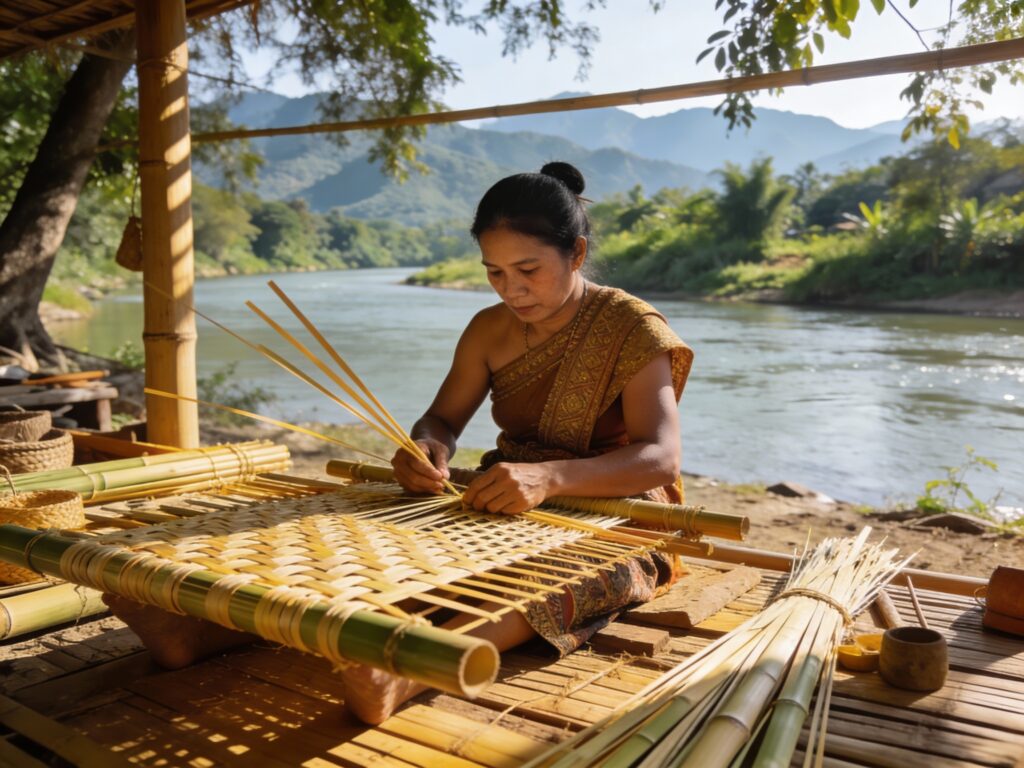
- Artisanal Mastery: Visit local workshops and homes, and witness the astonishing skill of bamboo weaving. From intricate fish traps and sturdy baskets essential for daily life to delicate decorative items and even furniture, the transformation of raw bamboo strips into functional art is mesmerizing. The rhythmic tapping, splitting, and weaving create a unique soundscape of creation.
- Musical Heritage: Bamboo isn’t just for crafting objects; it’s integral to the region’s sound. Traditional Karen instruments like the hae (a bamboo mouth organ), bamboo flutes, and percussion instruments made from bamboo sections produce hauntingly beautiful melodies that echo the sounds of the forest and river. Hearing these instruments played, perhaps during a village celebration, is a truly transcendent experience.
- Architectural Harmony: Bamboo forms the structural skeleton and walls of traditional stilt houses and granaries, blending seamlessly with the environment. Its flexibility and strength make it ideal for this resilient architecture.
The rhythmic processing of bamboo – splitting, shaving, weaving – is a constant, almost meditative presence, a testament to human ingenuity living in harmony with nature’s bounty.
Weaving Traditions: More Than Just Material
The “weaving” at Umong Phra extends far beyond bamboo and textiles (though Karen weaving, with its vibrant patterns and symbolic motifs, is another stunning tradition here). It represents the interweaving of:
- Cultural Threads: The confluence of Karen, Thai Yai, and mainstream Thai influences creates a unique cultural blend evident in language, dress, food, and belief systems.
- Generational Knowledge: Skills like bamboo crafting, weaving, and traditional music are passed down meticulously from elders to the young, ensuring the continuity of heritage.
- Nature and Community: Life here is intrinsically linked to the rhythms of the river and the cycles of the forest. Traditions and daily practices reflect a deep understanding and respect for this connection.
Visiting Umong Phra offers a chance to witness this intricate weaving firsthand. Engaging respectfully with artisans, learning about the symbolism in their crafts, or simply sharing a meal offers glimpses into this resilient and beautiful way of life.
Experiencing Umong Phra’s Essence
To truly connect with the Bamboo Rhythms and River Reveries:
- Seek Out Artisans: Visit community-based tourism initiatives or local homes (ask permission respectfully) to see bamboo and textile weaving in action. Consider purchasing directly to support the craft.
- Listen: Be present. Listen to the river, the wind in the bamboo groves, and the sounds of craft. Inquire if there are opportunities to hear traditional music.
- Respect the River: Take a boat trip (if available and operated ethically by locals), walk along the banks, absorb its power and serenity. Understand its sacred significance.
- Stay Local: Opt for homestays or small, locally-run guesthouses to immerse yourself deeper and contribute directly to the community.
- Travel Mindfully: Understand you are a guest in a place with deep-rooted traditions and a sensitive border location. Dress modestly, ask before taking photos of people, and be open to learning.
The Enduring Pulse of Place
Tak’s Umong Phra offers a rare glimpse into a Thailand where ancient rhythms still resonate. It’s a place where the powerful flow of the Salawin River meets the delicate, persistent rhythm of bamboo being shaped by skilled hands. Here, traditions aren’t museum pieces; they are living, breathing elements of daily existence, woven into the landscape and the soul of the people. To experience Umong Phra is to feel the pulse of the Salawin and the heartbeat of bamboo – a profound symphony of nature, culture, and enduring human spirit.