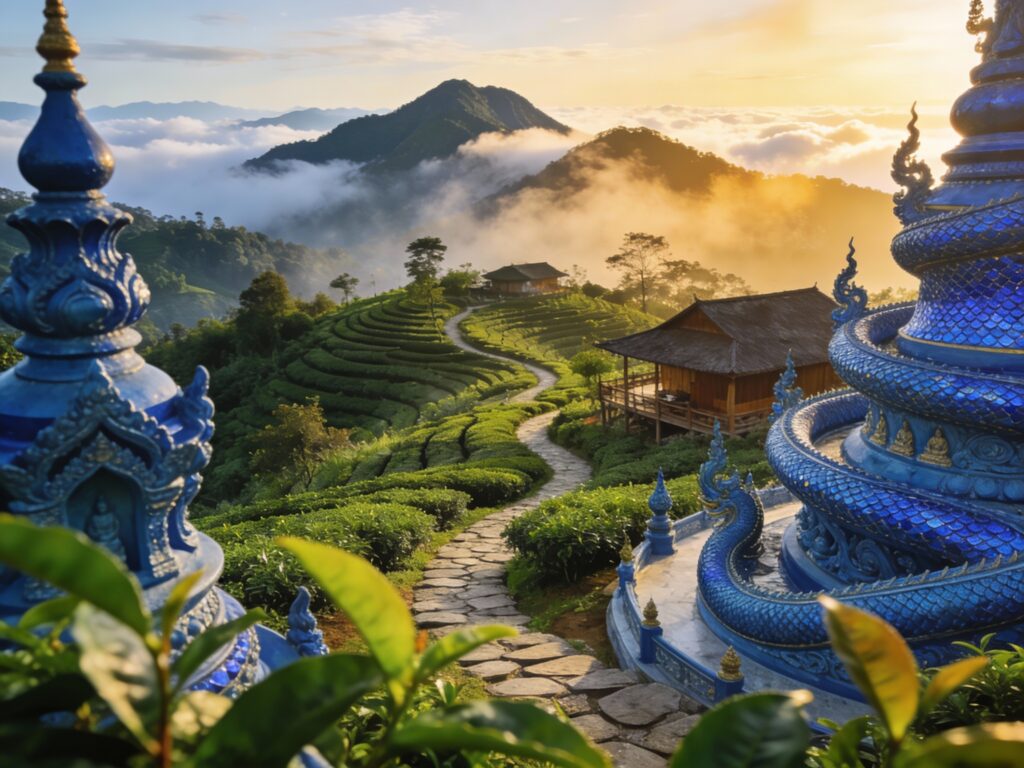
Chiang Rai’s Azure Spirals & Misty Peaks: Temple Artistry & Highland Tea Trails in Mae Salong
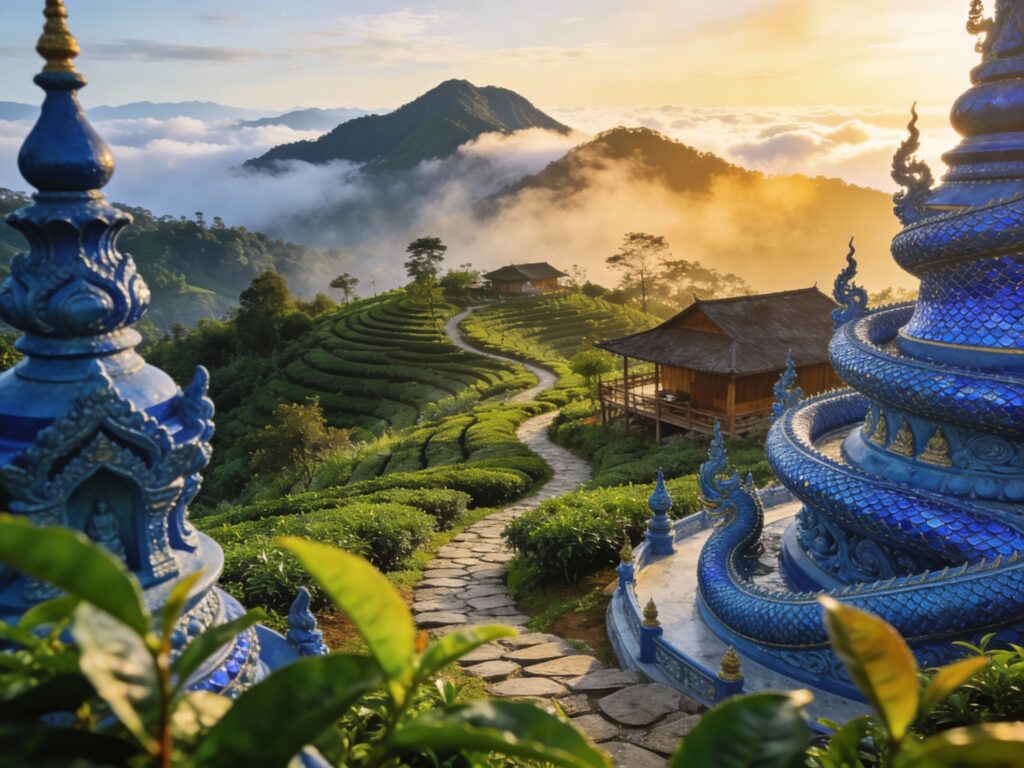
Chiang Rai’s Duality: Azure Dreams & Highland Mists
While Chiang Mai often steals the northern Thailand spotlight, its sister province, Chiang Rai, offers a captivatingly different rhythm. Here, spiritual artistry collides with rugged highland beauty, creating a journey defined by mesmerizing temples and the fragrant trails of tea country. Venture beyond the ordinary to discover the electric blues of Wat Rong Suea Ten and the serene, mist-wrapped peaks of Mae Salong.
The Electric Allure: Wat Rong Suea Ten (The Blue Temple)
Forget subtlety; Wat Rong Suea Ten makes a bold, unforgettable statement. Emerging from the earth like a sapphire vision, this contemporary temple, consecrated relatively recently (2016), is the brainchild of local artist Putha Kabkaew, a student of the famed White Temple’s creator. It’s a dazzling departure from tradition, yet deeply rooted in Buddhist symbolism.
- A Cobalt Canvas: The temple complex is drenched in vibrant, almost electric shades of blue. This dominant hue represents the Dharma, the Buddha’s teachings, symbolizing purity, wisdom, and the infinite expanse of the universe. Gold accents shimmer in contrast, signifying enlightenment and the Buddha himself.
- Intricate Artistry: Every surface tells a story. Elaborate murals depicting Buddhist lore, fearsome Naga serpents coiling around pillars, and intricate stucco work showcasing mythical creatures and floral motifs cover the structures. The level of detail is staggering.
- The Main Ubosot (Ordination Hall): Step inside to be enveloped by an ethereal blue glow. The centrepiece is a magnificent, strikingly white Buddha image (Phra Phuttha Siddhamuni) seated in the Bhumisparsha Mudra (calling the earth to witness) posture. The walls explode with vividly painted murals blending traditional iconography with modern, almost surrealist elements – think celestial beings alongside contemporary figures.
- Beyond the Blue: Explore the surrounding grounds, including a unique, ornate white bridge leading over a pond filled with mythical creatures, symbolizing the crossing from the cycle of suffering (Samsara) towards enlightenment (Nirvana).
Visiting Tips: Arrive early to avoid crowds and experience the temple’s magic in softer morning light. Dress respectfully (shoulders and knees covered). Be prepared for its intense visual impact – it’s truly unlike any other temple.
Journey to the Clouds: Mae Salong (Santikhiri)
Leaving the vibrant blues behind, a winding mountain road leads north towards the sky. Perched high in the hills near the Myanmar border lies Mae Salong (officially Santikhiri – “Hill of Peace”). This unique enclave feels like stepping into another world, far removed from lowland Thailand.
A Slice of Yunnan in the Thai Highlands
Mae Salong’s story is fascinating. Settled primarily by former Kuomintang (KMT) soldiers and their families who retreated from China in the mid-20th century, the town retains a distinctly Chinese (specifically Yunnanese) character. Mandarin is widely spoken, architecture reflects traditional Chinese styles, and Yunnanese cuisine dominates the menus.
The Fragrant Trails: Tea Plantations Unveiled
The cool, misty climate and fertile slopes of Mae Salong are perfect for one thing: tea. Vast plantations, often terraced dramatically into the hillsides, blanket the landscape in vibrant shades of green.
- Oolong Paradise: Mae Salong is renowned for its high-quality oolong teas. Stroll through the rows of neatly pruned tea bushes, breathing in the fresh, earthy aroma.
- Meet the Makers: Visit family-run plantations like Wang Put Tan or Choui Fong. Many offer guided tours explaining the cultivation and intricate processing steps (withering, rolling, oxidizing, drying) that transform leaves into exquisite tea.
- Tea Tasting: The highlight! Settle into a plantation tea shop or a cozy town cafe. Savor steaming cups of fragrant oolong – from light and floral Jin Xuan (Milk Oolong) to deeper, more complex varieties like Ruby Oolong (No. 17) or traditional Taiwanese-style high-mountain oolongs. Learn the art of appreciating the aroma, color, and taste.
- Beyond the Cup: Look for tea-infused products – from ice cream and pastries to soaps and cosmetics – unique souvenirs of the highlands.
Misty Peaks & Panoramic Views
Mae Salong’s beauty extends beyond tea. Mornings often cloak the valleys in ethereal mist, creating a magical atmosphere. Hike to viewpoints like Phra Boromathat Chedi (a golden pagoda offering stunning 360-degree vistas over the town, plantations, and rolling hills into Myanmar) or explore nearby Akha hill tribe villages for cultural immersion.
Visiting Tips: Mae Salong is significantly cooler than Chiang Rai town, especially at night – pack layers! Hiring a scooter or songthaew is ideal for exploring the plantations spread across the hills. Allow at least one full day, preferably two, to soak in the atmosphere and tea culture. Don’t miss trying Yunnanese dishes like steamed buns, braised pork knuckle, and unique teas.
Weaving the Tapestry: Chiang Rai’s Unique Charm
The journey from the electric blue spirals of Wat Rong Suea Ten to the serene, tea-scented mists of Mae Salong encapsulates Chiang Rai’s extraordinary appeal. It’s a province where ancient spiritual traditions find bold, contemporary expression, and where highland cultures cultivate serenity in a cup. It offers profound artistry not just in temples, but in the landscape, the communities, and the delicate flavors nurtured on its misty peaks. This is Chiang Rai: less discovered, deeply felt, and utterly unforgettable.