
**Ayutthaya’s River Rhythms: Daily Life Along the Forgotten Canals of the Ancient Capital**
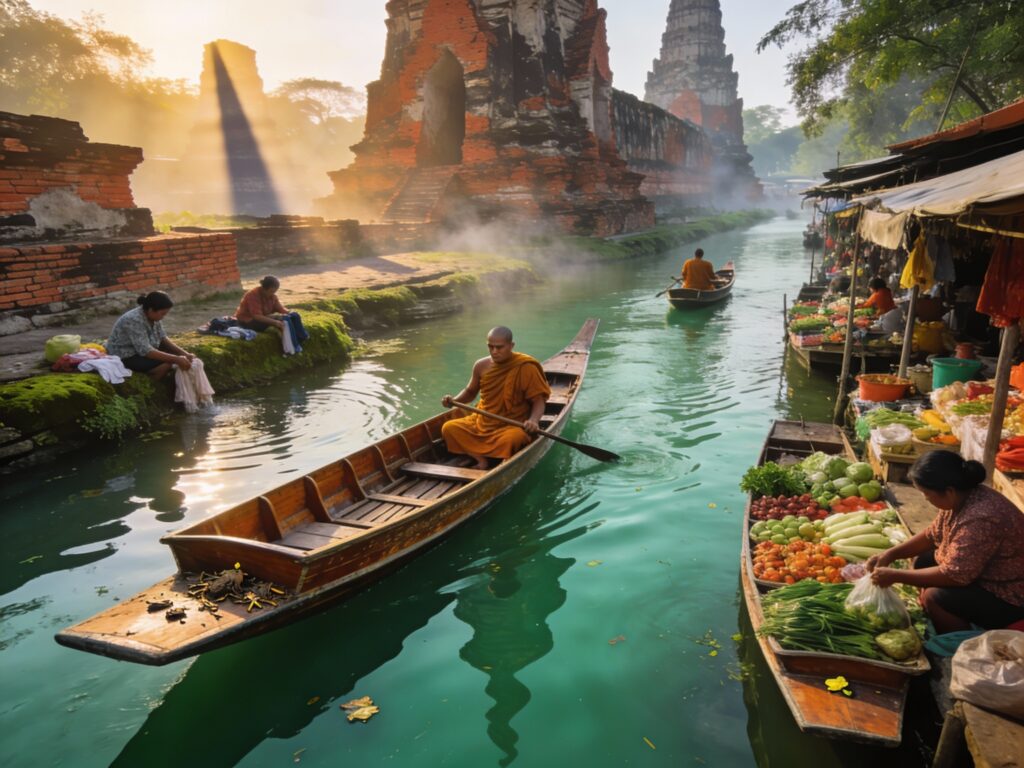
Beyond the Temples: The Liquid Pulse of Ayutthaya
Most visitors to Ayutthaya come for the temples – the haunting Buddha heads entwined in roots, the majestic ruins of palaces whispering of a glorious past. And rightly so. But to truly grasp the soul of this ancient Siamese capital, you need to slip away from the well-trodden temple paths and listen. Listen to the gentle lap of water against aged teak, the rhythmic putter of a long-tail engine, the splash of a child jumping into the murky embrace of a forgotten canal. This is Ayutthaya’s other heartbeat, its **River Rhythms**, a testament to a life shaped by water for centuries.
Waterways as Lifelines: The Historical Arteries
Ayutthaya wasn’t just built *near* rivers; it was built *on* and *because* of them. The mighty Chao Phraya, Lopburi, and Pa Sak Rivers converge here, forming a natural island fortress. But the city’s genius lay in its intricate network of artificial canals (khlongs). These weren’t mere drainage ditches; they were:
- Highways of Commerce: Goods from across Asia and beyond flowed along these waterways, making Ayutthaya a global trading hub. Imagine the bustle of merchant boats laden with ceramics, silks, and spices.
- Defensive Moats: The canals formed concentric rings of defense, making the city island a formidable stronghold.
- Lifeblood of Communities: Water provided for drinking, bathing, irrigation for lush orchards and paddy fields, and was the primary mode of transport. Houses lined the banks, their stilted foundations dipping into the water.
While the grand palaces and temples were the head, the canals were the veins and arteries, carrying the life force of the kingdom.
The Forgotten Canals: Echoes in the Present
Time, war, and modern infrastructure (namely roads) shifted the focus. Many inner-city canals silted up, were filled in, or became neglected backwaters. Yet, venture beyond the main historical park, into the residential neighbourhoods and the outskirts, and you’ll find these “forgotten” canals still pulsing with life, albeit at a slower, more resilient tempo.
A Day Along the Khlongs: Modern Rhythms
Wake before dawn, and head to the water’s edge. The mist hangs low as saffron-robed monks glide silently in narrow wooden boats, paddling along the khlongs for their morning alms round. Residents, often elderly women, wait patiently at small wooden docks or the foot of garden staircases leading into the water, placing offerings of rice and food into the monks’ bowls. It’s a ritual unchanged for centuries, a serene ballet performed on liquid stages.
As the sun climbs, the canals become utilitarian highways. Long-tail boats, laden with construction materials, sacks of rice, or produce for the local markets, chug purposefully along narrower waterways where cars cannot go. You’ll see:
- Waterfront Living: Homes, some grand teak structures, others simple wooden shacks, perch precariously on stilts. Washing hangs on lines, children play on verandas overlooking the water, and small gardens cling to the banks.
- Khlong-Side Commerce: Tiny, family-run shops open directly onto the water, accessible by boat. You might find a makeshift stall selling grilled fish skewers cooked over charcoal, or a vendor offering fresh coconuts.
- Riverside Industry: Glimpses of local crafts persist – boat repair yards where skilled hands caulk aging hulls, or small-scale fishing operations checking nets.
The heat of midday brings a lull, a quiet broken only by the buzz of insects and the occasional splash of a fish or monitor lizard. But as the afternoon cools, activity resumes. Kids cannonball off makeshift platforms, laughter echoing off the water. Women gather at communal washing areas. Fishermen cast their lines or check traps, hoping for a catch for the evening meal.
Experiencing the Canal Life
To truly immerse yourself:
- Rent a Bicycle: Pedal along paths flanking the lesser canals (like Khlong Takhian or areas north/northeast of the island). Stop at small local temples or chat with residents.
- Take a Long-Tail Boat Tour (Off the Beaten Path): Skip the standard temple circuit boat. Ask a local operator for a tour focusing on the *residential* canals and the daily life along them. Glide past hidden gardens, weathered docks, and communities living at water level.
- Visit Local Markets: Markets like Hua Ro (northeast of the island) or smaller morning markets often hug the canals, buzzing with activity where land and water meet. Watch goods being loaded and unloaded from boats.
- Dine Waterside: Seek out small restaurants perched over the water, especially along the Pa Sak River or outer canals. Enjoy fresh seafood while watching the world float by.
A Fading Melody, A Resilient Spirit
It’s undeniable that the centrality of the canals has diminished. Roads reign supreme now. Some waterways are choked with water hyacinth; others show signs of neglect. Yet, the rhythm persists. The water remains a source of sustenance, a means of transport for some, a backyard for many, and a deep-seated cultural anchor. It’s a quieter, more intimate Ayutthaya – one that whispers stories not just of kings and conquests, but of mothers washing clothes, children learning to swim, fishermen hoping for luck, and monks receiving alms. It’s the enduring pulse of daily life, a gentle, liquid counterpoint to the stone silence of the ruins, proving that while empires fall, the river – and the life it sustains – flows on.
