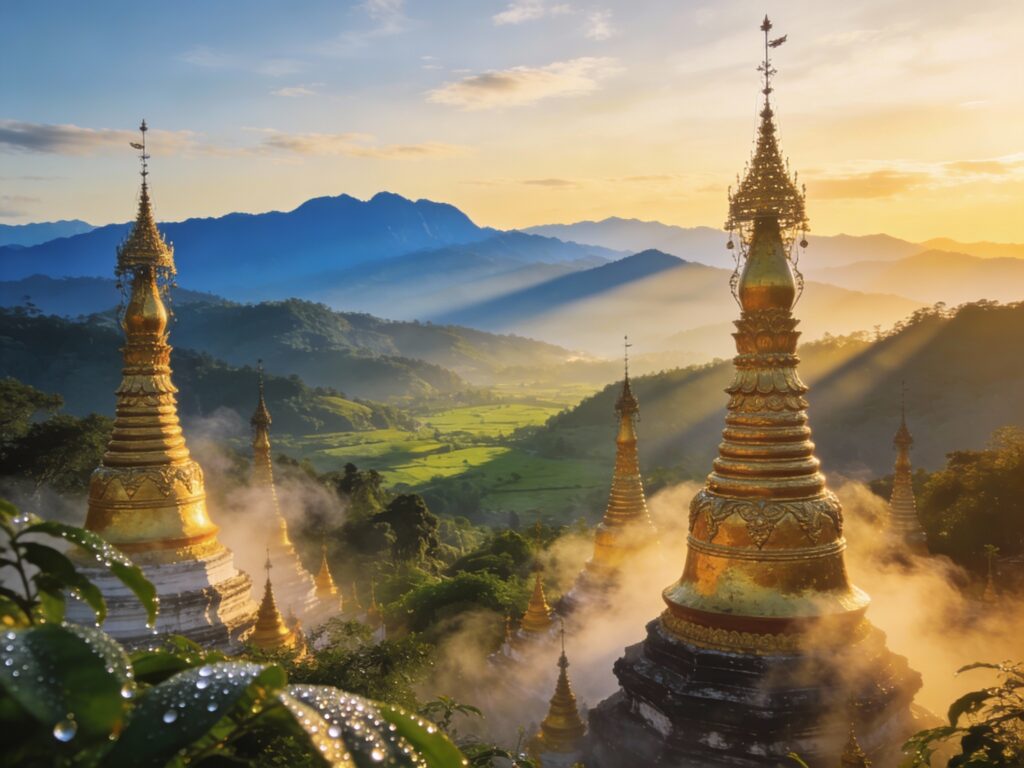
**Mae Hong Son’s Gilded Whispers: Dawn Chants & Burmese-Style Stupas in the Mountain Mist**
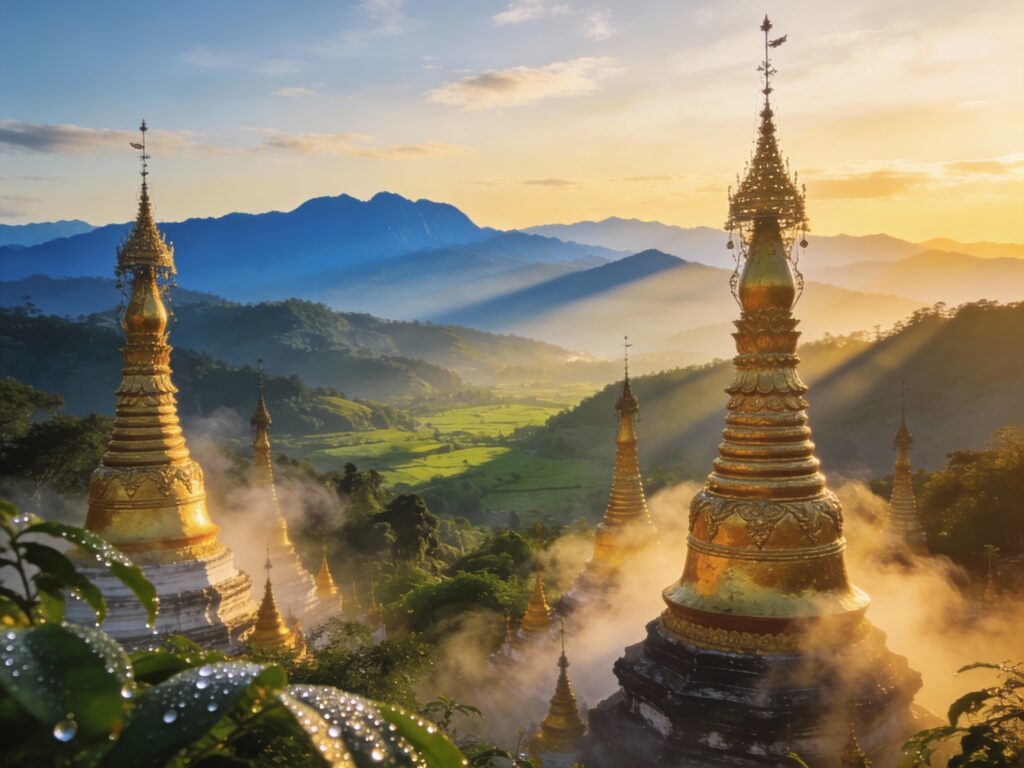
Where the Mountains Whisper: Dawn in Mae Hong Son
Tucked deep within Thailand’s mountainous northwest, bordering Myanmar, lies Mae Hong Son – a province often called “The City of Three Mists.” It’s a land where time seems to slow, wrapped in ethereal veils of fog, especially in the cool season. And within its heart, the provincial capital, also named Mae Hong Son, offers an experience that feels plucked from a dream: the profound serenity of dawn chants echoing amidst gilded Burmese-style stupas piercing the morning mist.
The Sacred Symphony of Dawn
Pre-dawn in Mae Hong Son is a world painted in shades of deep blue and grey. As the town still sleeps, a soft, rhythmic percussion begins – the steady beat of a temple drum. This is the call. It signals the monks’ morning ritual is about to commence. Wrap yourself warmly (mornings can be surprisingly chilly) and make your way towards the tranquil Nong Chong Kham lake, the spiritual centerpiece of the town.
Here, facing the serene water, stand two of Mae Hong Son’s most revered and visually stunning temples: Wat Chong Kham and its adjacent sister temple, Wat Chong Klang. As the first slivers of light struggle through the dense mountain mist, the atmosphere becomes palpably sacred.
- The Chant Begins: Monks draped in saffron robes gather in the dimly lit prayer halls. Their voices, deep and resonant, rise in unison, chanting ancient Pali scriptures. The sound isn’t loud, but it carries with an incredible clarity, amplified by the stillness and the reflective surface of the lake.
- A Soundscape of Devotion: The chanting is a complex, mesmerizing tapestry of sound – a low drone underpinning melodic phrases that rise and fall. It’s not a performance; it’s an act of deep devotion, a daily reaffirmation of faith that has echoed through these mountains for generations.
- Observing Reverently: Visitors are welcome to sit quietly on the temple grounds outside the main viharn (prayer hall) to listen. This is a moment for quiet contemplation. Dress modestly (covered shoulders and knees), remove your shoes, and maintain a respectful silence. The experience is about absorbing the profound peace, not photography or conversation.
Gilded Sentinels in the Mist
As the chanting continues, the strengthening dawn light begins its daily battle with the persistent mist. This is when the true magic unfolds, revealing the architectural gems that define Mae Hong Son’s skyline. Unlike the more common Thai chedi or prang, the stupas here are distinctly Burmese, reflecting the region’s historical and cultural ties to the Shan States and Myanmar.
- Distinctive Design: Look for the characteristic elements: the bell-shaped base, often resting on octagonal terraces; the elongated, conical spire tapering gracefully towards a pointed hti (umbrella-like finial); and the lavish application of gold leaf or gold paint that catches even the faintest light.
- Wat Chong Klang’s Masterpiece: Wat Chong Klang is particularly famed for its large, central stupa, a magnificent structure covered in intricate stucco work and gleaming gold. As the mist swirls and thins, the stupa seems to emerge, piece by gilded piece, like a celestial being descending.
- Reflections and Whispers: On calm mornings, the still waters of Nong Chong Kham lake become a perfect mirror, doubling the beauty of the golden spires. The combination of the reflective water, the shifting mist, the soft golden glow, and the hauntingly beautiful chants creates an atmosphere that feels both grounding and transcendent – the “gilded whispers” of the mountains made manifest.
More Than Just a Sight
Experiencing dawn in Mae Hong Son isn’t just about witnessing a beautiful sunrise or seeing interesting architecture. It’s a multi-sensory immersion into a unique cultural and spiritual heartland. The chants are a living tradition, a daily pulse connecting the present to centuries of Buddhist practice. The Burmese-style stupas are not relics, but active centers of faith, their golden forms representing aspiration and enlightenment reaching towards the sky.
The mountain mist, far from being an obstruction, becomes an essential character in this drama, softening the light, amplifying the sounds, and adding an element of mystery and discovery as it slowly unveils the gilded wonders. It transforms the scene into something ethereal, a fleeting moment where earth, sky, water, faith, and artistry converge in perfect harmony.
To stand by Nong Chong Kham lake as dawn breaks over Mae Hong Son, listening to the ancient chants while watching golden stupas emerge from the mist, is to witness one of Thailand’s most quietly profound and visually arresting experiences. It’s a gentle whisper from the mountains that resonates long after the mist has lifted.