**Nong Khai’s Morning Alms Bowls & Pungent Blessings: Offering Fermented Fish at Provincial Temples**
Witnessing the Dawn Ritual: Sai Bat in Nong Khai
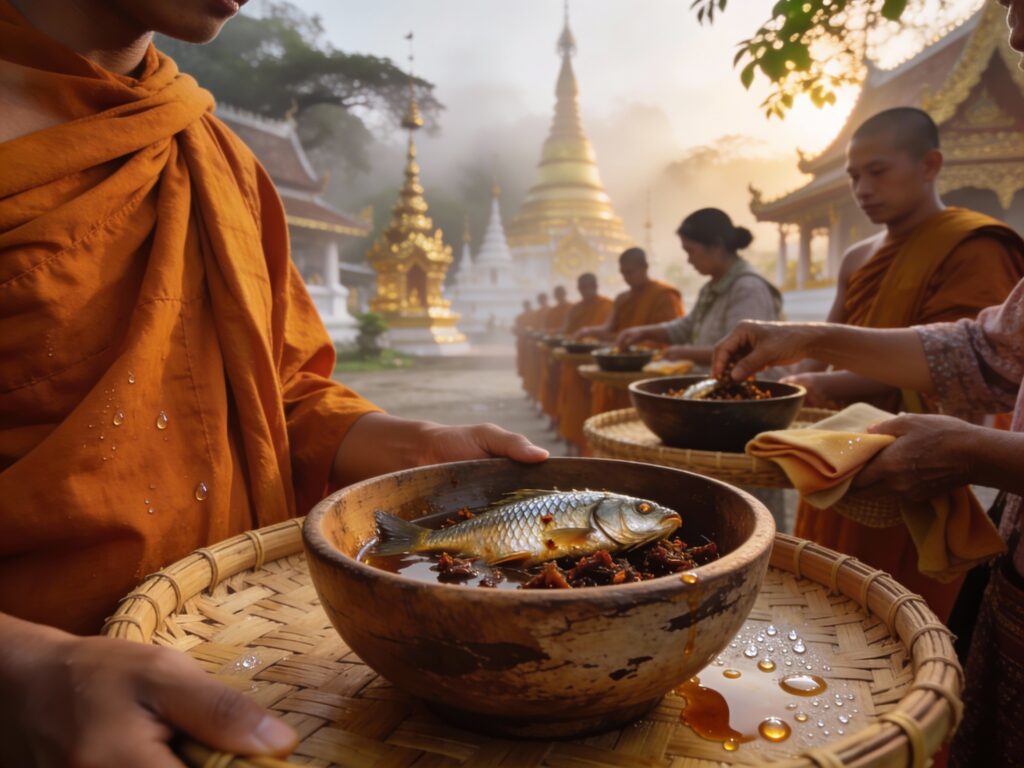
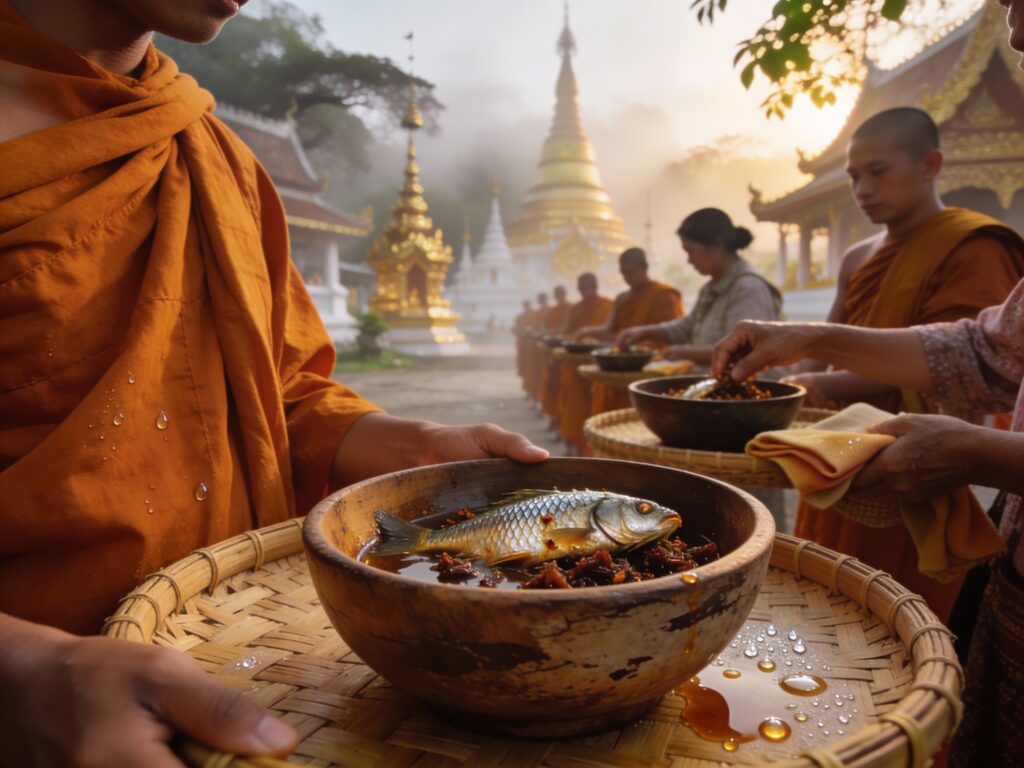
As the first blush of dawn paints the Mekong sky, a profound and deeply local ritual unfolds in the quiet temples of Nong Khai. Forget the silent procession of saffron robes receiving spoonfuls of rice you might have seen elsewhere in Thailand. Here, in Thailand’s northeastern Isaan region, the morning alms offering – sai bat – carries a distinctly pungent and powerful signature: the unmistakable aroma of pla ra, fermented fish paste. This isn’t just about sustenance; it’s a visceral connection to Isaan culture and Buddhist merit-making, offering blessings as robust as the scent itself.
Beyond Sticky Rice: The Sacred Sting of Pla Ra
While steamed sticky rice (khao niao) remains a staple in the monks’ alms bowls across Thailand, Nong Khai’s provincial temples, particularly those slightly removed from the main tourist trail, embrace a more traditional Isaan offering. Alongside the rice, devout locals carefully place small bundles containing pla ra.
What is Pla Ra? This isn’t your average fish sauce. Pla ra is a potent fermented fish paste, traditionally made with freshwater fish (like snakehead fish or smaller river species) packed with salt and rice bran or roasted rice powder, then left to ferment in earthenware jars for months, sometimes years. The result is a complex, intensely savory, salty, and undeniably pungent condiment – the very essence of Isaan flavor.
Why Offer Fermented Fish?
This practice speaks volumes about Isaan’s history and practical spirituality:
- Cultural Cornerstone: Pla ra is the lifeblood of Isaan cuisine. Offering it to the monks is an offering of their most essential, cherished food, symbolizing deep respect and sharing their cultural identity.
- Practical Sustenance: Historically, in a region prone to drought and with limited refrigeration, fermented foods like pla ra were crucial sources of protein and flavor that kept well. Offering it ensured monks received nutritious, long-lasting food.
- Humility & Authenticity: It represents giving what you have, not what you think might be conventionally “pleasant.” It’s an offering made from the heart, steeped in local tradition, not altered for outsiders.
- Robust Blessings: Locals believe that offering something as strong and foundational as pla ra generates equally potent merit. The pungency is seen as a sign of its strength and value.
Experiencing the Alms Giving in Nong Khai
To witness this unique ritual, venture beyond Nong Khai town to smaller district temples (wat amphoe) or village temples (wat ban) early in the morning, typically between 5:30 AM and 6:30 AM. Temples like Wat Pho Chai (known for its revered Luang Por Phra Sai Buddha image) or smaller community temples along the river or in rural areas are excellent places to observe.
The Ritual Unfolds
- Preparation: Devotees, often women dressed respectfully, arrive before dawn. They prepare their offerings: baskets of still-warm sticky rice and small, tightly wrapped banana-leaf packets or tiny plastic bags containing pla ra.
- The Procession: As the monks emerge single file, barefoot and silent, the devotees kneel or sit on mats along their path.
- The Offering: Each devotee places a small ball of sticky rice into each monk’s alms bowl. Alongside the rice, the small packet of pla ra is gently offered. The monk accepts everything silently, bestowing blessings through his presence and mindfulness.
- The Aroma: The air fills with the distinctive, sharp, umami-rich scent of the fermented fish – an integral and unforgettable part of the experience. It’s a smell that defines Isaan kitchens and now, its sacred morning ritual.
A Traveler’s Note: Respect and Observation
Experiencing this ritual is a privilege. Remember:
- Dress Modestly: Cover shoulders and knees.
- Observe Silently: Keep your distance, remain quiet, and avoid using flash photography. Let the focus remain on the devotees and monks.
- Respect the Scent: The smell of pla ra is potent and can be challenging for the uninitiated. Be prepared, but view it as an authentic part of the cultural and spiritual tapestry.
- Don’t Interrupt: Unless specifically invited, do not attempt to participate in the offering unless you are a practicing Buddhist familiar with the ritual. Observing is participation enough.
More Than a Meal: The Essence of Isaan Faith
Nong Khai’s morning alms, fragrant with pla ra, offer a profound glimpse into the soul of Isaan Buddhism. It’s a practice rooted in practicality, cultural pride, and deep devotion. It reminds us that merit-making isn’t about grandeur, but about sincerity, offering the essence of one’s life and land to the spiritual path. To witness it is to understand that blessings, much like the finest pla ra, can be complex, deeply flavorful, and truly unforgettable. It’s a pungent blessing indeed, and one that resonates long after the dawn mist clears over the Mekong.