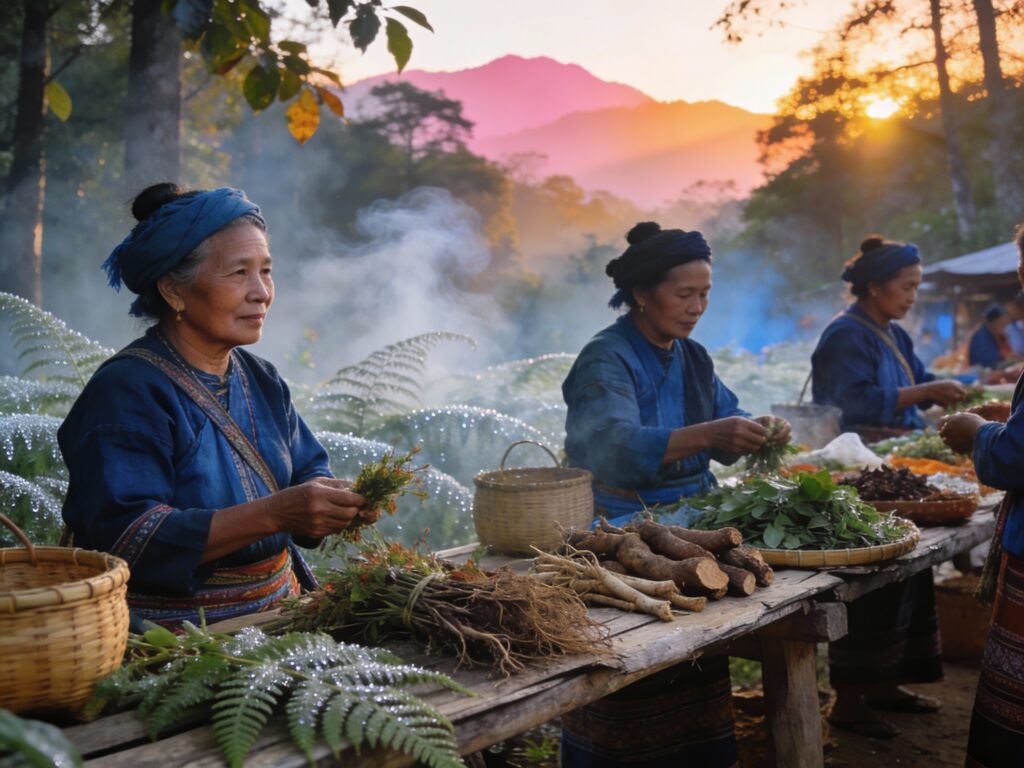
**Tak’s Mountain Barter: Dawn’s First Light with Karen Herbalists at Um Phang’s Forest-Edge Market**

Whispers in the Mist: Experiencing Um Phang’s Dawn Barter Market
The air in Um Phang District, Tak Province, holds a different kind of cool before sunrise. It’s a deep, forest-cool, thick with the scent of damp earth and the promise of secrets carried down from the mountains. This remote corner of Thailand, brushing against the Myanmar border in the embrace of the Thungyai Naresuan Wildlife Sanctuary, guards a tradition that feels like stepping back in time, yet vibrantly alive: the forest-edge barter market of the Karen people.
The Journey into the Hush
Reaching this market requires commitment. It means leaving your guesthouse or homestay long before first light, navigating winding roads under a canopy of stars slowly fading. As you approach the designated spot – often a simple clearing or a widened section of road near a Karen village on the forest fringe – the world is painted in shades of indigo and charcoal. Mist curls like lazy serpents through the towering trees. The only sounds are the crunch of gravel underfoot, the distant hoot of an owl, and the murmur of low voices materializing from the gloom. You haven’t arrived at a marketplace; you’ve stepped into a pre-dawn ritual.
A Market Unfolding with the Light
As the eastern sky begins to soften, figures become clear. Karen villagers, predominantly women, emerge from forest trails and nearby hamlets. They carry their bounty not in plastic bags, but in traditional woven baskets slung across their foreheads or balanced on their backs. They spread simple mats on the ground. There are no flashy stalls, no neon signs, no shouted prices. This is commerce stripped back to its most ancient and essential form: barter.
The goods laid out are a direct gift from the surrounding wilderness and their sustainable cultivation:
- Forest Vegetables & Tubers: Bamboo shoots of varying tenderness, wild mushrooms (seasonal and prized!), fiddlehead ferns, various gourds, taro, and sweet potatoes.
- Mountain Rice: Often the distinctive sticky rice varieties grown on their steep, terraced fields.
- Handicrafts: Intricately woven bags, textiles with traditional geometric patterns, and sometimes simple bamboo tools.
- And the Stars: Forest Medicinals & Herbs: This is where the true magic lies, overseen by the community’s knowledgeable herbalists.
The Language of Barter: Trust and Tradition
Money is rarely seen, and never demanded. Transactions are conducted through a quiet exchange, a gentle negotiation spoken in Karen or broken Thai, often accompanied by soft smiles. A bunch of fresh bamboo shoots might be exchanged for a bag of salt. A beautifully woven pouch might be traded for cooking oil or soap. A bag of mountain rice might secure some fish sauce or batteries.
It’s a system built on generations of understanding, mutual need, and deep-seated trust. The value isn’t dictated by a global market, but by immediate utility and a shared recognition of the effort involved in gathering or producing each item. Observing this quiet exchange is witnessing an economy rooted in community and respect.
The Wisdom of the Forest: Karen Herbalists at Work
Particularly fascinating are the herbalists. Often older women, their knowledge passed down through countless generations, they lay out their treasures with quiet pride:
- Bundles of Dried Herbs: For steeping into teas to treat stomach ailments, fevers, or fatigue.
- Roots and Rhizomes: Like wild turmeric or ginger, known for their anti-inflammatory properties.
- Barks and Twigs: Used in traditional decoctions for aches, pains, or specific chronic conditions.
- Fresh Leaves: Some for cooking, others for poultices applied directly to the skin.
- Unique Forest Finds: Like the slightly sour Ya Nang leaf, used in local soups and believed to have health benefits.
Engaging with them (respectfully and often through a guide or translator) offers glimpses into a profound pharmacopeia derived directly from the biodiversity of the surrounding forests. They might explain the use of a particular root for joint pain or a leaf for soothing a cough. This isn’t just commerce; it’s the living library of Karen traditional medicine laid bare at dawn.
More Than a Market: A Fading Light Worth Preserving
As the sun finally crests the mountain ridges, bathing the clearing in golden light, the market activity naturally winds down. Goods have been exchanged, news shared in hushed tones, and the community’s needs for the coming days met. People pack their newly acquired items and melt back into the forest trails or towards their villages, ready to start the day’s work.
Experiencing Um Phang’s dawn barter market is a privilege. It’s a fragile ecosystem of tradition existing alongside the modern world. It offers a profound insight into Karen culture, their deep connection to the forest, and a sustainable way of life that has endured. It’s a reminder of the value of community, simplicity, and the irreplaceable knowledge held within indigenous cultures. For the traveler, it’s not just about buying something unique; it’s about witnessing a beautiful, ancient dance of exchange at the break of day, a dance where the forest itself is the most valued partner.