Phuket’s Peranakan Palette: Cooking Classes in the Colorful Shophouses of Phuket Old Town
A Symphony of Spices and Stories: Unwrapping Phuket’s Peranakan Heritage Through Cooking
Beyond the sun-drenched beaches and bustling markets, Phuket Old Town holds a vibrant secret: its rich Peranakan heritage. Known locally as “Baba-Nyonya,” this unique culture blossomed from the intermingling of Chinese immigrants (mostly Hokkien) with local Thai and Malay communities centuries ago. Today, the legacy lives on most deliciously in the colourful Sino-Portuguese shophouses lining the streets, and what better way to dive deep into this cultural tapestry than by rolling up your sleeves in a Peranakan cooking class?
Where History Meets the Hob: The Enchanting Shophouse Classrooms
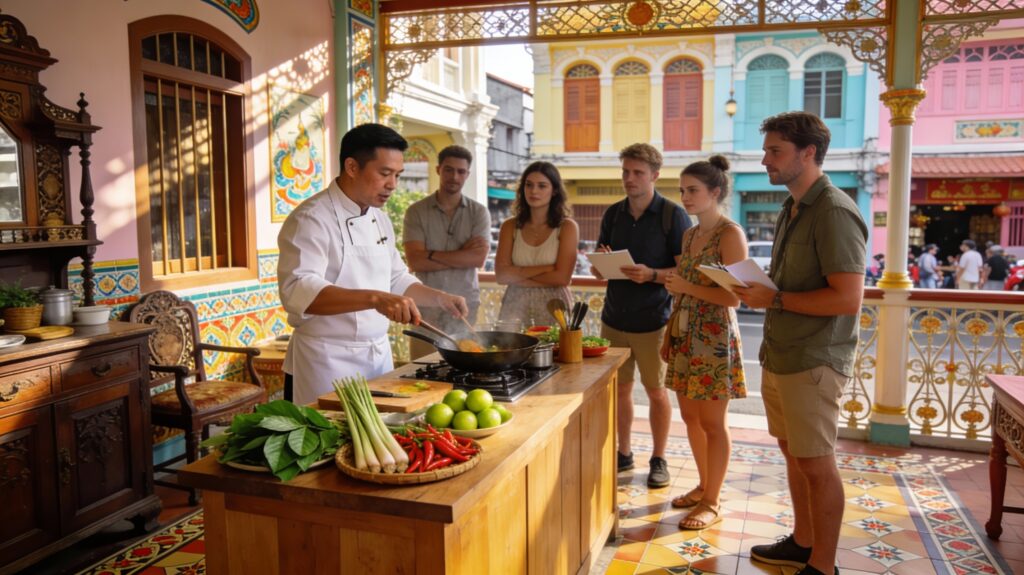
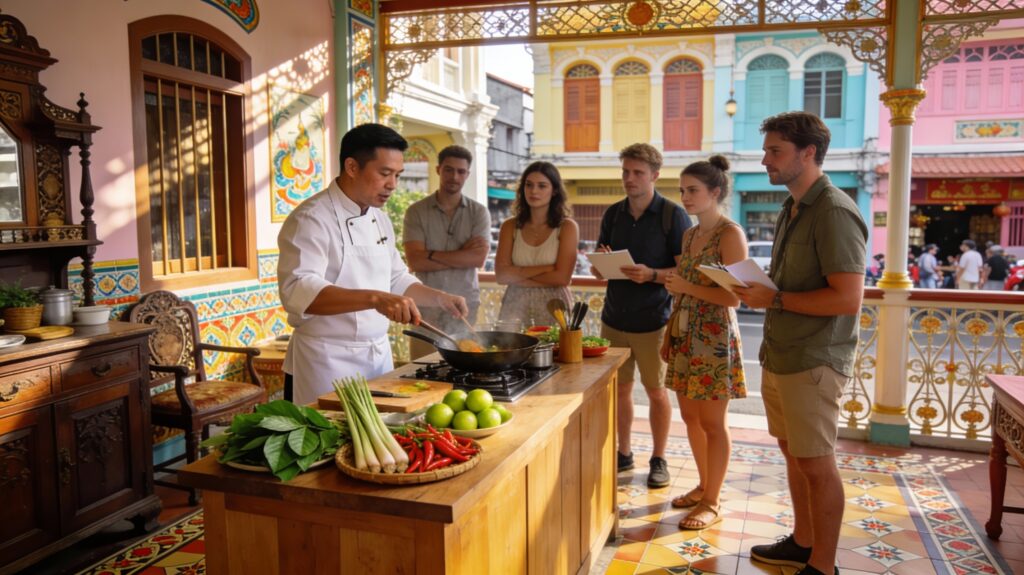
Forget sterile kitchens. The magic of learning Peranakan cuisine in Phuket lies in the setting itself. Many cooking classes are hosted within beautifully restored Sino-Portuguese shophouses – architectural gems adorned with vibrant hues of pastel pink, mint green, sunshine yellow, and turquoise. Intricate tiles, ornate wooden shutters, and airy courtyards create an atmosphere steeped in history. As you step inside, you’re not just entering a kitchen; you’re stepping into a living museum, where the walls whisper tales of generations past and the air hums with the promise of culinary adventure.
More Than Just Recipes: The Essence of Peranakan Cuisine
Peranakan food is a captivating fusion, a true reflection of its multicultural roots. Expect a complex interplay of flavours:
- Chinese Foundations: Techniques like stir-frying, steaming, and braising form the backbone.
- Thai & Malay Spice: The liberal use of local ingredients like lemongrass, galangal, turmeric, kaffir lime leaves, and chillies adds distinctive aromatic heat and depth.
- Unique Creations: This blend birthed dishes found nowhere else, balancing sweet, sour, salty, and spicy notes with remarkable harmony.
Cooking classes here go beyond simply following steps. Instructors, often passionate locals with deep family connections to the culture, become storytellers. They explain the significance of ingredients, the symbolism behind certain dishes for festivals or family gatherings, and the subtle variations that make Phuket’s Peranakan cuisine unique.
What to Expect in a Phuket Peranakan Cooking Class
A typical class is an immersive journey:
- Market Immersion (Often Included): Start with a guided tour of a local fresh market. Learn to identify exotic herbs, pungent shrimp paste (belacan), fragrant spices, and the freshest seafood and vegetables essential to the cuisine. It’s a sensory explosion!
- Hands-On Creation: Under expert guidance, you’ll prepare 3-5 iconic dishes. Common stars include:
- Moo Hong (Phuket-style Braised Pork Belly): Rich, tender, and deeply flavoured with soy sauce, spices, and palm sugar.
- Otak-Otak: A fragrant fish cake spiced with lemongrass, turmeric, and chillies, traditionally steamed in banana leaves.
- Ngoh Hiang: Flavorful minced pork and prawn rolls wrapped in tofu skin and deep-fried to crispy perfection.
- Curry Kapitan: A rich, coconut-based chicken curry with a distinct Peranakan spice profile, less creamy than Thai curries.
- Mee Swa (Birthday Noodles): Delicate noodles in a flavourful broth, often symbolising longevity.
- The Grand Feast: The ultimate reward! Sit down with your fellow cooks in the charming shophouse setting and savour the fruits of your labour, sharing stories and enjoying the vibrant flavours you helped create.
Choosing Your Culinary Adventure
Several excellent cooking schools operate within Phuket Old Town’s historic core. Look for those emphasizing authentic recipes, small class sizes for personalized attention, and of course, the atmospheric shophouse setting. Many cater to different dietary needs (vegetarian, vegan, halal) with advance notice. Classes usually last 4-5 hours, making it a perfect half-day cultural deep dive.
A Taste of Living Heritage
Taking a Peranakan cooking class in Phuket Old Town isn’t just about learning to cook new dishes; it’s an intimate encounter with the island’s soul. It connects you to the resilient spirit of the Baba-Nyonya community, their history of adaptation, and their enduring love for flavourful, communal dining. As you pound spices in a century-old mortar, stir a fragrant curry in a wok, and finally sit down to share your meal amidst the colourful walls, you become part of keeping this beautiful heritage alive, one delicious bite at a time. It’s an experience that nourishes both the body and the understanding, leaving you with far more than just recipes – it leaves you with the taste of Phuket’s vibrant, multicultural heart.