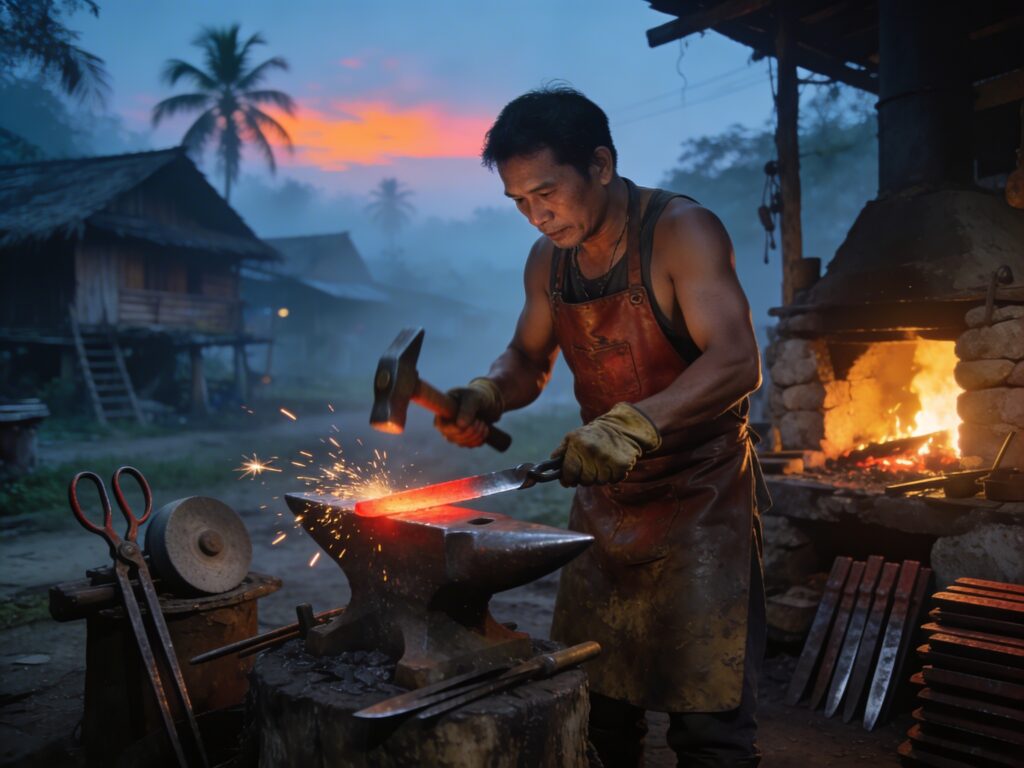
**Chonburi’s Forge Flare: Crafting Utility Blades with Village Blacksmiths in the Pre-Dawn Glow**

The Rhythm Before Sunrise
While much of Thailand slumbers, a unique symphony begins in pockets of Chonburi province, far removed from the coastal resorts. Before the first rays of sun paint the sky, the sharp *clang* of hammer on metal resonates through quiet villages. This is the domain of Chonburi’s traditional blacksmiths, masters of fire and steel, crafting essential utility blades in the cool, pre-dawn hours.
Why the Pre-Dawn Glow?
Working in the dark hours isn’t just tradition; it’s practical necessity. Forging steel is intensely hot work. Starting before sunrise allows these skilled artisans to harness the cooler ambient temperatures, making the gruelling physical effort slightly more bearable. The flickering light of the forge, contrasting with the fading stars, creates an almost mystical atmosphere, illuminating generations of knowledge passed down through calloused hands.
More Than Just Knives: Tools for Life
Don’t expect ornate ceremonial daggers here. This craft is born from necessity, producing the unsung heroes of Thai daily life:
- Nak: The quintessential Thai utility knife, featuring a distinctive hooked tip. Essential for farmers, fishermen, and gardeners – used for everything from cutting rope and bamboo to harvesting crops and preparing food.
- Machetes (E-Tor): Heavy-duty blades for clearing brush, chopping wood, and tackling tough jungle vegetation.
- Specialized Hooks & Blades: Tools tailored for specific local industries, like the unique blades used in the fishing communities along Chonburi’s coastline for net repair or boat maintenance.
The Dance of Fire and Metal
Witnessing the creation of a blade is mesmerizing. The process is deceptively simple yet requires immense skill:
- The Forge: Charcoal burns fiercely, reaching searing temperatures. The smith carefully judges the heat by colour alone.
- Shaping the Steel: A length of high-carbon steel (often recycled truck leaf springs) is thrust into the fire. Once glowing orange-yellow, it’s pulled out and placed on the anvil. With rhythmic, powerful blows from a heavy hammer, the smith begins to draw out the metal, flattening and shaping it into the rough blade profile. An assistant often provides secondary hammering or holds the steel.
- Defining the Edge: Using specialized tongs and precise hammer strikes, the cutting edge is carefully drawn out and refined. This is where experience is paramount – knowing exactly where and how hard to strike.
- Quenching & Tempering: The critical moment. The red-hot blade is plunged into water or oil, instantly hardening the steel. This makes it brittle, so it’s then tempered – reheated to a lower temperature (judged by the colour of the oxide layer forming – straw yellow to blue) and cooled again. This reduces brittleness while maintaining hardness, creating a tough, durable edge.
- Grinding & Finishing: Once cooled, the blade is ground on large, often foot-powered, sandstone wheels to refine the shape and sharpen the edge. Hand-filing and sanding smooth the blade before fitting a simple, sturdy wooden handle, often secured with metal pins or resin.
Endurance Against Time
This craft faces the relentless tide of cheap, mass-produced imports. Yet, the blacksmiths persist. Their blades are renowned locally for their superior durability and edge retention. A well-made *Nak* isn’t just a tool; it’s an investment, often lasting decades with proper care. Buyers – farmers, fishermen, chefs, craftsmen – seek out these village forges knowing they’re getting a piece of functional art built to withstand real work.
Experiencing the Forge Flare
Finding these workshops requires local knowledge. They are not typical tourist attractions, but scattered workshops within villages, often identifiable only by the sound and glow before dawn. Areas near Bang Saen or within rural districts of Chonburi province are known hubs. Visiting respectfully is key:
- Timing is Crucial: Arrive *very* early (4:00 AM – 5:30 AM) to catch the active forging.
- Respect the Workspace: Keep a safe distance. The forge is extremely hot, flying sparks are common, and the smiths need intense concentration. Never touch tools or materials without permission.
- Observe Silently: This is their livelihood, not a performance. Watch the incredible skill unfold without disrupting the rhythm.
- Support the Craft: If a blade catches your eye, purchasing one directly supports the artisan and keeps the tradition alive. Expect a fair price for hand-forged quality.
More Than Metal
Chonburi’s pre-dawn blacksmiths offer a raw, authentic glimpse into a vanishing world. It’s a testament to human ingenuity and resilience, where fire transforms humble steel into indispensable tools that fuel the local economy and culture. Witnessing the “Forge Flare” – the intense heat, the rhythmic hammering, the focused skill bathed in the pre-dawn glow – is to witness the enduring heartbeat of Thai craftsmanship, still beating strong against the modern world.