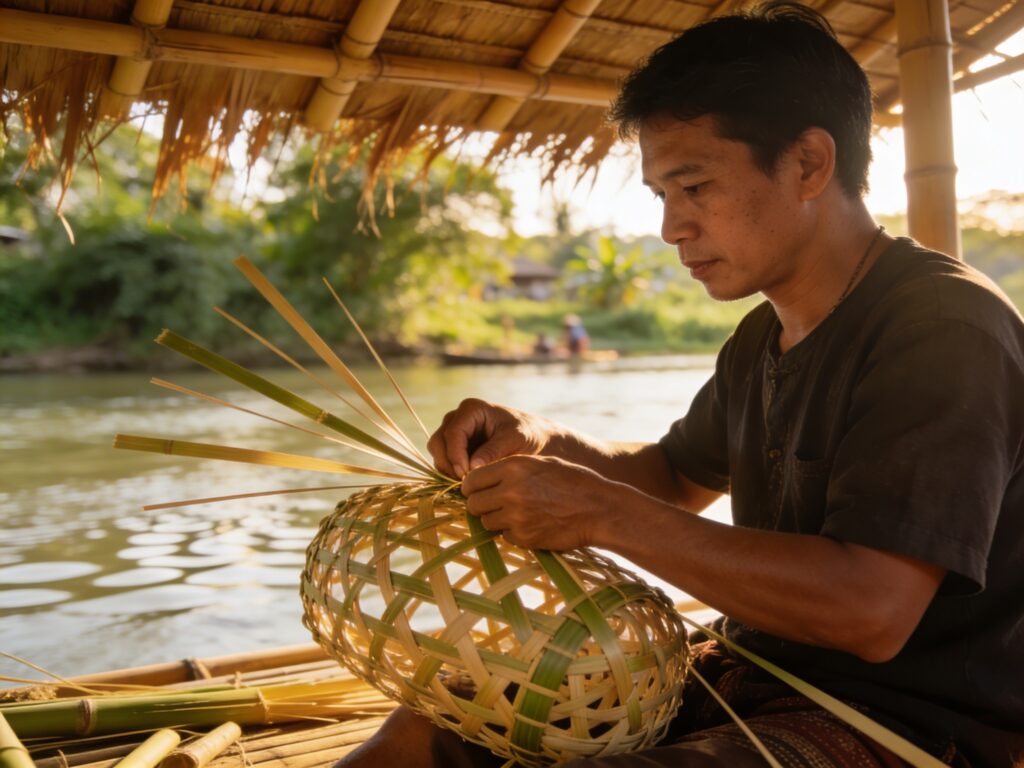
Nong Bua Lamphu’s Bamboo Braids: Plaiting River Traps with Bamboo Artisans in the Shade of the Afternoon
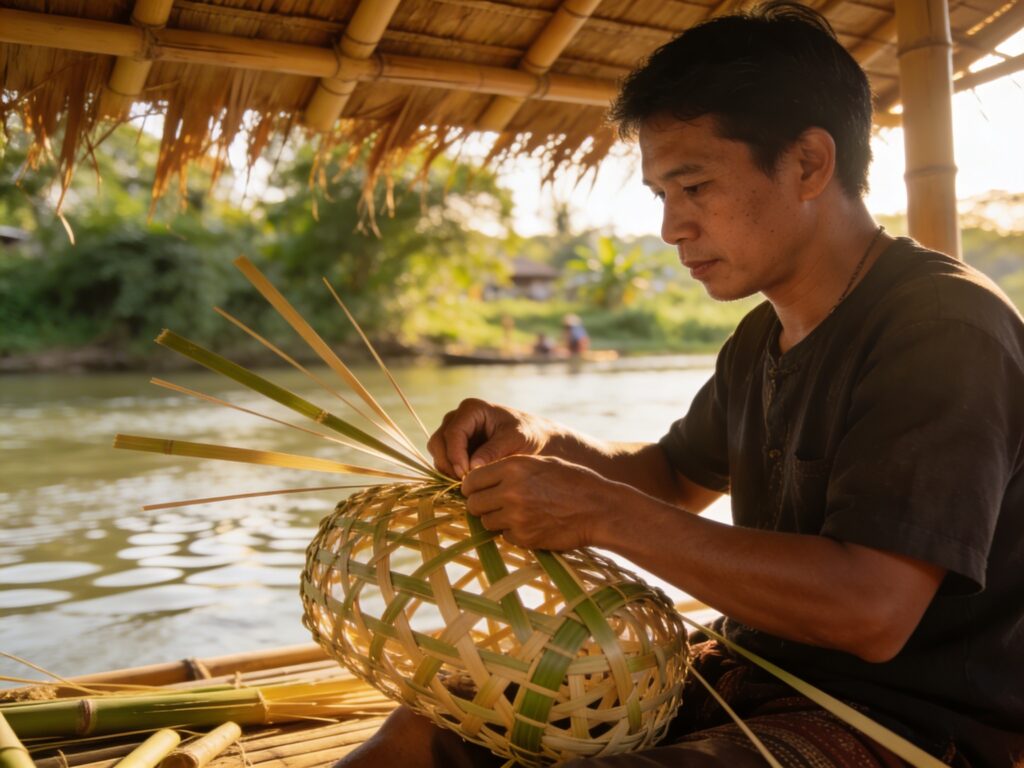
Beyond the Rice Fields: The Gentle Rhythm of Bamboo Braiding in Nong Bua Lamphu
Northeastern Thailand, Isaan, often whispers tales of stoic resilience and vibrant festivals. But tucked away in the serene province of Nong Bua Lamphu, far from the well-trodden tourist paths, lies a quieter, more rhythmic story. It’s the story of skilled hands, whispering bamboo strips, and age-old wisdom passed down in the dappled shade of a lazy afternoon – the story of crafting “Pla Huad,” intricate bamboo fish traps.
Finding the Masters in the Afternoon Shade
Venture into the villages hugging the banks of Nong Bua Lamphu’s gentle rivers and streams, particularly as the fierce midday sun begins its descent. Here, beneath the generous canopy of mango or tamarind trees, or on the cool, raised platforms of traditional wooden homes, you’ll find the true artisans. Often elders, their faces etched with lines that speak of decades by the water, they sit surrounded by bundles of freshly harvested bamboo. The air hums with a quiet industry: the soft *thwack* of a cleaver splitting bamboo poles, the gentle scraping as outer layers are smoothed, and the almost hypnotic rustle as supple strips are coaxed into intricate forms.
More Than Just a Trap: The Art of the Pla Huad
Don’t be fooled by the name ‘fish trap’. The “Pla Huad” (literally “fish head” trap, named for its distinctive shape) is a testament to functional artistry. These aren’t crude cages; they are meticulously engineered structures designed with deep understanding of river currents, fish behavior, and the properties of bamboo itself.
- The Material: Specific species of bamboo are chosen for their strength, flexibility, and resistance to water. Only the right sections of the culm are used, split into uniform strips.
- The Weave: Using techniques passed through generations – primarily a diagonal plaiting pattern – artisans create incredibly strong yet porous cylinders. The entrance is cleverly funnel-shaped, allowing fish to swim in easily but making escape difficult.
- The Form: While the classic conical ‘fish head’ shape is iconic, variations exist depending on the target catch and the specific river conditions. Some are long and slender for eels, others wider for river fish.
An Afternoon Immersed in Craft
To sit beside these masters in the afternoon shade is to step into a different rhythm. Time seems to slow down, measured by the incremental growth of the woven form. Watch as:
- Splitting & Preparing: Bamboo poles are expertly split into increasingly finer strips using a cleaver and a steady hand. The outer, harder layer is often separated for structural ribs, while the inner, more flexible layers become the weaving strips.
- Setting the Frame: Thicker strips form the robust circular ribs that give the trap its shape and structure. These are carefully spaced and secured.
- The Dance of Weaving: This is the heart of the craft. Thin, flexible bamboo strips are woven horizontally around the vertical ribs in an over-under pattern. The artisan’s fingers move with practiced ease, pulling the strips taut, locking each row securely against the last. The tension must be perfect – too loose, and the trap collapses; too tight, and the bamboo snaps.
- Shaping & Finishing: As the weaving progresses, the distinctive funnel entrance is formed. The top is closed, often with a small opening for retrieving the catch. Edges are neatly tucked and secured.
A Fading Echo on the Riverbanks?
While the skill remains deeply respected, the number of artisans dedicated to crafting Pla Huad using traditional methods is dwindling. Modern, mass-produced nets and traps are cheaper and easier to use. Younger generations often seek opportunities beyond the village. Witnessing this craft feels increasingly like catching a glimpse of a fading world – one deeply connected to the river’s bounty and the sustainable use of local resources.
Why Seek Out This Bamboo Braiding?
This isn’t just about watching someone make a basket. It’s about connecting with:
- Living Heritage: Experiencing a tangible link to Isaan’s rural past and its intimate relationship with nature.
- Sustainable Ingenuity: Appreciating a perfect example of zero-waste, locally sourced craftsmanship designed for a specific ecosystem.
- The Human Touch: Feeling the patience, skill, and quiet pride embedded in every perfectly tensioned strip of bamboo.
- The Soul of Nong Bua Lamphu: Discovering an authentic, unhurried side of Thailand far removed from the beaches and bustling cities.
Listening to the Bamboo Whisper
As the afternoon sun lengthens the shadows and the rhythmic weaving continues, a profound sense of tranquility settles. In Nong Bua Lamphu, the humble bamboo fish trap is more than just a tool; it’s a woven story of resilience, adaptation, and quiet artistry. Finding these artisans in their afternoon shade isn’t just a sightseeing stop; it’s an invitation to slow down, listen to the whisper of bamboo, and witness a beautiful, enduring thread in the fabric of Isaan life, one careful plait at a time. It’s a gentle reminder of the profound beauty found in necessity and the deep wisdom held in skilled hands.