**Ayutthaya’s Monk Bowl Alchemy: Casting Sacred Vessels with Temple Artisans at the Clang of the Midday Bell**
Beyond the Ruins: The Living Alchemy of Ayutthaya’s Monk Bowls
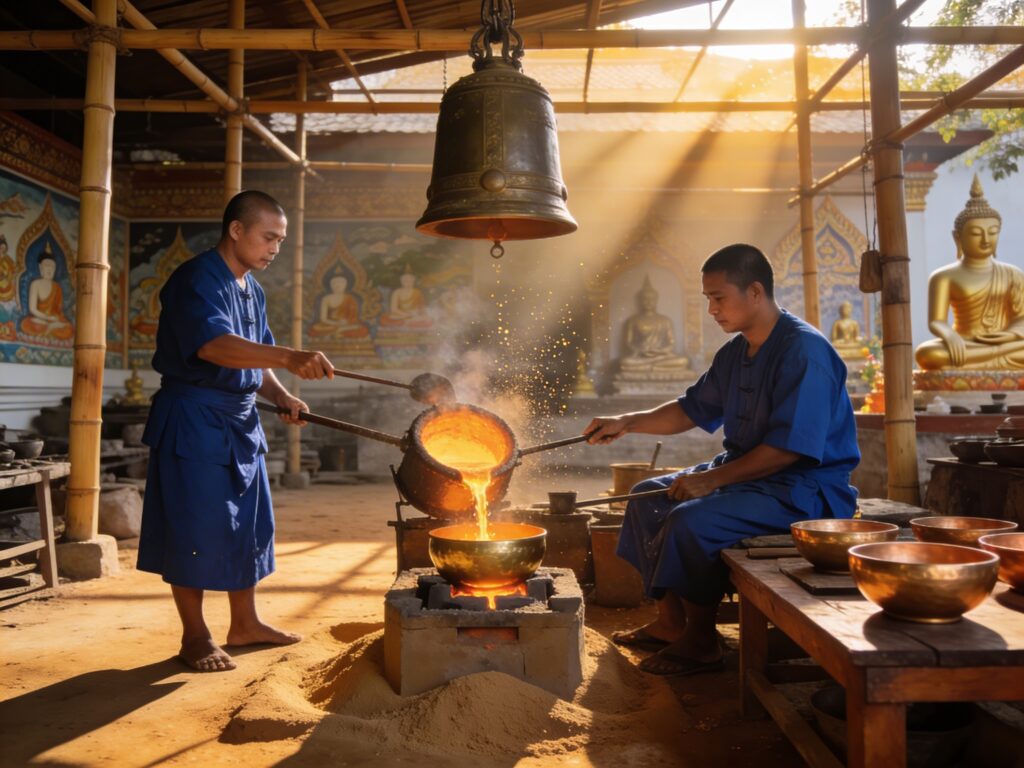
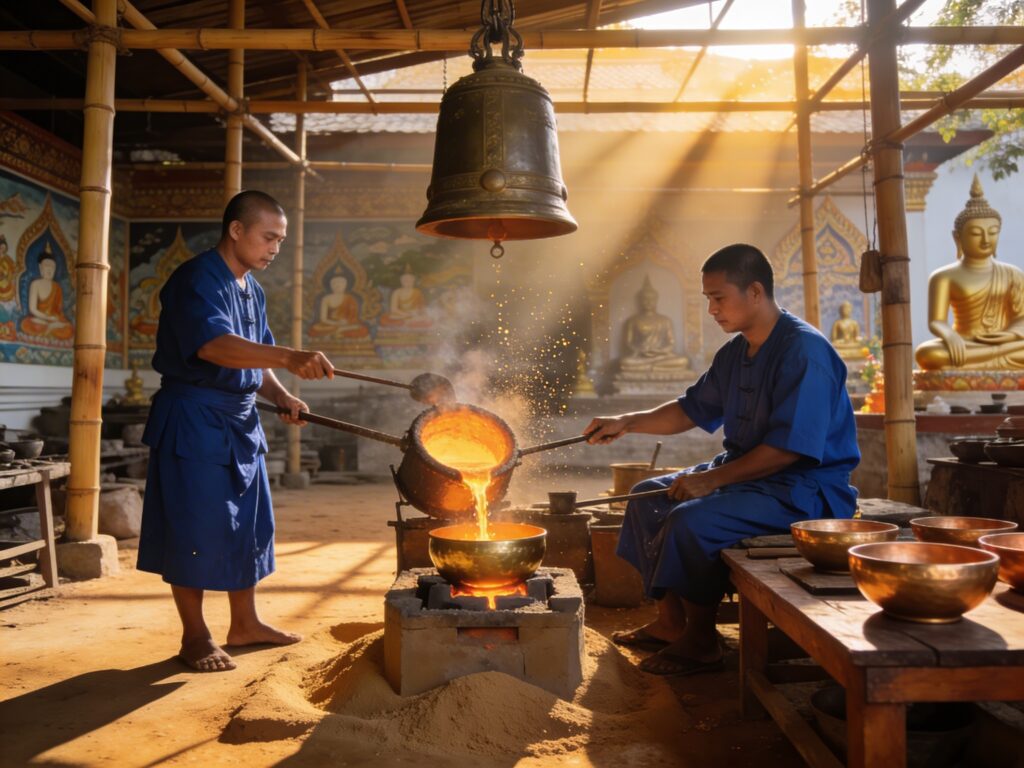
Ayutthaya. The name conjures images of crumbling temples and stone Buddha heads embraced by banyan roots – a hauntingly beautiful testament to a fallen kingdom. But amidst these silent giants of history, a vibrant, resonant tradition survives: the sacred art of casting the monk’s alms bowl, the baat. This isn’t just craft; it’s alchemy, transforming base metal into vessels of profound spiritual significance, a ritual often timed to the resonant clang of the midday temple bell.
The Baat: More Than Just a Bowl
In Theravada Buddhism, the monk’s alms bowl is not merely utilitarian; it’s one of the few possessions a monk is permitted to own, symbolizing humility, dependence on the lay community, and the path to enlightenment. Traditionally made from eight separate metal segments fused together, the baat embodies the Noble Eightfold Path – the Buddha’s guide to ending suffering.
- Symbolism: Each segment represents a component of the path: Right View, Right Intention, Right Speech, Right Action, Right Livelihood, Right Effort, Right Mindfulness, Right Concentration.
- Material: Crafted from a blend of metals – often copper, brass, tin, silver, and sometimes traces of gold or other sacred alloys – symbolizing the blending of diverse elements into a unified whole, much like the Buddhist community.
- Function: Used daily for collecting alms, the act itself is a profound exchange of merit and sustenance between monks and laypeople.
The Foundry’s Sacred Rhythm
While Bangkok’s Ban Baat (Monk Bowl Village) is more widely known, Ayutthaya harbours skilled artisans who preserve the ancient methods, often working within the spiritual orbit of the temples themselves. Visiting their foundries is a step back into a world where craft is inseparable from devotion.
The process is demanding, requiring immense skill, precision, and patience:
- Mould Making: Intricate clay or sand moulds are meticulously prepared, each designed for a specific segment of the bowl.
- The Crucible: The chosen metals are heated in a roaring furnace until they reach a molten, liquid state – a mesmerizing, elemental transformation.
- The Pour: At the critical moment, the glowing metal is poured into the waiting moulds. Timing and steady hands are everything.
- Forging & Fusing: Once cooled, the rough-cast segments are painstakingly removed, cleaned, shaped, and then the true alchemy begins: the eight separate pieces are heated and expertly hammer-welded together into a single, seamless vessel.
- Finishing: The bowl is filed, smoothed, polished, and often adorned with simple, traditional bands or markings.
The Midday Bell: A Call to Mindfulness
Time holds a different weight in Ayutthaya. The rhythm of temple life is marked by the sonorous tolling of bells. The midday bell, echoing across the ancient city and through the lanes where artisans work, serves as more than just a timekeeper.
For the artisans casting the baat, its deep resonance can punctuate their work:
- A Pause for Reflection: The sound often prompts a momentary pause, a chance for the artisans to center themselves, dedicating their labor once more to the creation of a sacred object.
- A Spiritual Timer: Some artisans align critical stages of the casting process – like the pouring of the molten metal – with the bell’s chime, imbuing the act with an extra layer of sanctity and auspicious timing.
- A Reminder of Purpose: The sound washes over the foundry, a tangible reminder that their craft serves a higher purpose beyond the physical object – it serves the Sangha (monastic community) and the perpetuation of Dhamma (Buddhist teachings).
Witnessing the Sacred Craft
Seeking out these artisans offers an unparalleled glimpse into Ayutthaya’s living heritage. It’s an experience far removed from the well-trodden temple paths:
- Authenticity: You witness tradition preserved, not performed. The heat of the forge, the clang of hammers, the intense focus – it’s real.
- Connection: Engaging with the artisans reveals deep pride and reverence for their craft and its spiritual significance. Their knowledge is profound.
- Respectful Observation: Remember this is their livelihood and spiritual practice. Ask permission before entering workshops, be unobtrusive, avoid flash photography near molten metal, and consider purchasing a bowl (often smaller replicas or decorative pieces are available) to support their craft.
- Timing Your Visit: While artisans work throughout the day, aiming to arrive late morning increases the chance of witnessing the molten pour, potentially synchronized with the powerful midday bell resonating from nearby temples like Wat Phra Si Sanphet.
Standing in a humble Ayutthaya foundry as the midday bell rings out, watching skilled hands coax sacred form from molten metal, connects you to an unbroken chain of tradition. It transforms the iconic ruins from silent stone into a backdrop for enduring faith and artistry. Here, the true treasure of Ayutthaya isn’t just in its past; it’s in the resonant *clang* and the glowing alchemy that continues to shape vessels of devotion for the path ahead.