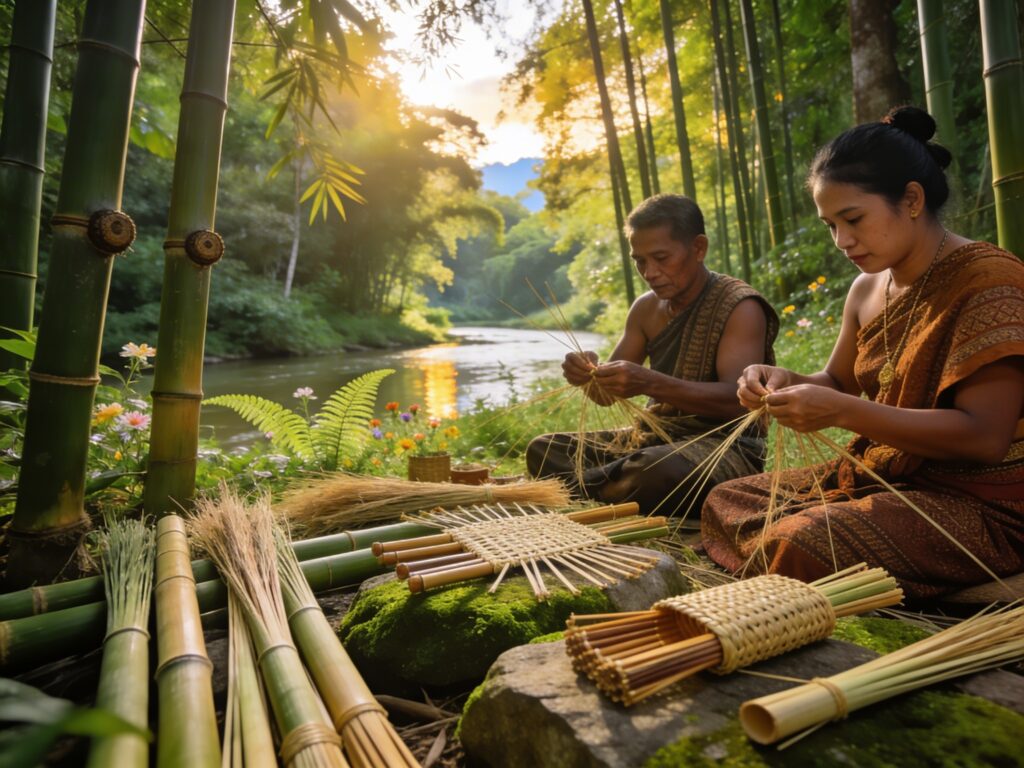
**Sa Kaeo’s Borderland Bamboo Symphony: Weaving River-Reed Instruments with Cambodian Cross-Culture Artisans in the Emerald Forest Glade**
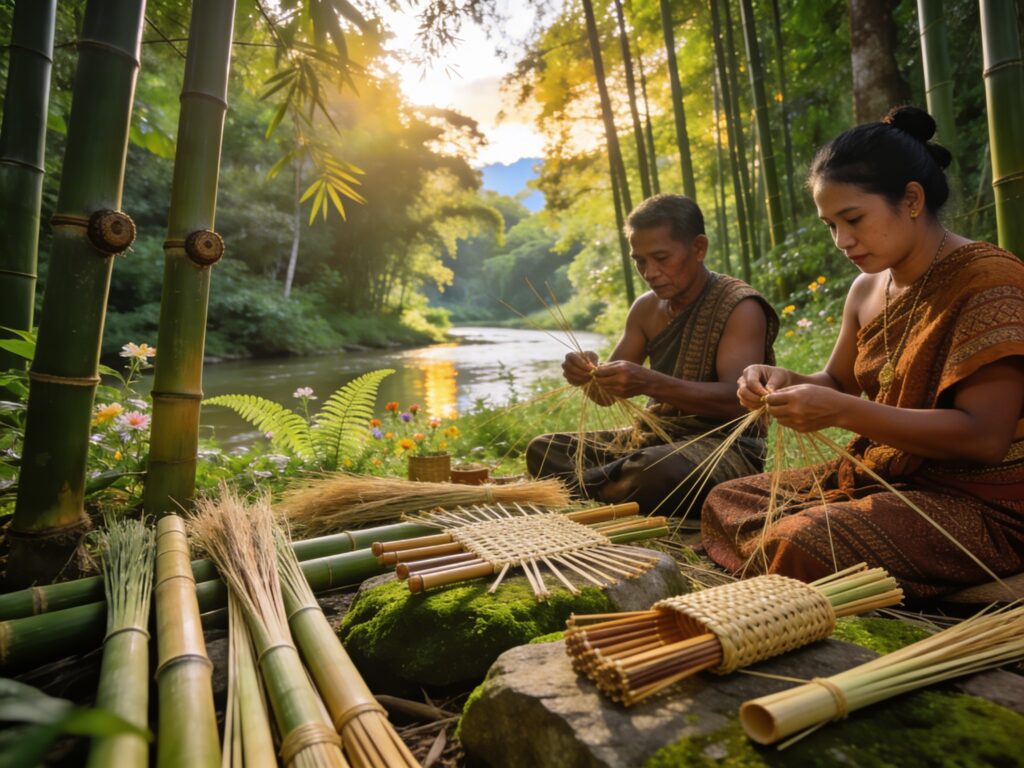
Where Emerald Forests Whisper Melodies
Tucked away in Thailand’s eastern frontier, Sa Kaeo province whispers secrets of resilience and cultural harmony. Far from the bustling tourist trails, near the gentle curve of the Cambodian border, lies an unexpected treasure: a community where the very air vibrates with the soulful resonance of bamboo. Here, in dappled clearings kissed by sunlight filtering through dense emerald canopies, master artisans practice an ancient craft – weaving river reeds and bamboo into exquisite, melodious instruments.
The Artisan’s Grove: Crafting Sound from Nature
Venturing into villages like those nestled near the border districts, you step into a world where time seems measured by the growth rings of bamboo. Workshops, often simple structures open to the forest breeze, are alive with focused energy. Artisans, their hands bearing the wisdom of generations, select bamboo stalks with the discerning eye of a luthier choosing rare tonewood.
The process is a symphony of precision and patience:
- Harvesting: Bamboo is carefully chosen – specific species, the right age, and harvested during the optimal dry season when sap is low, ensuring durability and superior acoustic properties.
- Curing & Shaping: Stalks are meticulously dried, sometimes over slow-burning fires, before being cut, measured, and shaped using traditional hand tools like chisels, knives, and awls.
- Hollowing & Tuning: The delicate task of hollowing the bamboo internodes begins. Finger holes are painstakingly drilled and smoothed. This is where true artistry shines, as the artisan tunes each note by ear, adjusting hole size and placement with infinitesimal precision.
- Reed Craft: For instruments requiring reeds, like certain types of mouth organs or free-reed pipes, thin slivers of resilient river reed are expertly cut, shaped, and fitted to create the vibrating element that produces sound when air passes through.
- Finishing: The instruments are polished, sometimes decorated with subtle carvings or natural dyes, and finally assembled, ready to sing.
The result? A breathtaking array of wind instruments: haunting khlui flutes (Thai bamboo flute) in various sizes, the distinctive double-reed pi, and unique local variations passed down through families. The sound they produce is organic, warm, and deeply evocative of the forest itself.
A Cross-Border Harmony: Weaving Cultures Together
Sa Kaeo’s proximity to Cambodia isn’t just geographical; it’s profoundly cultural. The border here is less a barrier and more a permeable membrane through which traditions have flowed for centuries. This is strikingly evident in the bamboo craft.
- Shared Heritage: The techniques used by Sa Kaeo artisans often bear a striking resemblance to those found just across the border in Cambodian provinces like Banteay Meanchey or Oddar Meanchey. The fundamental understanding of bamboo, the tools, and even some instrument designs speak of a shared Khmer cultural root.
- Artisan Exchange: Historically, families and artisans moved and traded across this region. Knowledge of specific bamboo varieties, curing methods, and decorative motifs was exchanged freely. This cross-pollination continues subtly today, influencing the distinct character of Sa Kaeo’s instruments.
- Musical Dialogue: The instruments crafted here aren’t confined to Thai melodies. They are capable of producing tones and scales that resonate equally with Cambodian traditional music. Listening to a master play, you might hear echoes of Khmer folk tunes woven seamlessly into Thai compositions, a testament to the region’s blended musical soul.
Visiting these artisans isn’t just witnessing craftsmanship; it’s observing living cultural diplomacy. They are the keepers of a sonic heritage that acknowledges no hard borders, only the shared language of nature and music.
Finding the Forest Glade: Experiencing the Symphony
Seeking out these workshops requires a spirit of gentle exploration. While Sa Kaeo town offers access, the true experience lies deeper:
- Community-Based Tourism: Look for homestays or community initiatives in districts like Khlong Hat or Aranyaprathet, often linked to artisan cooperatives.
- Respectful Engagement: Workshops are workplaces. Approach with quiet respect, perhaps arranging visits through local guides or community leaders. A genuine interest in the craft is appreciated far more than intrusive photography.
- Listen & Learn: Allow time. Sit quietly, listen to the rhythmic scraping of tools, the whisper of bamboo shavings, and then, the magical moment when an artisan tests a newly crafted flute, filling the forest glade with pure, resonant sound.
- Support Sustainably: If you wish to purchase an instrument, buy directly from the artisans or their cooperatives. This ensures fair compensation and helps sustain this precious cultural practice.
Sa Kaeo’s borderland bamboo symphony is more than just music. It’s the sound of ancient knowledge breathing, of cultures intertwined like the reeds woven into an instrument’s heart, and of the enduring spirit of artisans who transform the forest’s bounty into something profoundly beautiful and eternally resonant. It’s a hidden melody waiting to be discovered in Thailand’s emerald east.