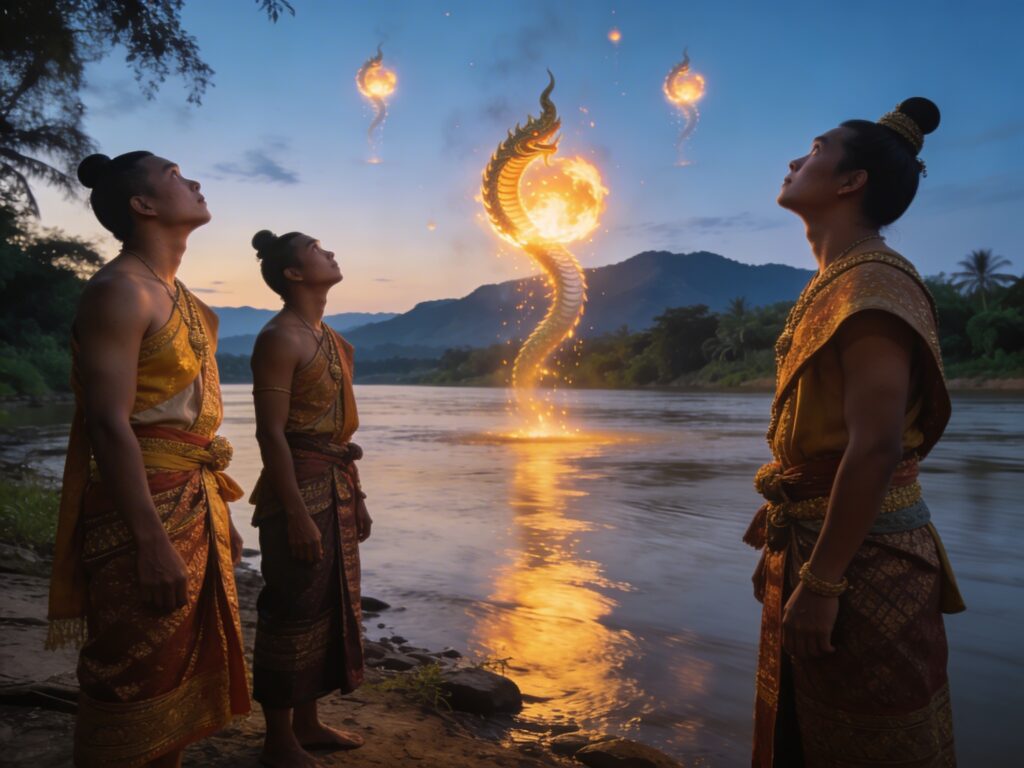
Loei’s Ghostly Fires: Chasing Naga Fireballs with Riverside Mystics Along the Mekong’s Twilight Banks
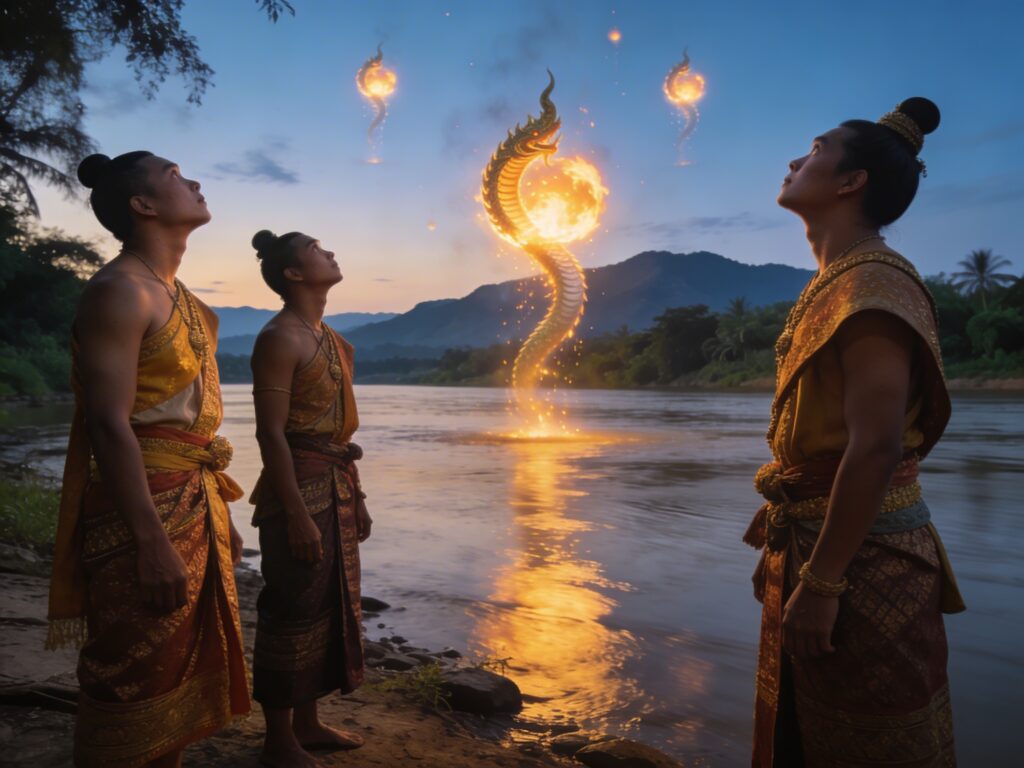
The Whispering River & The Waiting Crowd
As twilight deepens over the Mekong River, painting the sky in bruised purples and fiery oranges, a palpable hush descends upon the banks in Thailand’s northeastern province of Loei. The sticky heat of the day lingers, but attention is fixed firmly on the slow, brown expanse of water separating Thailand from Laos. This is no ordinary sunset vigil. Along the shores, particularly concentrated around the districts of Phon Phisai and Sri Chiang Mai, thousands gather – locals steeped in tradition, curious Thai travellers, and intrepid international visitors – all waiting for one of Thailand’s most enigmatic phenomena: the Naga Fireballs.
The Legend of the Mekong Serpent
Steeped in Isan folklore, the Naga Fireballs are intrinsically linked to the mythical Phaya Naga, a powerful serpent deity believed to dwell in the depths of the Mekong River. The legend varies subtly from village to village, but the core narrative remains potent: at the end of Buddhist Lent (usually in October), the Naga king residing beneath the river pays homage to the Lord Buddha by releasing fiery orbs from the water into the sky. These glowing spheres, ranging in size from tiny sparks to basketballs, silently ascend hundreds of meters before vanishing. To witness them is considered auspicious, a blessing from the river spirit itself.
More Than Just Balls of Fire
The fireballs, known locally as “Bang Fai Phaya Nak,” are deeply woven into the cultural and spiritual fabric of the communities along this stretch of the Mekong. Their appearance coincides with the Ok Phansa festival, marking the end of the rainy season monks’ retreat. The event is seen as a reaffirmation of faith, a connection to ancient animist beliefs coexisting with Buddhism, and a powerful symbol of the river’s life-giving (and potentially mystical) force.
Chasing the Mystery: The Festival Atmosphere
Experiencing the Naga Fireballs is less about guaranteed spectacle and more about embracing the profound atmosphere of anticipation. Riverside villages transform:
- Temple Grounds & Makeshift Viewpoints: The best vantage points are often near temples like Wat Luang Pu Sothon in Phon Phisai or along the banks in Pak Khat district. Temporary stalls selling local food, sticky rice, grilled meats, and sweet treats spring up.
- The Rituals & Reverence: Monks chant blessings. Locals make merit, offering food and flowers to the river spirit. Incense smoke mingles with the evening air.
- The Collective Gasp: As darkness fully envelops the land, eyes strain towards the river. A hush falls. Then, inevitably, someone shouts: “There!” A faint, reddish-orange orb silently rises from the water’s surface. Another appears further downstream. Then another. The crowd erupts in gasps, murmurs of amazement, and sometimes applause. The silence of the fireballs’ ascent contrasts sharply with the human reaction.
Riverside Mystics & Local Lore
This is where the “ghostly fires” truly earn their name. While science scratches its head (proposing theories from flammable swamp gas to mass illusion), the locals possess unwavering faith. Engage with the village elders, the “riverside mystics,” and they’ll share generations-old stories. They speak of the Naga’s benevolence, warnings issued through the fireballs, and deep connections to the river’s health. Their conviction is infectious, adding a layer of profound authenticity to the spectacle. To them, it’s not a debate; it’s a sacred annual event witnessed by their ancestors and now by them.
The Skeptic’s View & The Unanswered Question
Naturally, the phenomenon attracts skepticism. Scientists point to the possible ignition of methane or phosphine gas bubbling up from the riverbed sediment, ignited spontaneously or by human activity (though sightings often occur far from boats or flares). Others suggest mass suggestion or even hoaxes. However, the consistency of the timing (always around Ok Phansa), the vast number of independent witnesses across miles of riverbank, and the sheer longevity of the legend make purely scientific explanations feel incomplete. The mystery is a significant part of the allure.
The Transformative Power of the Unseen
Chasing the Naga Fireballs is less about capturing definitive proof and more about immersing yourself in a unique cultural heartbeat. It’s about:
- Embracing the Unknown: Sitting on the riverbank in the dark, surrounded by hopeful anticipation, opens a space for wonder that modern life often lacks.
- Connecting with Community: Sharing the wait, the reactions, and the stories with locals and fellow travellers creates a powerful shared experience.
- Honoring Tradition: Witnessing a deeply held belief manifest, regardless of your personal interpretation, fosters respect for the rich spiritual tapestry of Isan.
A Journey Beyond Sight
Whether you witness a dozen brilliant fireballs lighting up the night or just a few faint glimmers, the true magic of Loei’s ghostly fires lies in the journey. It’s in the sticky night air, the murmur of prayers, the taste of grilled river fish, the shared tension, and the profound connection to the mighty Mekong and the ancient stories it holds. Come with an open mind, respect for the local beliefs, and a willingness to be captivated by the twilight mystery. You might just leave believing in dragons, or at least, in the enduring power of a river’s spell.
Practical Tip: The phenomenon peaks around the full moon night at the end of Buddhist Lent (Ok Phansa), typically in October. Check specific dates yearly, arrive early to secure a good spot, dress comfortably for warm nights, and bring patience and respect. Accommodation in Phon Phisai and Sri Chiang Mai books up fast!