Bueng Kan’s Stone Sentinels & Dawn’s Bounty: Catching Mekong Fish in Ancient Kor Traps at Phu Tok
The Dawn Chorus of Stone and River
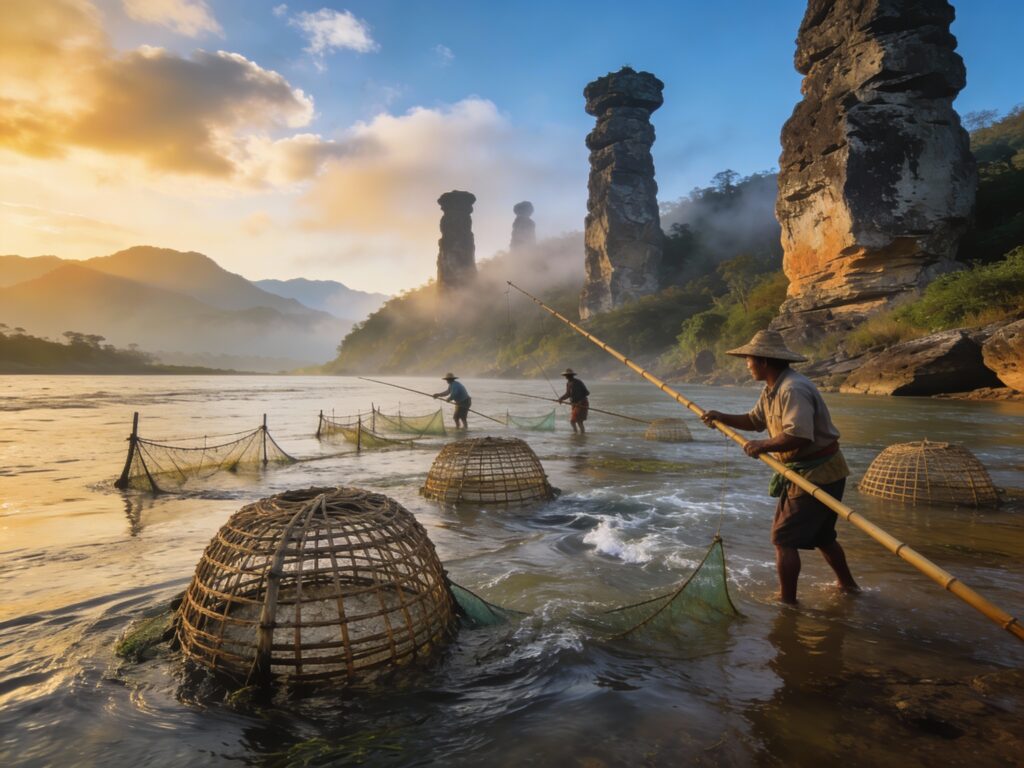
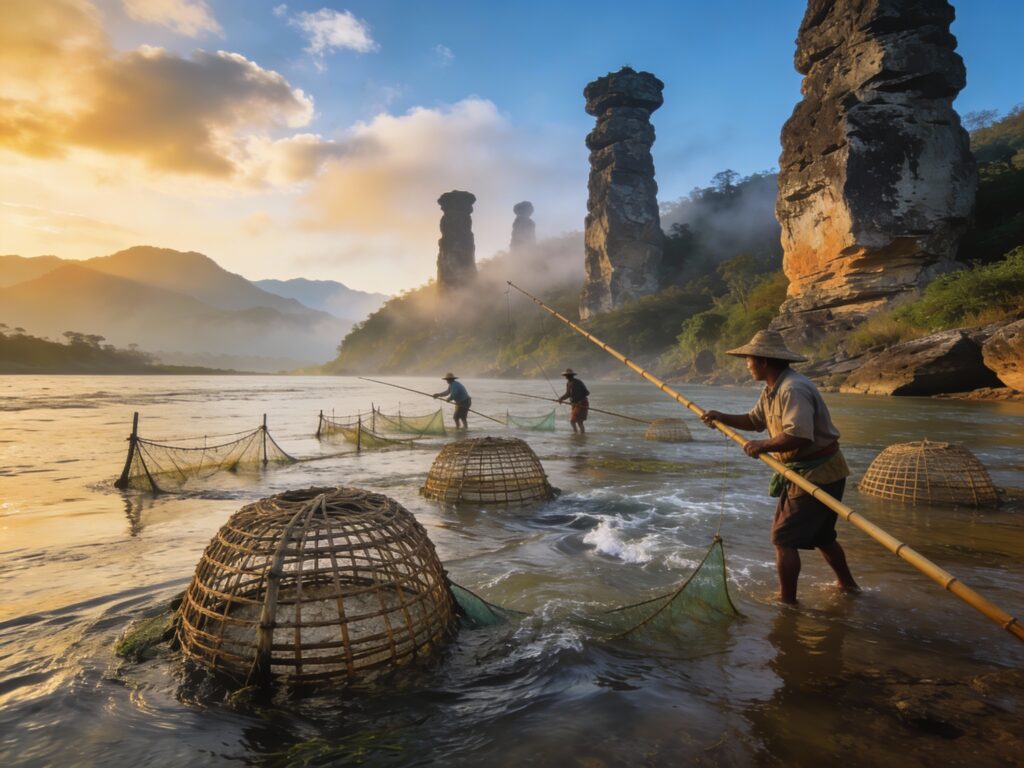
Before the tropical sun paints the Mekong sky in fiery hues, Bueng Kan province stirs. In the ethereal blue light of pre-dawn, a journey to **Phu Tok** feels like stepping onto a primordial stage. This isn’t just a viewpoint; it’s a congregation of giants. Towering sandstone pillars, weathered by millennia of wind and rain, rise defiantly from the earth like petrified sentinels guarding the mighty river below. These are Bueng Kan’s **Stone Sentinels**, a geological marvel sculpted by time into fantastical shapes – some resembling mushrooms, others ancient fortresses or mythical beasts. As the first golden light spills over the Laos mountains across the Mekong, it bathes these silent watchers in a warm glow, casting long, dramatic shadows that shift and dance. The air is cool, filled with the scent of damp earth and the distant murmur of the river, a moment of profound peace before the day begins.
Phu Tok: Where Landscape Meets Livelihood
Phu Tok isn’t merely a scenic overlook; it’s a vantage point into a timeless relationship between the people of the Mekong and their life-giving river. As the dawn light intensifies, revealing the vast expanse of the Mekong snaking through the landscape, activity begins to stir on its banks far below. This is where the ancient practice of fishing using **Kor Traps** comes alive, a method passed down through countless generations.
The Ingenious Kor Trap: An Ancient Mekong Technology
Forget modern rods and nets. The Kor trap is a testament to profound understanding and sustainable ingenuity. Crafted meticulously from local bamboo, these large, funnel-shaped structures are feats of traditional engineering:
- The Barrier: Long bamboo fences are strategically placed perpendicular to the riverbank, guiding fish movement.
- The Heart: At the end of these barriers sits the trap itself – a complex, conical basket woven tightly, often several meters long.
- The Mechanism: Fish swimming along the shore or following currents are gently guided by the barriers into the wide mouth of the Kor trap. Once inside the narrowing cone, escape becomes nearly impossible.
Setting these traps requires intimate knowledge of the river’s flow, fish behaviour, and the changing seasons. It’s a communal effort, often involving families or groups of fishermen working together, reinforcing social bonds as strong as the bamboo they weave.
Dawn’s Bounty: The Ritual of Harvest
This is why dawn is sacred at Phu Tok. As the sky brightens, fishermen arrive at the river’s edge. Wading into the cool, swirling waters, they approach the Kor traps submerged near the bank. With practiced hands and often using smaller nets, they carefully lift the end of the trap and extract the night’s catch. You might see shimmering silver scales flashing in the early light – species like Pa Soi (Mekong flying barb), Pa Keng (various cyprinids), Pa Dok Khem (featherbacks), or the prized Pa Kheng (Mekong catfish), though larger specimens are rarer today.
Witnessing this harvest is witnessing sustenance being drawn directly from the river. It’s quiet, efficient, and deeply connected to the rhythm of nature. The catch, still fresh and lively, is quickly sorted – some kept for family meals, others destined for the vibrant local markets where they’ll fetch a premium for their freshness and traditional provenance.
More Than a View: An Enduring Connection
Standing atop Phu Tok as the sun fully ascends, illuminating the Stone Sentinels and the bustling activity on the river below, offers a powerful perspective. It’s a landscape frozen in geological time juxtaposed with a livelihood that feels equally timeless. The Kor traps aren’t relics; they are vibrant symbols of cultural resilience and sustainable practice in a world increasingly detached from its food sources.
Visiting Bueng Kan for this experience is about more than stunning photos (though you’ll get plenty!). It’s about understanding the deep, enduring connection between the people of Isaan and the Mekong. It’s about witnessing ingenuity born of necessity and respect for the river’s bounty. It’s a chance to see dawn not just as a beautiful light show, but as the start of a daily ritual of survival and tradition that has shaped life along this mighty river for centuries. To see the Stone Sentinels standing guard is to understand why this place, and its people, endure.