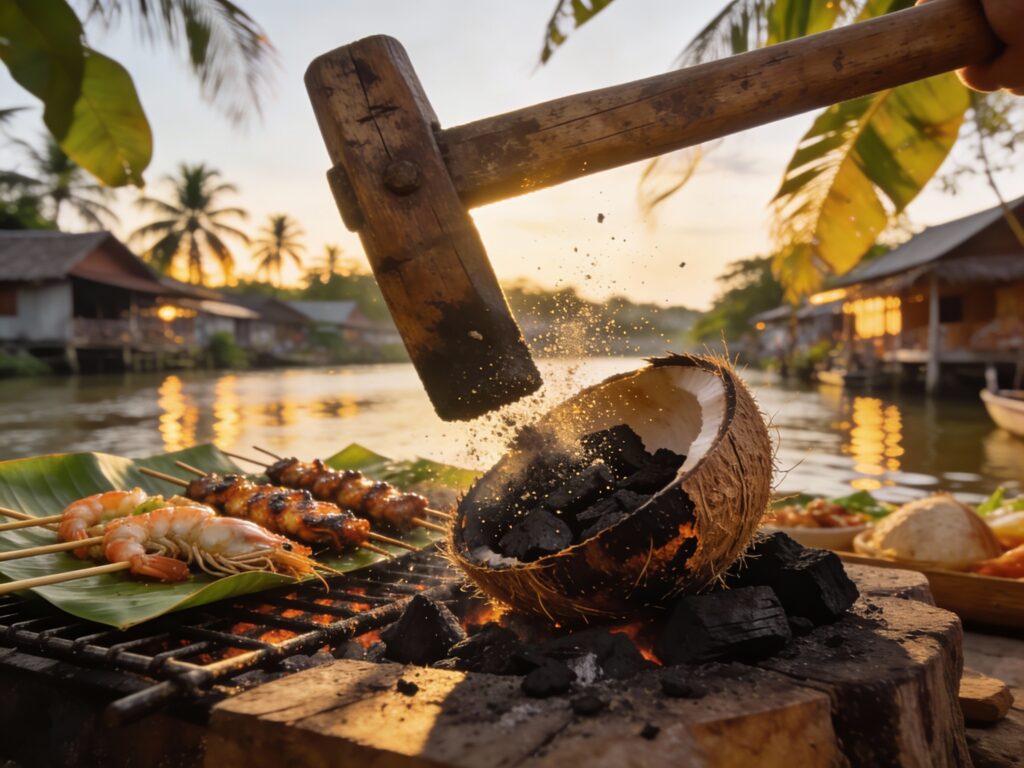
**Embers of Tradition: Samut Songkhram’s Coconut Charcoal Craft & Grilled River Feast**
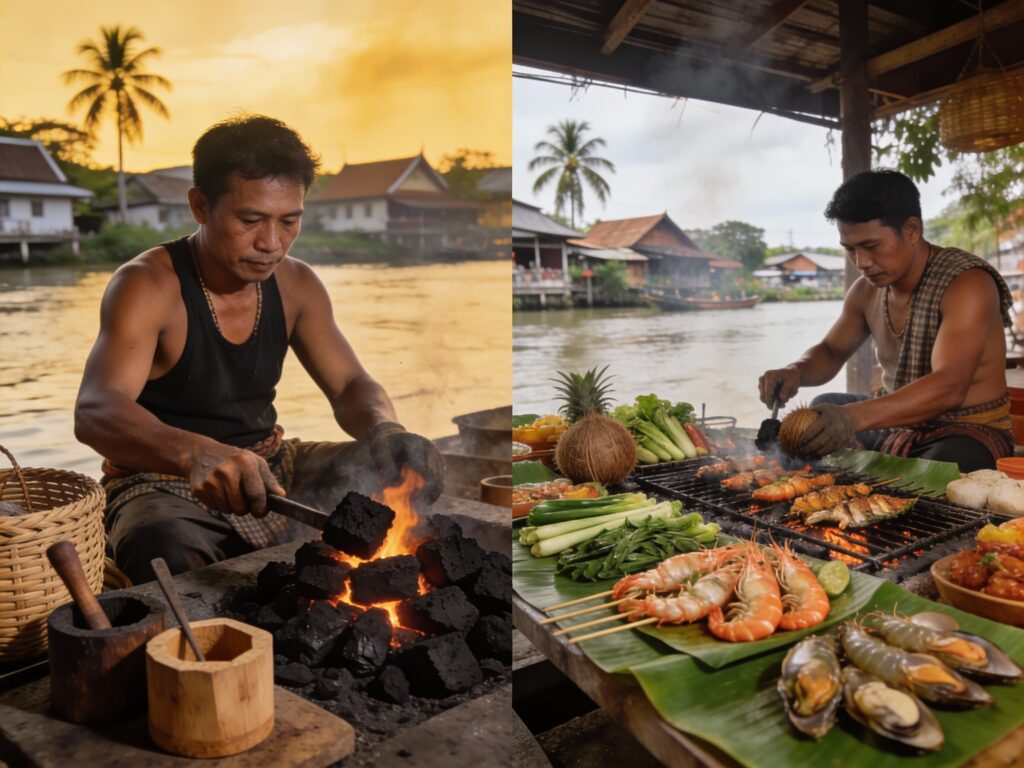
The Hearth of Mae Klong: Where Coconut Shells Ignite Tradition
Beyond the bustling floating markets and vibrant orchards of Samut Songkhram lies a quieter, more elemental tradition, one where the humble coconut shell finds fiery purpose. Here, nestled along the banks of the Mae Klong River, the ancient craft of coconut charcoal making persists, its glowing embers fueling not just fires, but a unique culinary heritage – the legendary Grilled River Feast. This isn’t just industry; it’s alchemy, transforming waste into warmth and flavor, a testament to Thai ingenuity and deep-rooted sustainability.
Crafting Embers: The Art of Coconut Charcoal
Samut Songkhram’s abundance of coconut trees provides the raw material. What was once discarded – the tough, fibrous shells – becomes valuable fuel. The process, honed over generations, is meticulous:
- Collection & Preparation: Shells are gathered from local coconut vendors and farms. They are cleaned, broken into smaller, manageable pieces, and thoroughly dried under the intense Thai sun, a crucial step for efficient burning.
- The Slow Burn (Carbonization): The dried shells are stacked within large, brick kilns, often dome-shaped. A carefully controlled fire is lit at the base. The key is limited oxygen. Instead of blazing flames, the shells smolder slowly over several days (sometimes up to a week). This anaerobic heating drives off volatile compounds and moisture, leaving behind nearly pure carbon – charcoal.
- Cooling & Sorting: After the slow burn, the kilns are sealed completely to extinguish any remaining embers and allow the charcoal to cool gradually over more days. Once cool, the charcoal is extracted, sorted by size, and carefully packaged. The result: dense, slow-burning lumps emitting intense, consistent heat with minimal smoke and a distinctive, faintly sweet aroma.
This isn’t mass production; it’s often small-scale, family-run operations. Watching the kilns, billowing minimal smoke against the sky, and seeing artisans manage the process with practiced ease, feels like witnessing a timeless ritual.
Igniting Flavor: The Grilled River Feast
The magic of Samut Songkhram’s coconut charcoal truly comes alive at dusk along the Mae Klong River. This is where the Grilled River Feast (Pla Pao or Kin Pla Yang) takes center stage. It’s not just a meal; it’s an immersive, riverside culinary experience deeply intertwined with the local environment and that unique charcoal.
Small, rustic restaurants and floating kitchens line the riverbanks. Their signature dish? Whole river fish, most famously Pla Thu (Short Mackerel) or Pla Kapong (Sea Bass), but also giant river prawns and succulent squid.
Here’s why the coconut charcoal is essential:
- Intense, Clean Heat: Coconut charcoal burns hotter and cleaner than wood charcoal. This intense heat sears the fish skin instantly, locking in incredible moisture and natural juices.
- Distinctive Sweet-Smoky Aroma: The faint, natural sweetness of the coconut charcoal infuses the fish with a unique, delicate smokiness impossible to replicate with other fuels. It complements, rather than overwhelms, the fresh flavor of the river catch.
- Long-Lasting Embers: Its dense nature means it burns slowly and steadily, perfect for grilling large quantities of fish evenly over extended periods.
The fish are typically stuffed with lemongrass and kaffir lime leaves, generously coated in a thick, salty paste (often a mix of sea salt and tamarind), and then grilled directly over the glowing coconut charcoal embers until the skin is beautifully crisp and charred, while the flesh inside remains tender, flaky, and incredibly flavorful.
Experiencing the Tradition
To truly embrace Samut Songkhram’s ember-fueled heritage:
- Visit a Charcoal Kiln: Seek out small-scale charcoal producers, often found near coconut plantations or along quieter roads. Observe the process respectfully (ask permission for photos) and appreciate the labor involved. Some might sell small bags of charcoal as souvenirs.
- Dine Riverside at Dusk: Head to the Mae Klong riverbanks in the late afternoon. Restaurants like those near Wat Phet Samut Worawihan or along the road towards Amphawa are renowned. Grab a mat by the water.
- Order the Feast: Go for the whole grilled fish (Pla Pao). It’s served simply with fresh vegetables (cabbage, green beans, herbs), sticky rice, and an array of fiery, tangy, and sweet dipping sauces – especially the iconic Nam Jim Seafood. Don’t miss grilled prawns or squid too!
- Savor the Atmosphere: As the sun sets, the river comes alive with the glow of charcoal fires, the sizzle of grilling fish, and the chatter of locals and travelers sharing this unique experience. Watch boats glide by as you pick tender flesh straight from the bone.
More Than Just Fuel
Samut Songkhram’s coconut charcoal craft is a beautiful example of circular economy thinking long before the term existed. It transforms agricultural waste into a valuable, sustainable resource. That resource, in turn, becomes the literal fire behind one of Thailand’s most authentic and delicious regional culinary traditions. The Grilled River Feast isn’t just food cooked *on* coconut charcoal; its unique, irreplaceable flavor profile is defined *by* it. To taste that fish, smoky-sweet and perfectly moist, by the river at dusk, is to taste the very essence of Samut Songkhram – a tradition kept alive, one glowing ember at a time.