
**Nan’s Temple of Tales: The Murals of Wat Phumin and Riverside Reflections**
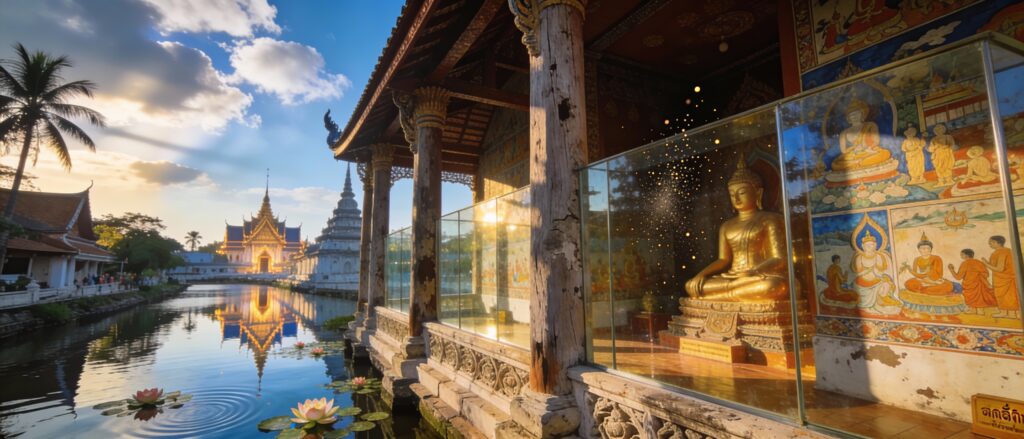
Nestled beside the gentle curves of the Nan River, in a town where time seems to flow as steadily as the water, stands Wat Phumin. This isn’t just a temple; it’s a captivating repository of Northern Thai history, artistry, and spirituality, renowned across the kingdom for its extraordinary murals. A visit here is a journey into the heart of Nan’s soul, where vibrant frescoes whisper tales of a bygone era against the serene backdrop of riverside life.
An Architectural Marvel: The Singular Viharn
Wat Phumin’s most striking feature is its unique architecture. Built in 1596 during the reign of Phra Chao Chetabut Phrommin, the temple underwent significant restoration in 1867 under the patronage of Phra Chao Anantaworaritthidet. What sets it apart is its design: the temple consists of a single magnificent building that seamlessly integrates the functions of both the ubosot (ordination hall) and the viharn (sermon hall).
The structure is cruciform, with four entrances facing the cardinal directions, crowned by a stunning, multi-tiered Lanna-style roof. Inside, the central core rises dramatically, drawing the eye upwards. But the true magic unfolds when you step within its ancient teak walls.
The Whispering Walls: Masterpieces of Lanna Narrative Art
The interior walls of Wat Phumin are entirely covered in some of Thailand’s most significant and best-preserved mural paintings, dating primarily to the 19th-century restoration (circa 1867-1872). These aren’t merely religious iconography; they are a vibrant, sprawling visual narrative offering an unparalleled glimpse into the world of the Lanna Kingdom.
Themes That Captivate:
- Jataka Tales: Scenes from the Buddha’s previous lives, particularly the Vessantara Jataka (the story of the Buddha’s final incarnation before enlightenment), are depicted with remarkable detail and emotion.
- Local Life & Folklore: Perhaps most fascinatingly, the artists painted scenes of everyday life in 19th-century Nan – bustling markets, traditional ceremonies, farming activities, clothing, architecture, and even moments of humor and intimacy. This blend of the sacred and the secular is rare and precious.
- Cosmology & Mythology: Intricate depictions of the Buddhist cosmos (Traiphum), celestial beings, mythical creatures like the Naga serpent, and scenes from local legends adorn the walls.
- European Influence: Look closely, and you’ll spot subtle influences from Western art, particularly in perspective and shading, a testament to the period’s cultural exchanges.
Iconic Imagery: The Nan “Mona Lisa”
Among the thousands of figures, one mural has achieved iconic status: often referred to as the “Whisper of Love” or the “Mona Lisa of Nan.” It depicts an elegantly dressed woman whispering intimately into the ear of a man, their expressions conveying deep affection and serenity. This tender, human moment, painted amidst grand religious themes, encapsulates the unique charm and relatability of Wat Phumin’s art.
Preserving the Past: A Labor of Love
Time, humidity, and the elements have taken their toll on these delicate treasures. Significant conservation efforts have been undertaken over the years to stabilize the murals, clean away grime, and repair damage. Visiting today, you witness not just ancient art, but an ongoing commitment to preserving this irreplaceable cultural heritage for future generations. The slightly faded yet still vibrant colors add to the sense of history and reverence.
Riverside Reflections: The Soul of Nan
Wat Phumin’s location is integral to its atmosphere. Situated right on the banks of the Nan River, the temple offers moments of profound tranquility. After immersing yourself in the visual feast inside, step outside:
- River Views: Sit on the steps or wander the riverside promenade, watching traditional long-tail boats glide past and observing the unhurried rhythm of local life.
- Evening Ambiance: As the sun begins to set, casting a golden glow on the temple’s roof and the surrounding mountains, the atmosphere becomes especially magical. The reflection of the illuminated temple shimmering on the river’s surface is a sight to behold.
- Local Connection: The river isn’t just scenery; it’s the lifeblood of Nan. Seeing locals fishing, children playing by the banks, or monks walking mindfully along the water reinforces the deep connection between the temple, the community, and its environment.
Experiencing Wat Phumin: More Than Sightseeing
A visit to Wat Phumin transcends typical temple tourism. It demands time and quiet observation:
- Look Closely: Spend time scanning the walls. Discover vignettes of daily life hidden within larger religious scenes – a woman selling fruit, musicians playing, animals interacting.
- Feel the History: Imagine the artists at work centuries ago, the devotees who have worshipped here, and the stories these walls have silently witnessed.
- Embrace the Peace: Allow the serene riverside setting and the contemplative atmosphere within the viharn to wash over you. It’s a place for quiet reflection.
Wat Phumin is the crown jewel of Nan Province. Its walls are not just decorated; they are alive with stories – stories of Buddha, stories of kings, stories of farmers and lovers, stories of a unique culture shaped by mountains and rivers. To stand within its hallowed teak walls, surrounded by these breathtaking murals, and then to gaze out upon the tranquil Nan River, is to experience the profound beauty, rich history, and enduring spirit of Northern Thailand in its most captivating form. It’s a temple of tales, indeed, waiting patiently by the riverbank to share its secrets.
