Phatthalung’s Floating Gold: Lotus Harvests and Shadow Puppetry Traditions
Phatthalung’s Floating Gold: Lotus Harvests and Shadow Puppetry Traditions
Beyond the well-trodden paths of Thailand’s southern beaches lies Phatthalung, a province where time seems to flow as gently as the water through its iconic wetlands. Here, amidst serene landscapes, two extraordinary cultural treasures thrive: the breathtaking spectacle of the lotus harvest and the captivating ancient art of Nang Talung shadow puppetry. Together, they weave a narrative of natural beauty, agricultural ingenuity, and profound cultural heritage.
The Lotus Harvest: A Golden Dawn Spectacle
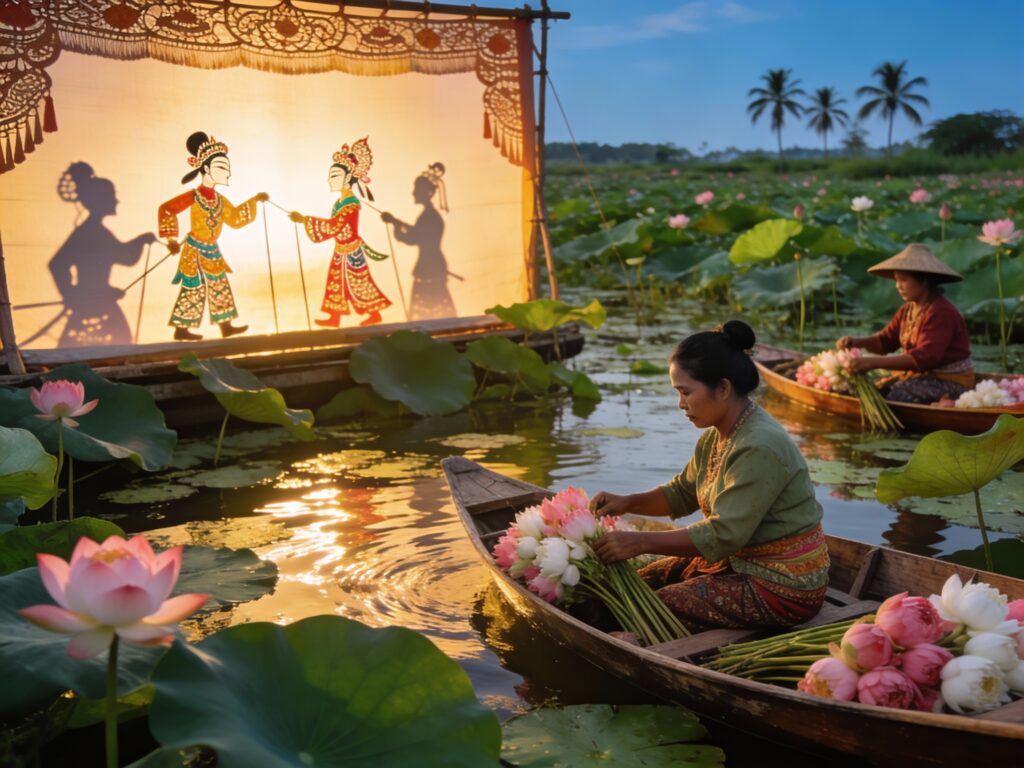
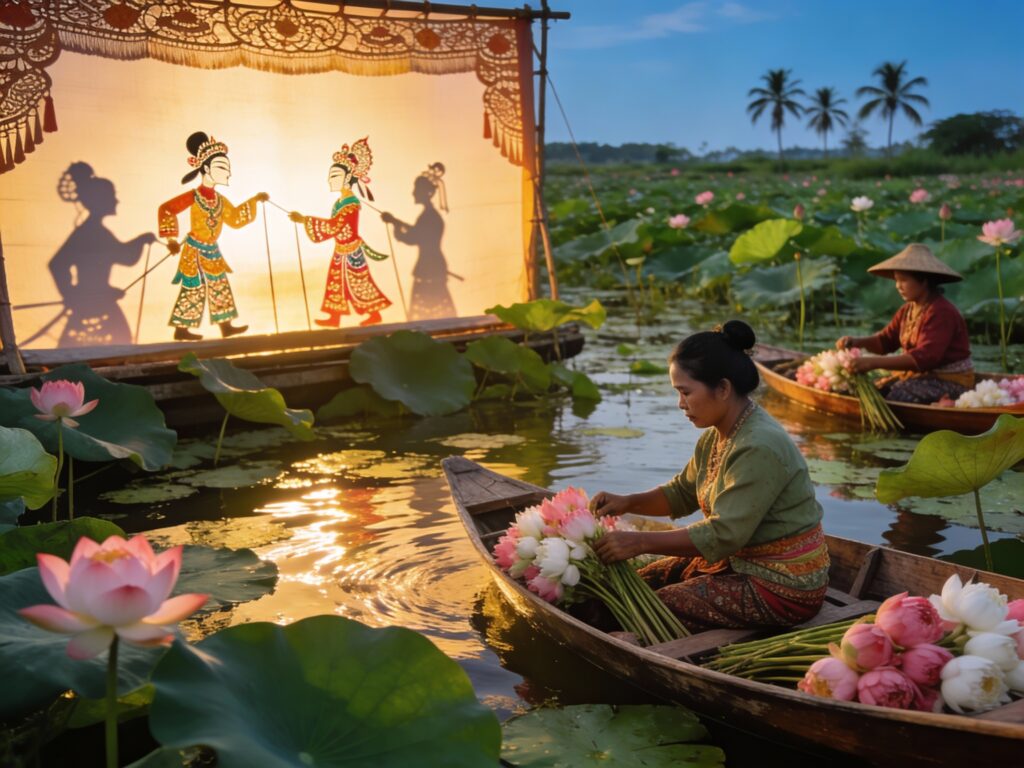
Imagine vast, shimmering fields stretching towards the horizon, not of rice, but of vibrant pink lotus blossoms floating serenely on placid waters. This is the signature landscape of Phatthalung, particularly around the Thale Noi Waterfowl Reserve – Southeast Asia’s largest natural lotus field. The harvest, locally referred to as the “floating gold,” is an event of both economic necessity and breathtaking beauty.
Before the sun fully claims the sky, local farmers glide silently through the aquatic fields in slender wooden boats. Armed with long, curved knives, they expertly reach beneath the large, waxy leaves to cut the precious stems laden with lotus pods. These pods are the source of mae luk – the edible lotus seeds, a highly valued ingredient in Thai cuisine, desserts, and traditional medicine. The harvest demands immense skill, patience, and an intimate knowledge of the watery terrain.
- The Golden Hour: Visit at dawn. The soft morning light transforms the fields into a painter’s palette of pinks, greens, and golds, with mist rising off the water and birdsong filling the air. Watching the silhouettes of harvesters move gracefully among the blooms is pure magic.
- Economic Lifeline: Lotus seeds provide a crucial income for local communities. The seeds are meticulously processed – dried, shelled, and often sold fresh, dried, or peeled – finding their way into markets across Thailand and beyond.
- Beyond the Seeds: Every part of the lotus is utilized: stems are used in soups and stir-fries, leaves serve as natural wrappers for food, and petals are used for decoration or tea.
Nang Talung: Shadows Dancing with Legends
As the day wanes and the lotus fields settle into twilight, another facet of Phatthalung’s soul comes alive: Nang Talung. This traditional form of shadow puppetry is far more than just entertainment; it’s a vibrant, living archive of southern Thai folklore, history, and social commentary.
Intricately crafted puppets, traditionally made from dried buffalo hide meticulously carved and painted, are manipulated by skilled puppeteers (Nai Nang) behind a backlit cotton screen. The performances are dynamic, blending complex puppetry with witty dialogue (often improvised), live music from a small ensemble (piphat), and resonant vocals. Stories draw from the Ramakien (the Thai Ramayana), Jataka tales (Buddha’s past lives), local legends, and contemporary social issues, often delivered with sharp humor.
- Masterful Artistry: Creating a Nang Talung puppet is an art form in itself. Each figure, from heroic princes and divine beings to comical villagers and fearsome giants, is a unique piece of folk art.
- Social Heartbeat: Historically, Nang Talung served as a vital community news source and social critique. While its role has evolved, it remains deeply connected to local identity and a powerful medium for cultural transmission.
- Finding a Performance: Seek out local cultural centers like the Phatthalung Cultural Centre or inquire at hotels/tourist offices. Performances are often held during temple festivals (wat fairs) and cultural events. Seeing a master puppeteer at work, voicing multiple characters and orchestrating the action, is mesmerizing.
A Tapestry Woven by Water and Light
The connection between the lotus harvest and Nang Talung in Phatthalung runs deep. Both are intrinsically linked to the province’s aquatic landscape and agrarian rhythms. The lotus provides sustenance and beauty, a symbol of purity rising from the muddy water. Nang Talung, born from the same earth and water, uses light and shadow to reflect the community’s spirit, wisdom, and humor. It’s an art form that, like the lotus, blossoms from the local environment and traditions.
Experiencing Phatthalung means embracing this duality: witnessing the tranquil, backbreaking work of the dawn lotus harvest and then being swept up in the vibrant, noisy, and thought-provoking energy of an evening Nang Talung show. It’s a journey that engages all the senses and offers a profound glimpse into the authentic cultural heart of Southern Thailand – where nature’s golden gift meets the enduring magic of storytelling in shadow.