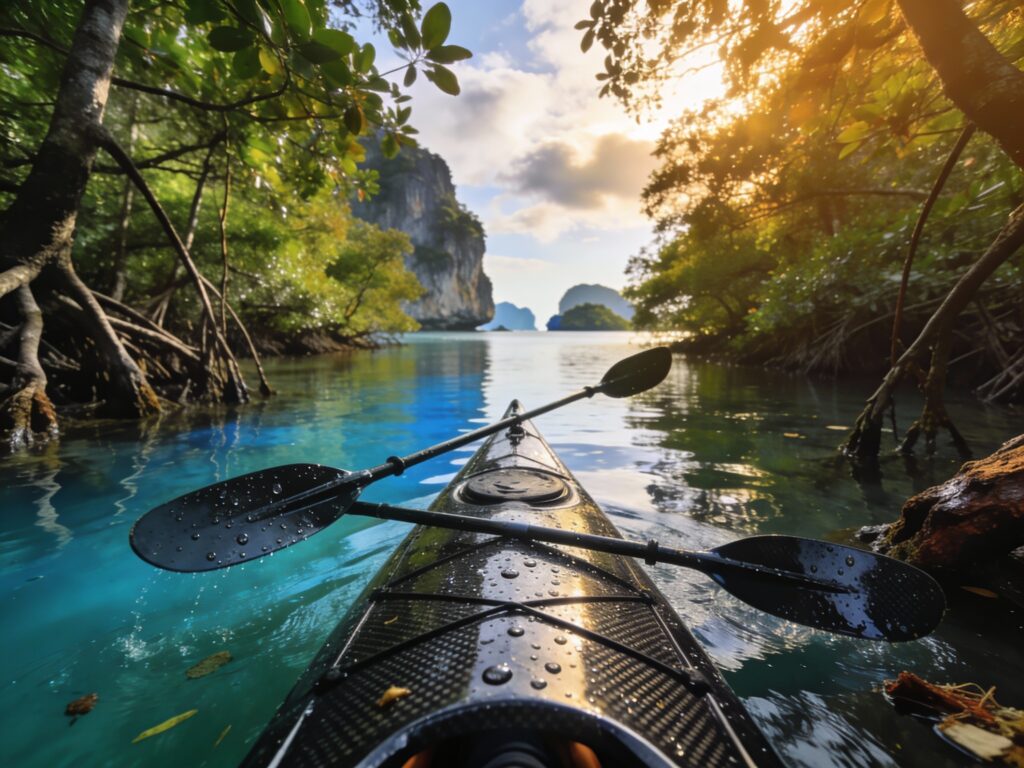
Satun’s Hidden Archipelago: Kayaking the Mangrove Channels of Tarutao National Park

Satun’s Secret Sanctuary: Unveiling Tarutao’s Mangrove Mysteries by Kayak
Forget the crowded beaches and bustling piers of Thailand’s more famous islands. Tucked away in the Andaman Sea, bordering Malaysia, lies Satun – Thailand’s serene “Forgotten Province.” And guarding its coastline like a string of emerald jewels is Tarutao National Park, a UNESCO-listed marine paradise. While its larger islands like Koh Tarutao and Koh Lipe draw some intrepid travelers, the true magic lies hidden within its labyrinthine mangrove channels, best explored silently gliding atop a kayak.
The Journey Begins: Gateway to Emerald Waterways
Your adventure typically launches from the mainland pier in Satun town or nearby Pak Bara. After a scenic boat transfer weaving through dramatic limestone karsts rising from the turquoise sea, you’ll arrive at the park headquarters on Koh Tarutao or directly at designated kayak starting points like the enchanting Ao Pante Malaka (Crocodile Bay – worry not, they’re long gone!). Here, sturdy sit-on-top kayaks await, your passport to a world untouched by time.
Paddling Through Liquid Labyrinths
As you dip your paddle into the glassy, tannin-stained water, the outside world melts away. Towering mangrove trees (Rhizophora, Bruguiera, Avicennia species) arch overhead, their intricate root systems – stilt roots, prop roots, and pneumatophores – creating a mesmerizing, tangled sculpture garden rising from the water. Sunlight filters through the dense canopy in dappled patterns, casting an ethereal green glow.
- Silence is Golden: The hushed stillness, broken only by the dip of your paddle, bird calls, and the gentle rustle of leaves, is profound. Kayaking allows you to slip into this ecosystem without disturbing its delicate balance.
- Navigating Nature’s Maze: Channels wind and fork, sometimes opening into wider lagoons, sometimes narrowing into tunnels of verdant growth. Local guides are invaluable, not just for navigation but for unlocking the secrets of this vital habitat.
- A Symphony of Life: Keep your eyes peeled! This is where the magic unfolds. Look for mudskippers skipping across exposed roots, vibrant fiddler crabs waving their oversized claws, and monitor lizards basking silently on overhanging branches.
Wildlife Encounters in the Canopy and Depths
The mangroves are a bustling nursery and sanctuary. Birdlife is abundant:
- Kingfishers: Flash of electric blue as a Collared or Stork-billed Kingfisher darts across a channel.
- Hornbills: Listen for the distinctive whooshing sound of Great or Wreathed Hornbills flying overhead.
- Egrets & Herons: White-faced, Little, and Pacific Reef Herons stand statuesque, hunting in the shallows.
- Primates: Troops of Dusky Langurs or playful Crab-eating Macaques often forage along the water’s edge, their antics captivating.
Peer into the clear water: juvenile fish dart amongst the roots, sea cucumbers rest on the bottom, and if you’re incredibly lucky, you might spot a small black-tip reef shark venturing into the brackish water.
The Hidden Gem: Koh Klang (Middle Island)
A highlight of many kayak trips is paddling towards Koh Klang, a small island nestled within the mangrove complex. Here, a stunning, secluded beach awaits – often completely deserted. Pull your kayak onto the soft white sand, swim in the incredibly clear, calm water, and simply soak in the pristine beauty. It’s the perfect reward after navigating the channels.
More Than Just Scenery: The Mangrove’s Vital Role
Paddling through Tarutao’s mangroves isn’t just beautiful; it’s a lesson in ecology. Your guide will explain how these forests:
- Protect Coastlines: Their dense roots act as a natural barrier, absorbing wave energy and preventing erosion.
- Nurture Marine Life: They serve as crucial breeding and nursery grounds for countless fish, crustaceans, and mollusks, supporting the entire marine food web.
- Filter Water: Mangroves trap sediments and pollutants, improving water quality.
- Sequester Carbon: They are incredibly efficient at capturing and storing carbon dioxide.
Experiencing this firsthand fosters a deep appreciation for their conservation.
Planning Your Mangrove Kayaking Adventure
- Guided Tours are Essential: Navigating the channels alone is not recommended. Reputable tour operators from Satun town or Pak Bara offer half-day or full-day trips, including park fees, transport, kayaks, guides, and often lunch/water. Opt for smaller groups for a more intimate experience.
- Best Time to Visit: The prime kayaking season is during the dry season, roughly **November to April**, when seas are calmer, and rainfall is less frequent. Avoid the peak monsoon (July-October).
- What to Bring: Swimsuit, quick-dry clothes, hat, reef-safe sunscreen, insect repellent (mosquitoes can be present, especially in still areas), waterproof camera/dry bag, reusable water bottle, and a sense of adventure!
- Fitness Level: While generally leisurely, kayaking does require moderate upper body strength and core engagement. Trips usually last 2-4 hours paddling.
- Respect the Environment: Practice “Leave No Trace.” Avoid touching or stepping on coral (if snorkeling near Koh Klang), don’t feed wildlife, take all rubbish with you, and use reef-safe sunscreen.
An Unforgettable Journey into the Heart of Wild Thailand
Kayaking the mangrove channels of Tarutao National Park is more than just a boat trip; it’s an immersion into a primordial world. It’s a chance to disconnect completely, witness nature’s intricate beauty and resilience up close, and experience the profound tranquility that only a hidden, thriving ecosystem can offer. In Satun’s secret archipelago, you won’t find crowds or development, but you will discover the untouched soul of the Andaman Sea, one paddle stroke at a time. It’s an adventure that etches itself onto your memory, a true hidden gem waiting to be explored.