
**Topic Title:** Doi Tung’s Tea Leaf Alchemy: Hand-Rolling Oolong in the Mist-Laced Highlands of the Royal Project
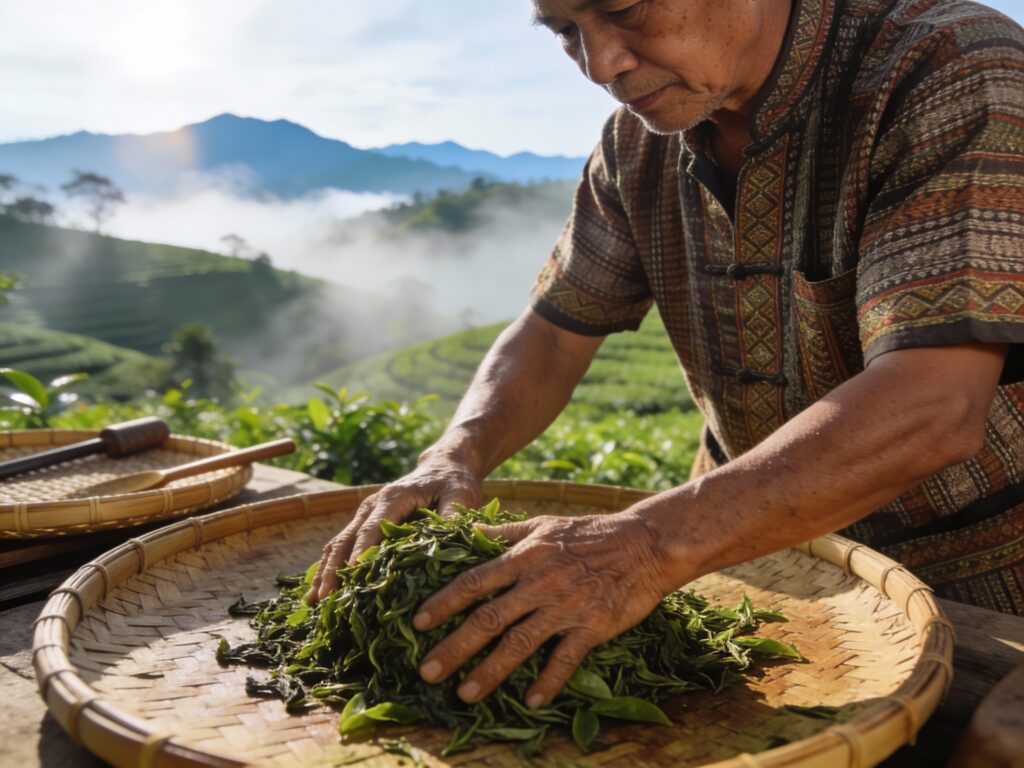
The Mist-Kissed Realm of Doi Tung
Nestled high in the rugged, forested peaks bordering Myanmar, Doi Tung isn’t just a mountain; it’s a realm sculpted by cool mists and imbued with a profound sense of tranquility. Perched within Chiang Rai province, this highland sanctuary sits at an elevation where the air grows crisp, the views stretch endlessly over rolling hills, and a unique alchemy takes place – the transformation of humble tea leaves into exquisite Oolong. Here, amidst meticulously tended terraces clinging to the slopes, unfolds a story of royal vision, dedicated craftsmanship, and the pure essence of high-altitude terroir.
A Legacy Rooted in Compassion: The Royal Project
Doi Tung’s journey as a tea haven is inseparable from the visionary Doi Tung Development Project, initiated under the patronage of the late Princess Mother Srinagarindra (Somdej Phra Srinagarindra Boromarajajonani). Recognizing the challenges faced by highland communities reliant on unsustainable practices, the project sought to provide alternative, legal livelihoods while promoting environmental conservation and cultural heritage.
The cool climate and fertile soils of Doi Tung proved ideal for high-quality tea cultivation. Introduced as a key cash crop, tea became more than just a plant; it became a symbol of hope, empowerment, and sustainable development. The project meticulously selected suitable cultivars, trained local communities (many from the Lahu and Akha ethnic groups) in advanced horticulture and processing techniques, and established standards focused on quality and environmental stewardship. Today, Doi Tung stands as a shining example of how royal foresight transformed a region, with tea as its liquid gold.
The Alchemy Unfolds: Hand-Rolling Oolong
While mechanization dominates much of the global tea industry, Doi Tung holds fast to the ancient art of hand-rolling for its finest Oolongs. This meticulous, labor-intensive process is where the true alchemy happens, transforming freshly plucked leaves into complex, aromatic treasures. It’s a dance between human skill and natural transformation:
From Pluck to Wither
The journey begins at dawn, often when the mountain mists still cling to the valleys. Experienced pluckers selectively harvest tender leaves and buds, usually a specific “two leaves and a bud” configuration. These fresh, vibrant leaves are then carefully spread out to wither. In Doi Tung’s cool, humid air, this initial wilting reduces moisture content subtly, gently priming the leaves for the changes to come.
The Crucial Oxidation Dance
Unlike green tea (minimally oxidized) or black tea (fully oxidized), Oolong is defined by its partial oxidation. This is the heart of its complexity. The withered leaves are gently bruised, traditionally by tossing in large bamboo trays. This ruptures cell walls, exposing enzymes to oxygen. Master tea makers in Doi Tung constantly monitor this process – smelling, feeling, observing the colour shift from green towards reddish edges. They decide precisely when to halt oxidation by applying heat, capturing the desired flavour profile somewhere between floral freshness and deeper, fruity notes.
The Artisanal Heart: Hand-Rolling
This is the step that defines Doi Tung’s most prized Oolongs. The partially oxidized leaves are still pliable. Skilled artisans gather small batches and begin the rhythmic, almost meditative process of hand-rolling. Using the palms and heels of their hands on bamboo trays or tables, they press, twist, and roll the leaves. This isn’t just about shaping; it’s crucial for:
- Breaking Down Cell Structure: Further rupturing cells to release essential oils and complex compounds that create aroma and flavour depth.
- Shaping the Leaf: Forming the characteristic semi-ball or twisted shapes associated with premium Oolongs.
- Coating the Leaf: The pressure and friction during rolling cause the leaf’s natural juices to coat its surface, intensifying flavour and contributing to the tea’s rich liquor.
Watching these artisans work is mesmerizing. Their hands move with practiced grace, applying just the right pressure over time, coaxing the leaves into their final form. The air fills with an increasingly complex, intoxicating fragrance – grassy notes giving way to hints of orchid, honey, and warm stone fruit.
Fixing & Drying
Once the rolling achieves the desired shape and internal transformation, the leaves undergo a final “firing” (often using hot air dryers) to halt enzymatic activity completely and reduce moisture to a stable level. This step locks in the carefully crafted flavours and aromas. A final, slow drying ensures perfect storage stability.
Experiencing the Liquid Jade
Visiting Doi Tung offers a rare opportunity to witness this alchemy firsthand and taste its exquisite results:
- Doi Tung Royal Villa & Gardens: While the royal residence and stunning Mae Fah Luang Garden are key attractions, don’t miss the dedicated tea outlets showcasing the project’s produce.
- Doi Tung Development Project Sites: Explore the project’s visitor centers and agricultural stations. While access to active rolling might be limited, exhibits often detail the process, and tea tasting is usually available.
- Local Shops & Cafes: Throughout the Doi Tung area, small shops and cafes proudly serve and sell the locally produced teas. Seek out establishments run by project cooperatives.
When you sip a cup of Doi Tung Oolong – whether a lightly oxidized, floral “Jade Oolong” or a deeper, more complex roasted variety – you’re tasting more than just tea. You’re tasting the cool mountain air, the dedication of skilled hands, the transformative power of oxidation, and the enduring legacy of a royal project that nurtured a community and created something truly beautiful from the mist-laced highlands.
