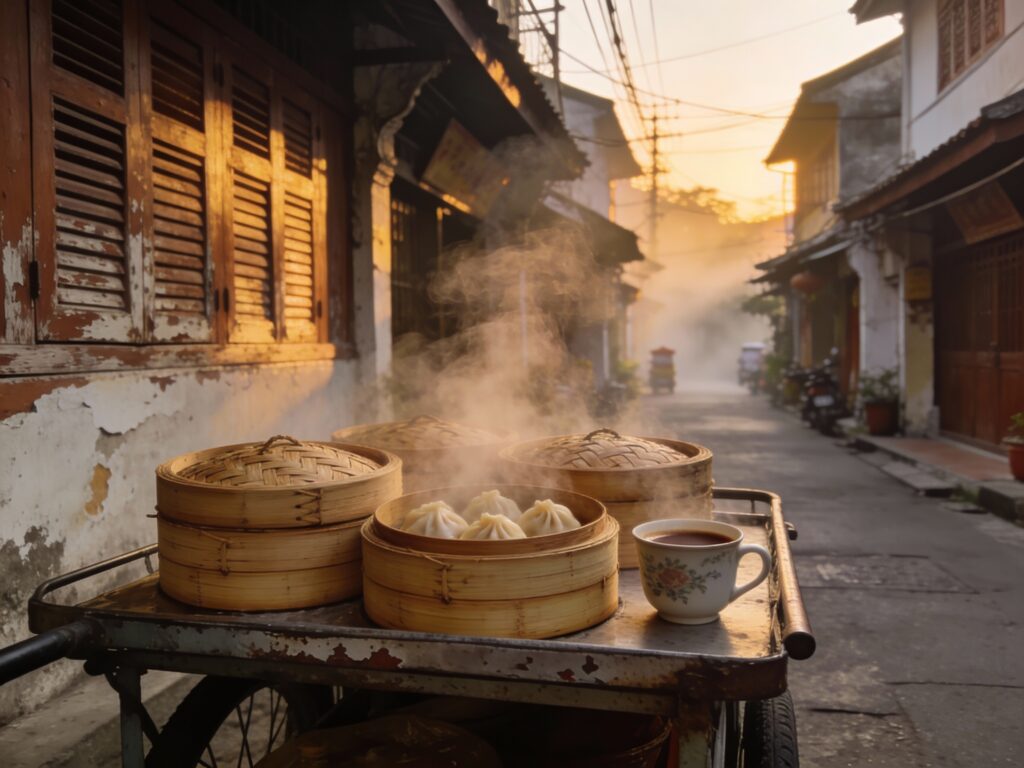
**Trang’s Dim Sum Dawn: Steamed Baskets & Sweet Coffee in the Old Town’s Teochew Alleyways**
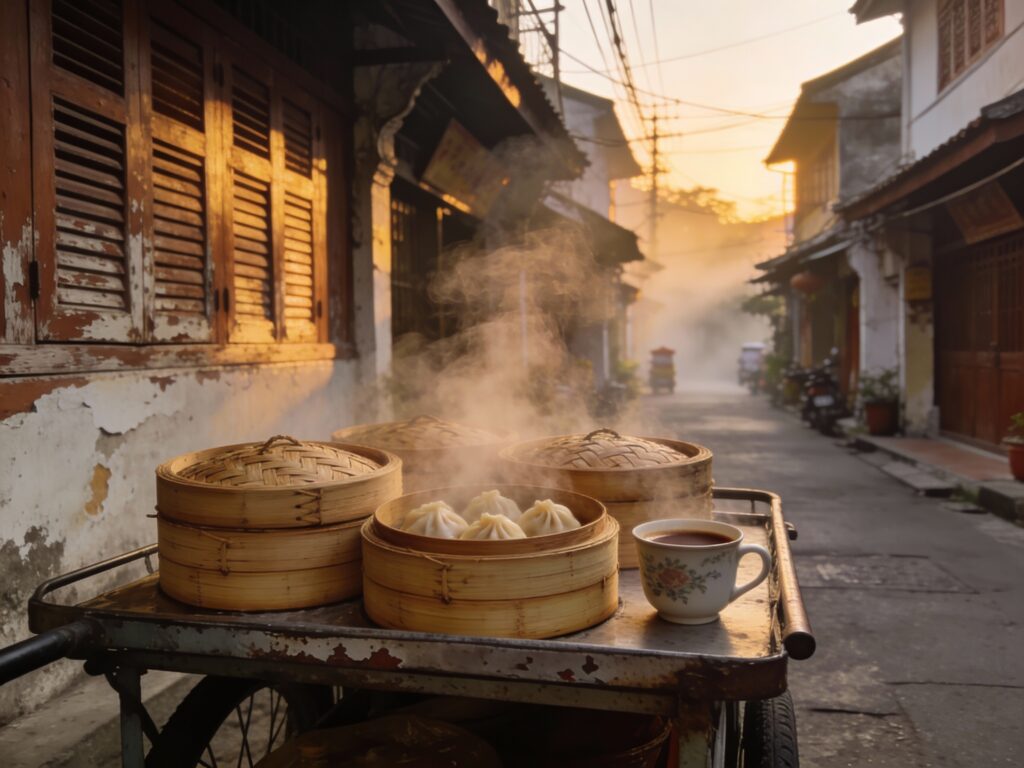
The Hiss of Steam & the Scent of Coffee: Trang’s Dawn Ritual
Forget lazy brunches. In Trang, Southern Thailand’s understated gem, breakfast is a vibrant, steam-filled spectacle played out before the sun climbs high. Venture into the labyrinthine alleyways of the Old Town, particularly around the historic Teochew Chinese quarter, and you step into a world where the day begins with delicate parcels of flavour and intensely sweet, strong coffee. This is Trang’s Dim Sum Dawn.
Alleys Alive Before Sunrise
As the first hints of light brush the sky, the narrow streets around landmarks like the old Vitsanu Kom Street or near the bustling morning market begin to hum. Wooden shophouses, some faded by time, throw open their doors. The air fills with the unmistakable hiss of massive steamers, billowing clouds of vapour that carry the tantalising aroma of freshly cooked dim sum. Locals, from shopkeepers to schoolchildren, gather at simple plastic tables spilling onto the pavement. The atmosphere is buzzing, communal, and utterly authentic. This isn’t just a meal; it’s a generations-old ritual.
Steamed Treasures: Trang’s Dim Sum Delights
Forget the vast, rolling carts of Hong Kong. Trang’s dim sum experience is more intimate and focused. Vendors often specialise in just a few types, perfected over decades. Look for baskets piled high with:
- Siew Mai: The undisputed star. Trang’s version is distinct – plump, open-topped dumplings often featuring a coarser, springier pork filling, sometimes with a hint of shrimp or crunchy water chestnut, crowned with a bright orange roe or a single pea. Bite-sized bursts of savoury goodness.
- Ha Gao (Steamed Shrimp Dumplings): Delicate, translucent wrappers encasing whole or minced fresh shrimp, offering a cleaner, seafood-forward counterpoint.
- Pork Buns (Salapao): Fluffy, white steamed buns cradling sweet or savoury minced pork fillings. Perfect for mopping up flavours.
- Other Local Variations: Keep an eye out for steamed ribs, glutinous rice wrapped in lotus leaves (Lo Mai Gai), or unique local creations depending on the stall.
The beauty lies in the simplicity and freshness. Point to what you want – baskets of siew mai, a few ha gao – and it’s swiftly delivered to your table, often still piping hot from the steamer. Dipping sauces, usually a simple soy-chilli blend, are provided for that extra kick.
The Essential Counterpart: Oliang & Sweet Coffee
Dim sum in Trang is inseparable from its liquid soulmate: Oliang (โอเลี้ยง) or local sweet coffee. This isn’t your average latte.
- Oliang: A Teochew-origin drink, it’s a potent blend of black coffee, brown sugar, and often roasted rice, corn, or soybeans, strained through a cloth “sock” filter directly into a glass. It’s served strong, dark, and pre-sweetened with lashings of condensed milk. Intensely aromatic and deeply satisfying.
- Kafe Boran (Old-Style Coffee): Similar to Oliang but typically refers to the pure coffee version without the grain additions, still heavily sweetened with condensed milk. Thick, syrupy, and the perfect foil to the savoury dim sum.
The ritual involves sipping the scalding hot, sweet coffee between bites of savoury dumpling, creating a harmonious contrast that defines the Trang breakfast experience. Watching the vendors expertly pour the coffee from great height between two containers to cool it slightly is part of the theatre.
Teochew Roots & Trang’s Taste
The prevalence of dim sum and Oliang is a direct legacy of Trang’s significant Teochew Chinese community, who settled here generations ago, particularly involved in trade and tin mining. Their culinary traditions took root and adapted to local tastes. Trang’s dim sum reflects this heritage – familiar forms like siew mai, but often with a slightly different texture, seasoning, or filling profile compared to other regions, showcasing the unique evolution of Teochew cuisine in this Southern Thai setting. The alleyways themselves, with their architectural details and bustling morning trade, whisper stories of this enduring cultural blend.
Experiencing Trang’s Dim Sum Dawn: Tips
- Timing is Key: Arrive early! The action starts around 6:00 AM and winds down significantly by 9:00 AM or even earlier for the most popular spots. The best atmosphere and freshest batches are found in the first hour.
- Location: Focus on the Old Town area. Look for clusters of plastic tables and steam clouds. Famous spots include Sin Oi Peng (centuries-old recipe for siew mai) and the alleyways branching off from the main roads near the clock tower and the market. Just follow your nose and the locals!
- How to Order: Point and gesture! Most vendors don’t have elaborate menus. See what looks good on other tables or in the steamers. Hold up fingers for quantity.
- Cost: Incredibly affordable. A basket of dim sum might be 20-40 THB, coffee 25-40 THB. A hearty breakfast for two rarely breaks 200 THB.
- Embrace the Chaos: It’s bustling, noisy, and communal. Sharing tables is common. Relax, soak it in, and enjoy the authentic vibe.
- Cash Only: Bring small bills (20, 50, 100 THB notes).
Trang’s Dim Sum Dawn is more than just breakfast; it’s a vibrant immersion into the town’s soul. It’s the hiss of steam cutting through the morning quiet, the sticky sweetness of coffee clinging to your lips, the burst of savoury pork from a perfectly steamed dumpling, and the warm hum of community in ancient alleyways. It’s a delicious, essential, and utterly unforgettable way to begin your day in Southern Thailand.