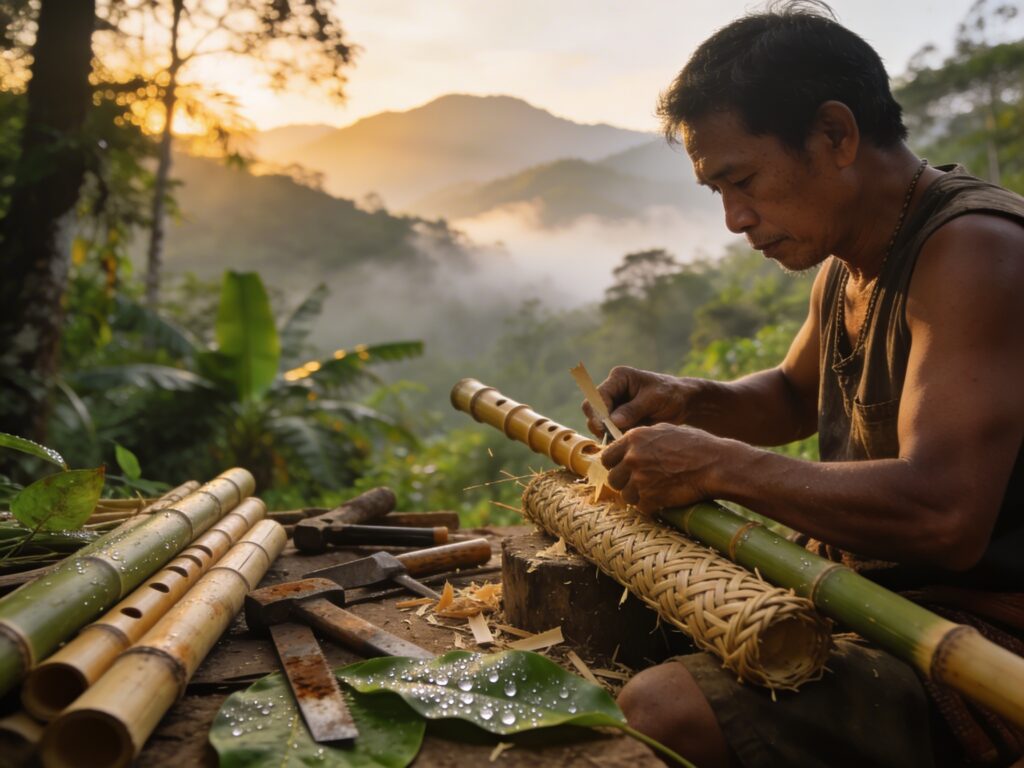
Chiang Mai’s Bamboo Alchemy: Crafting Jungle Instruments with Forest Artisans in the Mountain Mist Dawn
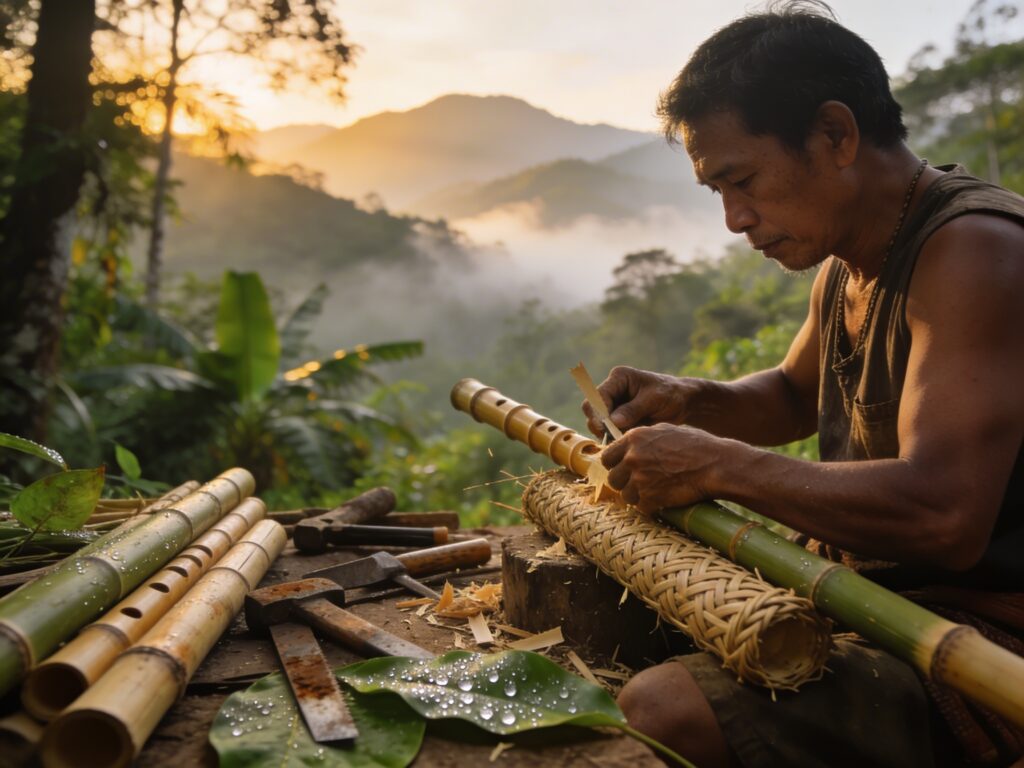
Whispers in the Mist: Dawn Journeys with Chiang Mai’s Bamboo Artisans
Chiang Mai, the Rose of the North, cradles secrets within its emerald embrace. Beyond the ancient temples and bustling night markets, deep within the highland jungles where dawn mist clings to the mountains like a lover’s sigh, another magic unfolds. Here, amidst the rustling giants of the forest, artisans practice an ancient alchemy: transforming humble bamboo into instruments that sing with the soul of the jungle.
Meeting the Forest Keepers
Venturing into these highland villages as the first light stains the sky purple and gold is like stepping into a living dream. The air is crisp, damp, and scented with earth, decaying leaves, and the faint, sweet aroma of bamboo sap. This is the domain of the forest artisans, masters of a craft passed down through whispers and weathered hands over generations. They are not merely craftsmen; they are interpreters of the forest, understanding its rhythms, its strengths, and its hidden melodies.
The Sacred Harvest: Bamboo at Dawn
The work begins long before the sun crests the peaks. Artisans head into the bamboo groves in the pre-dawn stillness, guided by generations of knowledge. Not all bamboo is equal. Specific species – like the resilient *Phai Ruak* or the sonorous *Phai Sang* – are chosen for their unique properties: thickness, straightness, node spacing, and the inherent resonance locked within their tubular structure.
Harvesting is a ritual of respect. Stalks are carefully selected, often those reaching maturity (3-5 years old), and cut at precise angles with razor-sharp tools. The timing, in the cool, moist dawn, is crucial. Bamboo harvested at this hour retains optimal flexibility and moisture content, making it less prone to cracking during the meticulous crafting process that follows. It’s a sustainable practice too; bamboo regenerates with astonishing speed, a gift from the forest.
Alchemy in Action: From Stalk to Song
Back in workshops often open to the mountain air, the transformation begins. The raw bamboo stalks undergo a demanding process:
- Curing & Drying: Bamboo is carefully smoked or slowly dried, sometimes over months, to stabilize it, prevent insect infestation, and enhance its tonal qualities.
- Shaping & Boring: Using specialized knives, chisels, and augers (sometimes hand-cranked), artisans meticulously hollow out the stalks, shape mouthpieces, and bore finger holes with astonishing precision. A fraction of a millimeter can alter the entire pitch and timbre.
- Refining & Tuning: This is where true artistry shines. The craftsman’s ear is their most vital tool. They scrape, sand, and adjust each hole, constantly testing the sound against subtle variations in breath or finger placement. It’s a dialogue between maker and material.
- Finishing Touches: Natural oils or beeswax might be applied to protect the bamboo and enhance its grain. Bindings of rattan or bamboo string add strength and aesthetic appeal.
Watching these artisans work is mesmerizing. Their hands, etched with the stories of countless instruments, move with a fluid confidence born of deep understanding. The workshop fills with the sounds of scraping wood, gentle tapping, and the experimental notes of an instrument coming to life – a soft flute trill, the deep thrum of a percussion tube, the rhythmic click of bamboo chimes.
Instruments Born of the Jungle
The creations emerging from these misty workshops are as diverse as the forest itself:
- The Khlui (ขลุ่ย): The iconic Thai bamboo flute, ranging from the high-pitched Khlui Lib to the deeper Khlui U. Its haunting, breathy tone is instantly recognizable.
- The Wot (โหวด): A circular panpipe made from graduated bamboo tubes bound together, producing rich, harmonious chords.
- Bamboo Xylophones & Marimbas: Striking tuned bamboo bars suspended over resonators creates bright, percussive melodies that dance on the mountain air.
- Percussion: From the sharp crack of bamboo clappers (*Grap*) to the resonant boom of large bamboo tubes used as drums (*Klong Yao*), bamboo provides rhythm to the jungle symphony.
- Unique Creations: Artisans often experiment, crafting wind chimes (*Luk Poom*), water-powered instruments, or entirely new designs inspired by the whispers of the forest.
More Than Craft: A Connection Forged
Seeking out these artisans isn’t just about buying a souvenir; it’s an immersion into a profound relationship between people, place, and material. It’s witnessing sustainability in action, where the resource is revered and replenished. It’s understanding the patience required, the respect demanded by the material, and the deep listening needed to unlock its song.
Holding a freshly crafted bamboo flute, still carrying the faint scent of the forest and the warmth of the artisan’s hands, you hold more than an instrument. You hold a piece of the mountain mist, the spirit of the dawn, and the enduring alchemy of Chiang Mai’s jungle artisans. It’s a resonant reminder that the most beautiful music often begins in silence, deep within the green heart of the world.
Finding the Harmony
Experiencing this requires venturing beyond the typical tourist trails. Look for community-based tourism initiatives focused on handicrafts or sustainable living in the Chiang Mai highlands (areas like Mae Kampong, Doi Saket, or specific villages near Doi Suthep-Pui National Park). Reputable eco-tour operators specializing in cultural immersion can also facilitate respectful visits. Remember to go with reverence, ask permission before taking photos, and support these artisans directly by valuing their time and skill when purchasing their incredible, forest-born instruments.