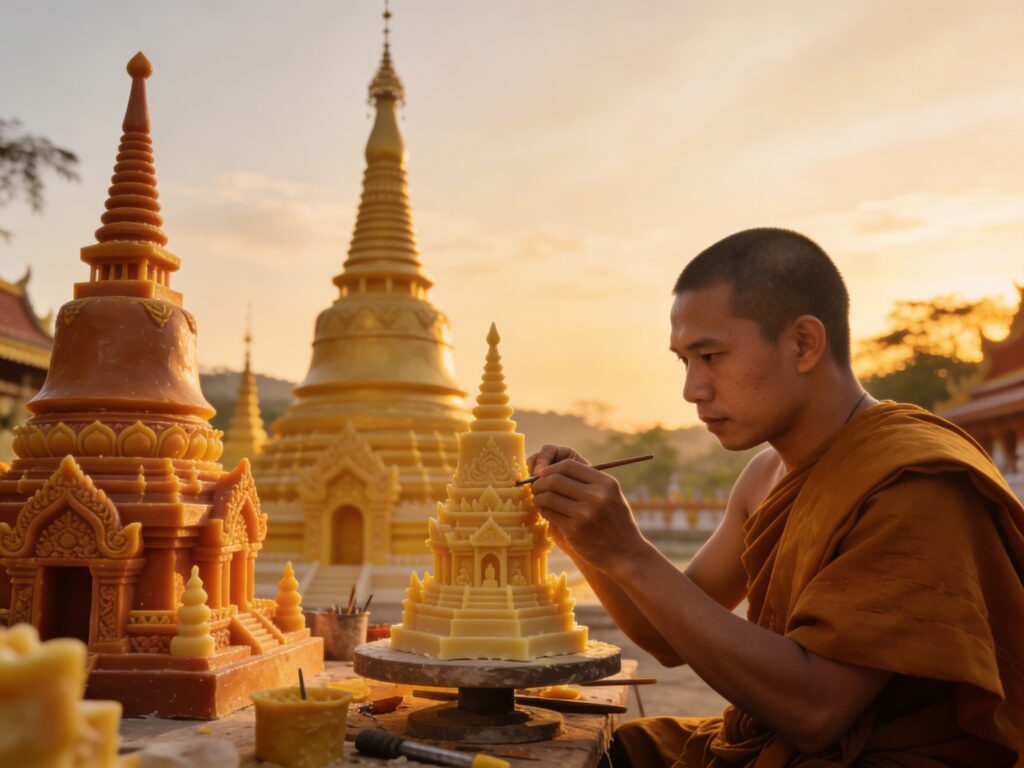
Sakon Nakhon’s Wax Citadel: Sculpting Devotion with Stupa Artisans at the Stupa Dawn Glow
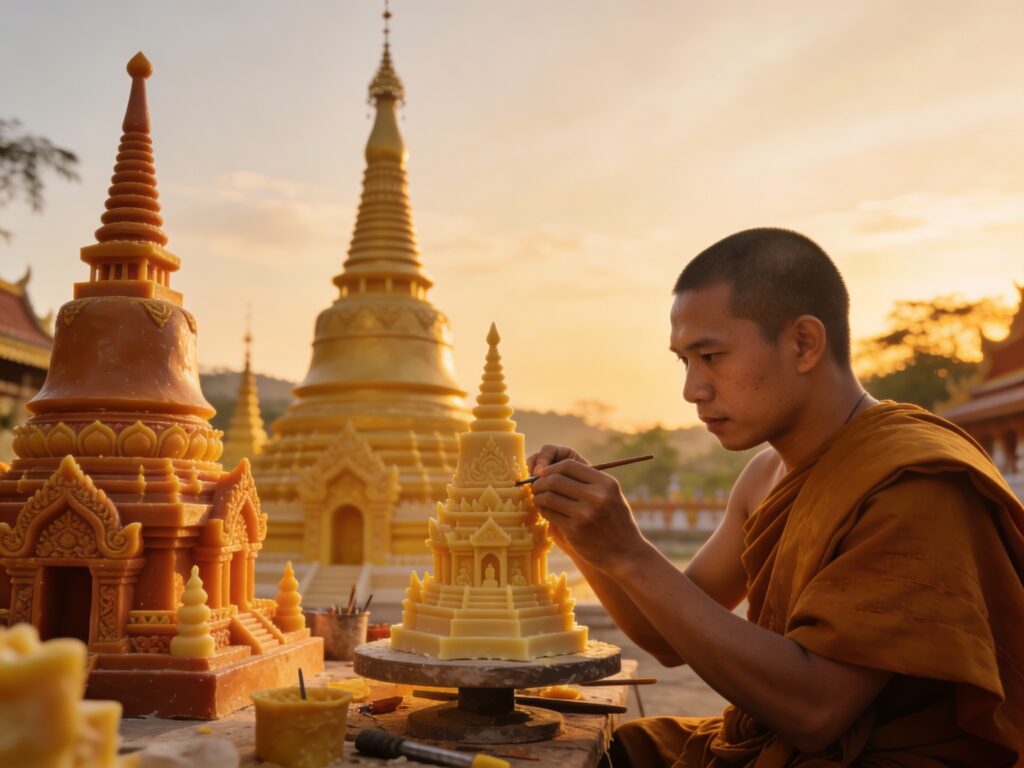
A Glow Unlike Any Other: Sakon Nakhon’s Wax Citadel
Forget the castles of Europe or the fortresses of ancient empires. Deep in Thailand’s spiritual heartland, Isan, the province of Sakon Nakhon crafts a citadel of an entirely different nature – one sculpted not from stone, but from faith, beeswax, and the first light of dawn. Welcome to the ethereal spectacle known locally as Prasat Peung (The Wax Castle or Wax Citadel) at Wat Phra That Choeng Chum, culminating in the breathtaking Stupa Dawn Glow ceremony.
More Than Art: Sculpting Merit and Devotion
This isn’t just an art exhibition; it’s a profound act of religious devotion deeply woven into the fabric of Sakon Nakhon’s identity, particularly during Bun Khao Padap Din (the End of Buddhist Lent festival) in late October. The tradition revolves around creating intricate, miniature replicas of Buddhist stupas (chedi or prasat) entirely from beeswax. These aren’t simple models; they are elaborate, multi-tiered citadels adorned with mythical creatures, delicate floral patterns, and intricate architectural details, often reaching several feet in height.
The artisans? They are the local people themselves – farmers, shopkeepers, students, monks – who dedicate countless hours, often late into the night, meticulously crafting these fragile masterpieces. Their tools are simple: hands warmed by the sacred material, sculpting tools, and unwavering faith. The beeswax, softened by the heat of their devotion, is painstakingly shaped, molded, and layered. Each stroke, each tiny detail added, is imbued with merit-making intention, an offering to the Buddha and the sacred relics housed within the temple’s main stupa.
The Alchemy of Dawn: The Stupa Glow
The culmination of this months-long dedication is the Stupa Dawn Glow ceremony. On the final morning of the festival, well before sunrise, the temple grounds transform. Hundreds, sometimes thousands, of these luminous wax citadels are gathered and carefully arranged around the base of the majestic Phra That Choeng Chum stupa, the province’s most revered religious site.
As the first, faint hints of light begin to soften the eastern horizon, a magical alchemy occurs:
- The Warmth of Candles: Devotees light countless candles placed within and around the wax stupas.
- The Dance of Light: The flickering candlelight dances through the translucent and semi-translucent beeswax, causing the entire collection of citadels to glow with an otherworldly, golden warmth.
- The Sacred Silhouette: This sea of glowing wax forms a radiant halo around the base of the ancient brick stupa, its silhouette stark against the pre-dawn sky.
- An Atmosphere of Reverence: The air fills with the gentle murmur of prayers, the soft chanting of monks, and the unique, sweet scent of melting beeswax – a scent of sanctity and sacrifice.
It’s a moment suspended in time, where human artistry, deep faith, and the natural phenomenon of dawn converge to create an atmosphere of profound peace and breathtaking beauty. The wax, inherently impermanent, begins to soften and melt as the sun rises higher, symbolizing the Buddhist teachings on impermanence (anicca) – a poignant reminder that beauty and devotion exist powerfully in the fleeting moment.
Witnessing the Wax Citadel Tradition
Experiencing the Wax Citadel and the Stupa Dawn Glow is a privilege. Here’s what you need to know:
- When: The main event, culminating in the Dawn Glow, takes place during Bun Khao Padap Din, typically around the end of October, specifically aligned with the full moon day marking the end of Buddhist Lent (Ok Phansa). Dates vary slightly each year based on the lunar calendar – check local listings or Sakon Nakhon tourism sources for the exact year you plan to visit.
- Where: Wat Phra That Choeng Chum in Sakon Nakhon town is the epicenter. Wax stupas are displayed in the days leading up to the Dawn Glow, but the pre-dawn ceremony is the highlight.
- Etiquette: Dress respectfully (shoulders and knees covered). Arrive early (around 4:00 AM or earlier) to secure a good viewing spot. Maintain silence or speak softly during the ceremony. Photography is generally permitted, but be discreet and avoid using flash near the wax sculptures.
- Beyond the Glow: The festival includes vibrant processions, traditional Isan music and dance performances (mor lam and serng), and the beautiful ritual of floating small, decorated wax boats (krathong peung) on the lake beside the temple.
A Testament to Faith and Community
Sakon Nakhon’s Wax Citadel is more than a tourist attraction; it’s a vibrant, living testament to the enduring power of community spirit and unwavering Buddhist faith in Isan. The Stupa Dawn Glow ceremony offers a rare glimpse into the soul of Northeast Thailand – a moment where artistry becomes prayer, beeswax becomes sacred gold, and the quiet devotion of thousands illuminates the path towards dawn. It’s a spectacle that etches itself onto the heart, a luminous reminder of the beauty born from collective devotion and the transformative power of light.