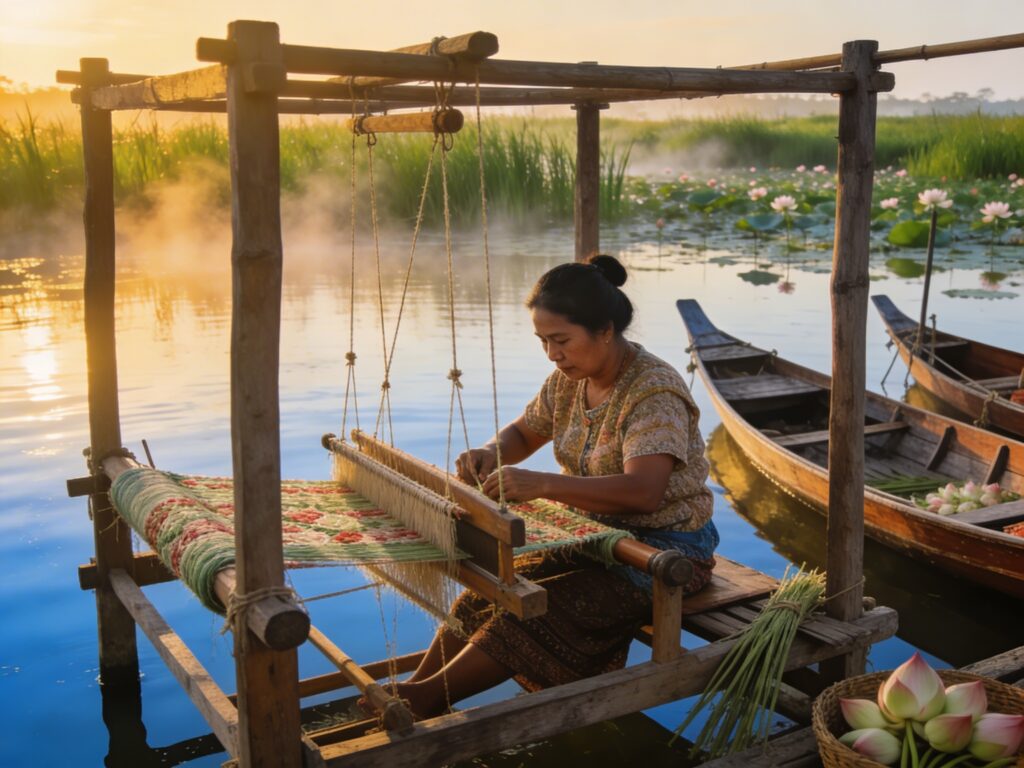
Phatthalung’s Lotus Loom: Weaving Aquatic Textiles with Lagoon Artisans in the Wetland Dawn Glow
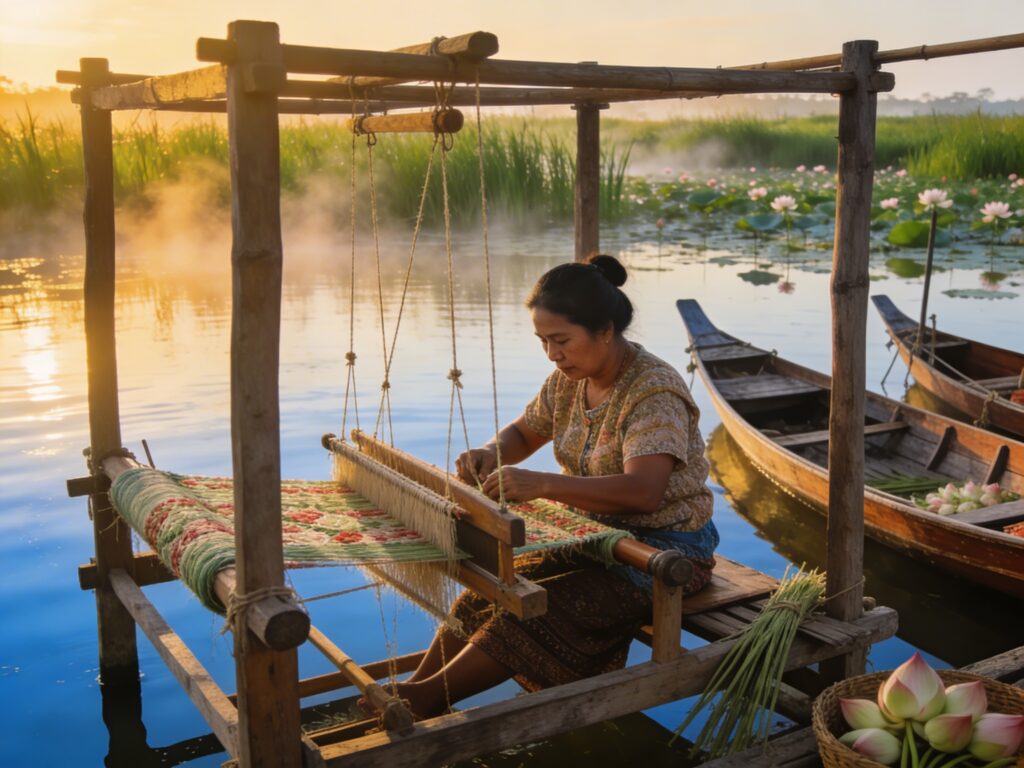
Beyond Silk & Cotton: Phatthalung’s Liquid Gold
Forget the bustling markets of Bangkok or the well-trodden paths of Chiang Mai’s artisan villages. Deep in Thailand’s serene south, nestled amongst emerald rice paddies and shimmering wetlands, lies Phatthalung – a province where the very fabric of tradition is woven from the water itself. Here, an extraordinary craft thrives: the creation of exquisite textiles from the humble lotus stem, a practice as delicate and resilient as the wetlands that sustain it.
The Wetland’s First Light: Harvesting Liquid Thread
The magic begins before dawn. As the first blush of pink and gold streaks the sky over the vast Thale Noi Lake (Thailand’s largest natural freshwater lake), a quiet industry stirs. Local artisans, often women whose families have practiced this craft for generations, glide in small, shallow boats through the labyrinthine canals and lotus lagoons. Silhouetted against the awakening sky, they carefully select mature lotus stems, slicing them just below the waterline with practiced precision.
This pre-dawn harvest is crucial. The cool, moist air preserves the stems’ flexibility and moisture content, making the subsequent extraction of the precious fibers possible. It’s a communion with the wetland’s rhythm, a daily ritual where human hands meet the aquatic bounty at its most receptive moment.
From Aquatic Stem to Ethereal Thread: A Painstaking Alchemy
The true artistry lies in the transformation. Back on land, often in simple stilt houses overlooking the water, the meticulous process begins:
- Peeling & Rolling: The thick, fleshy stems are gently scored and peeled. The inner filaments, resembling fine, sticky noodles, are carefully separated.
- Twisting the Fibers: This is where skill truly shines. Artisans deftly roll groups of wet filaments on a smooth, slightly damp surface – traditionally a wooden board or even a coconut shell. With rhythmic, consistent pressure, they roll them together into a single, continuous strand. It’s a mesmerizing dance of fingers and fiber, requiring immense dexterity and patience.
- Drying: The newly formed threads are laid out to dry naturally, not under harsh sun, but in the shade. This preserves their unique, slightly golden-beige hue and inherent softness.
Unlike silk or cotton, lotus thread cannot be spun on a wheel. Each strand is painstakingly created by hand, one by one. It takes thousands of stems and countless hours to produce enough thread for even a small scarf.
The Loom’s Song: Weaving Water into Fabric
Once dried, the threads are ready for the loom. Traditional handlooms, often passed down through families, come alive with the rhythmic clack of the shuttle. The weaving process itself is slow and deliberate. Lotus thread is incredibly fine and delicate, demanding constant attention and a gentle touch from the weaver.
The resulting fabric is unlike any other:
- Uniquely Soft & Light: Lotus fabric feels remarkably soft against the skin, often described as lighter than silk.
- Distinctive Texture & Sheen: It possesses a subtle, natural texture and a gentle, earthy sheen unique to lotus fibers.
- Breathable & Comfortable: Highly breathable, it’s ideal for Thailand’s warm climate, feeling cool and comfortable.
- Symbolic Hues: While naturally a soft beige-gold, artisans sometimes incorporate natural dyes from local plants, creating subtle, earthy tones that reflect the wetland palette.
More Than Fabric: Weaving Culture & Conservation
Phatthalung’s lotus weaving is far more than an artisanal craft; it’s a tangible link to the environment and cultural identity. The health of the Thale Noi wetlands is intrinsically tied to the survival of this tradition. Healthy lotus beds mean sustainable fiber sources. This creates a powerful incentive for communities to protect their fragile aquatic ecosystem from pollution and unsustainable development.
Moreover, it represents generations of ingenuity and quiet resilience. Learning this craft takes years of dedication. Supporting the artisans means preserving not just a textile, but a unique heritage, a way of life harmoniously intertwined with the wetland dawn.
Experiencing the Lotus Loom: A Traveler’s Privilege
For the responsible traveler, Phatthalung offers a rare and profound experience:
- Dawn Excursions: Join local guides for early morning boat trips to witness the lotus harvest firsthand amidst the stunning wetland sunrise.
- Village Workshops: Visit villages like Ban Khao Chi Chan or communities around Thale Noi to observe artisans extracting fibers, rolling threads, and weaving. Some offer hands-on experiences (like simple rolling techniques) under patient guidance.
- Meeting the Artisans: Engage respectfully with the weavers. Listen to their stories, understand the process’s complexity, and appreciate the deep connection to their environment.
- Ethical Purchasing: If purchasing lotus textiles (scarves, shawls, small pieces are common), buy directly from cooperatives or artisan groups whenever possible. Understand that the high price reflects the immense labor and skill involved – it’s an investment in heritage and sustainability.
Phatthalung’s lotus loom weaves more than just beautiful fabric; it weaves together water, light, human skill, and ecological awareness into a textile that feels truly alive. It’s a testament to the quiet magic found off the beaten track, where the dawn glow illuminates an ancient craft breathing softly on the water’s edge.