
Phetchaburi’s Palm Sugar Alchemy: Stirring Golden Syrup with Cave-Side Artisans in the Dawn Karst Haze
The Pre-Dawn Hustle: Where Sap Meets Stone
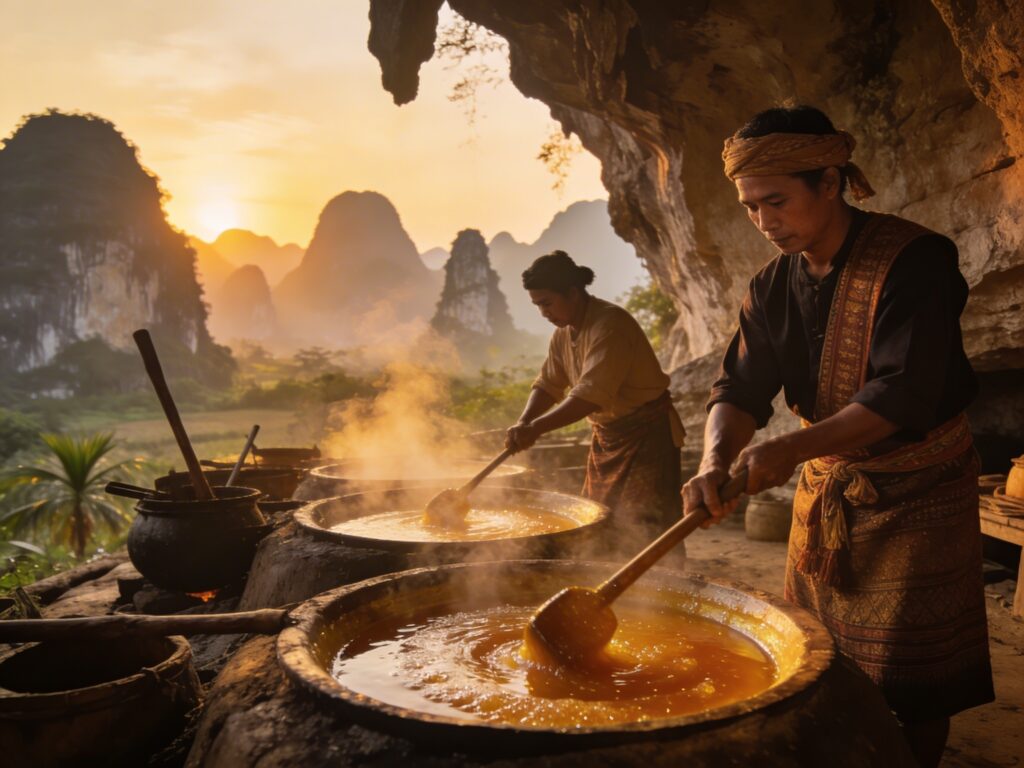
The first whispers of dawn are still hours away. Beneath the imposing, jagged silhouettes of Phetchaburi’s limestone karsts, a different kind of light flickers – the warm, dancing glow of charcoal fires. This is the realm of the palm sugar artisans, where ancient tradition meets the unique geology of Thailand’s ‘City of Diamonds’. Here, nestled against cave mouths or sheltered by towering cliffs, the alchemy of transforming simple palm sap into liquid gold begins while the world still sleeps.
Tapping the Sweet Essence: A Race Against the Sun
The magic starts high in the crowns of Toddy Palms (Borassus flabellifer). Skilled climbers, often scaling dizzying heights with nothing more than bamboo ladders and raw agility, work in the cool darkness before sunrise. Why the predawn rush? The sap flows most abundantly and with the lowest fermentation risk in the cool night air. They carefully collect the sap (nam tan) gathered overnight in suspended clay pots or bamboo tubes, a clear, slightly sweet liquid resembling coconut water, but destined for greatness.
The Cave-Side Crucible
This is where the karst landscape becomes an integral part of the process. Artisans often set up their boiling stations near cave entrances or under natural rock overhangs. This isn’t just picturesque; it’s practical. The caves provide:
- Natural Humidity Control: The constant, slightly humid environment helps prevent the syrup from crystallizing too quickly during the crucial boiling stage.
- Shelter: Protection from wind that could extinguish fires or blow debris into the syrup, and from sudden rain showers.
- Ambient Temperature Regulation: The rock mass helps moderate temperatures, providing a slightly cooler environment than the open fields, beneficial for the artisans working over intense heat.
The Alchemical Transformation: Fire, Skill, and Patience
Pouring the collected sap into vast, shallow woks perched over crackling charcoal fires, the artisans begin the patient, laborious process of reduction. This is where experience is paramount. Stirring constantly with long-handled paddles, they skim off impurities that rise to the surface. As hours pass, the clear sap undergoes a remarkable metamorphosis:
- Evaporation: Water content dramatically reduces, concentrating the sugars.
- Caramelization: The sugars gently caramelize, turning the liquid from pale gold to a deep, rich amber – the signature hue of Phetchaburi’s palm sugar.
- Flavor Development: Subtle notes emerge – hints of butterscotch, caramel, and a unique, deep sweetness far more complex than refined sugar.
The artisan’s eye and wrist are critical. Stir too little, and it scorches. Boil too long, and it becomes hard candy. The perfect moment to remove it from the heat is judged by its viscosity – a thick, flowing syrup that coats the paddle.
From Syrup to Solid Gold
While some syrup is bottled directly for culinary use, much is poured into traditional molds. Often small basket-like containers made of palm leaf or plastic, these give the sugar its familiar cake or cup shape. As it cools completely, the liquid solidifies into the crumbly, fragrant blocks of pure palm sugar (nam tan pep) prized throughout Thailand. The scent hanging in the cave-side air is intoxicating – sweet, smoky, earthy.
More Than Just Sugar: A Heritage in Every Drop
Phetchaburi’s palm sugar isn’t just a product; it’s a living heritage. The knowledge passed down through generations – identifying the right trees, the precise tapping technique, the intuitive mastery of the boil – is invaluable. Supporting these cave-side artisans means preserving a piece of authentic Thai culture and sustainable agro-forestry. The Toddy Palms provide not only sugar but also materials for thatch, timber, and sap for vinegar or alcoholic beverages, making them vital to the local ecosystem and economy.
Tasting the Dawn: Experiencing Palm Sugar Alchemy
For travelers seeking genuine connection:
- Visit Early: Aim to arrive *before* dawn (around 4:00-5:00 AM) to witness the climbers and the initial boiling stages. The atmosphere is magical.
- Seek Out Cave Workshops: Ask locally or at your accommodation for directions to traditional producers working near karst formations, particularly in areas like Khao Luang or around smaller caves off the main tourist paths.
- Observe Respectfully: This is hard, hot work. Observe quietly, ask permission before taking close-up photos, and avoid disrupting the process.
- Buy Directly: Purchase freshly made syrup or sugar cakes directly from the producers. The taste is incomparable.
- Savour the Flavour: Taste it pure, or look for it in local sweets like Khanom Mor Gaeng (coconut custard) or Khanom Tan (palm sugar cakes).
Watching the golden syrup emerge in the haze of dawn, stirred by skilled hands against a backdrop of ancient stone, is more than just seeing how sugar is made. It’s witnessing a timeless alchemy where nature, tradition, and human perseverance combine to create something truly golden – the soul of Phetchaburi, crystallized.
