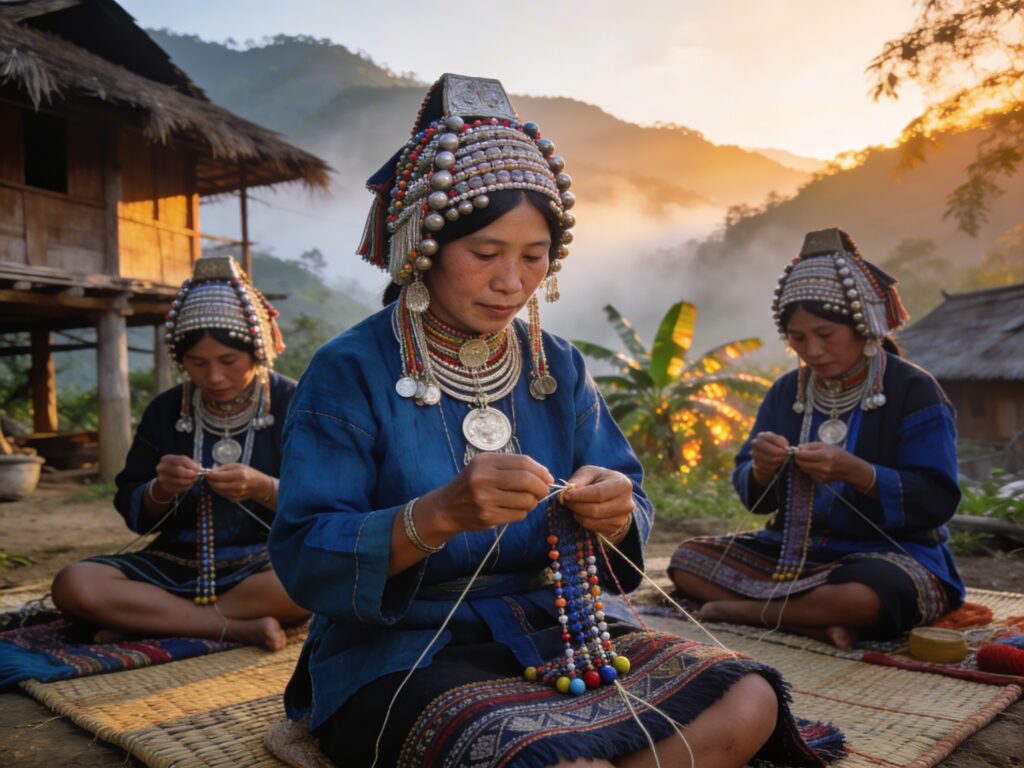
**Chiang Rai’s Daybreak Threads: Stitching Akha Headdresses with Tribal Artisans in a Highland Hamlet’s First Light**
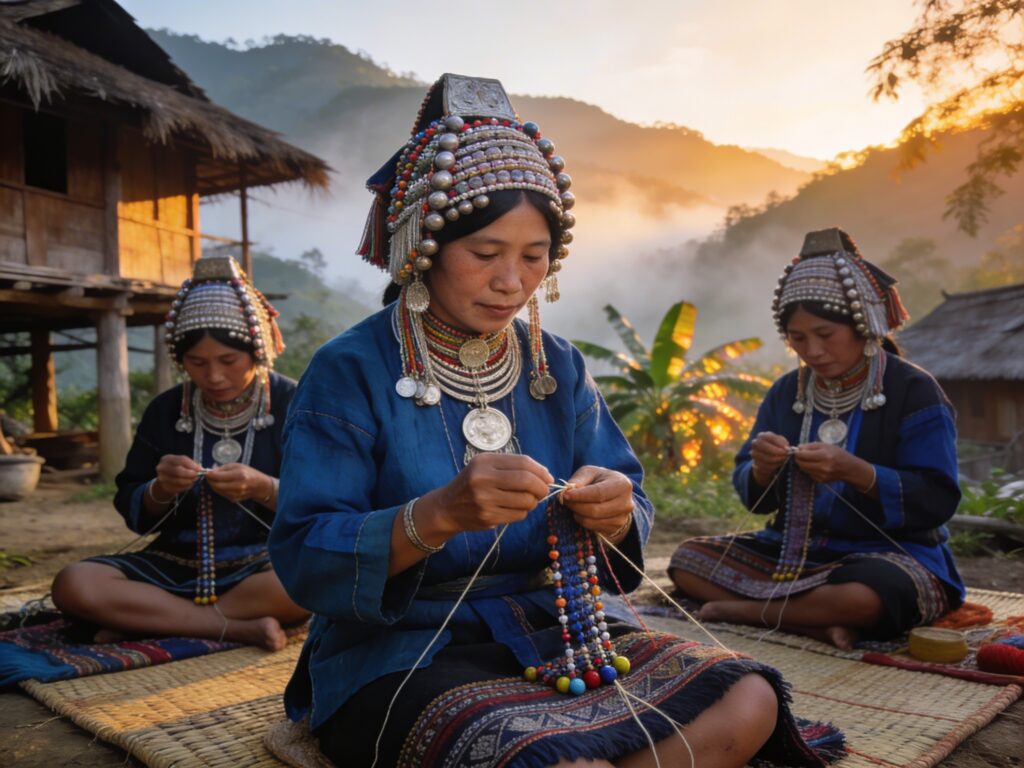
The Mist-Kissed Dawn: Where Silver Threads Weave Akha Dreams
The air in the Chiang Rai highlands holds a particular stillness just before dawn. Crisp, cool, and scented faintly with woodsmoke and damp earth, it’s a world suspended between night and day. Deep within a tucked-away hamlet, nestled amidst emerald rice terraces and whispering bamboo groves, a different kind of light begins to stir. It’s not just the sun peeking over the eastern peaks; it’s the soft glow of a single oil lamp illuminating the concentrated hands of an Akha artisan, already beginning the sacred task of the day – stitching dreams and identity into silver.
The First Light Symphony: Ritual and Craft Unite
For the Akha people, one of Thailand’s most visually distinctive hill tribes, the day doesn’t truly begin until the intricate headdress, or u-coe, is meticulously placed upon the head. This isn’t mere adornment; it’s a crown of heritage, a map of ancestry, and a protective talisman woven into existence. And the process of its creation, particularly the final embellishments and repairs, often unfolds in the quiet, sacred hours of daybreak.
Imagine: Thin tendrils of mist curl around stilted wooden homes. The village is mostly silent, save for the distant crow of a rooster and the gentle clinking of silver beads and coins. Inside a humble dwelling, bathed in the warm, flickering light of the lamp, an Akha grandmother or mother sits cross-legged on the woven bamboo floor. Her hands, weathered by time and work but astonishingly dexterous, move with practiced grace. Tiny seed beads, shimmering silver coins, vibrant dyed chicken feathers, and intricate metal ornaments are laid out before her like precious jewels.
Stitching the Sky and Earth: Anatomy of an U-Coe
Constructing an Akha headdress is a feat of artistry passed down through generations of women. Each element holds profound significance:
- The Foundation: A stiffened, often black cotton cap forms the base, shaped to fit snugly.
- The Silver Symphony: Rows upon rows of hand-hammered silver beads, discs, and balls are sewn meticulously onto the cap. The clinking sound they make is considered pleasing to the spirits and signifies the wearer’s presence.
- Cosmic Emblems: Distinctive silver ornaments often depict suns, moons, and stars – symbols linking the wearer to the cosmos and ancestral spirits. Fish scales represent fertility and abundance.
- Protective Charms: Old silver coins (often rupees or antique Southeast Asian trade coins) are highly prized, believed to ward off evil spirits and bring prosperity. Chains and dangling ornaments add movement and further protective power.
- The Feather Flourish: Dyed red chicken feathers, sometimes interspersed with tufts of goat hair, cascade down the back or sides, adding vibrant colour and dynamism, symbolising life force and beauty.
Watching an artisan work at dawn is witnessing a living museum. Her fingers know the patterns by heart, each stitch a silent prayer, a connection to mothers and grandmothers long past. The headdress isn’t just worn; it’s inhabited. Its weight is a reminder of responsibility, its beauty a celebration of Akha identity.
Beyond the Beads: Threads of Culture and Continuity
In the soft light, the act of stitching transcends craft. It’s a meditation, a reaffirmation of belonging. The motifs woven into the headdress tell stories:
- Intricate geometric patterns represent the Akha’s journey and their relationship with the natural world.
- The specific arrangement often denotes the wearer’s village, marital status, and even age group.
- Every bead placed is a continuation of an unbroken thread stretching back to mythical origins.
Yet, this tradition faces modern pressures. The sheer weight and cost of genuine silver headdresses mean lighter, less expensive versions are sometimes used daily. The knowledge resides primarily with the elder generation. Dawn, therefore, becomes a crucial time not just for maintenance, but for subtle teaching moments – a granddaughter watching, perhaps even threading a bead under a grandmother’s guidance, ensuring the patterns persist.
Witnessing with Reverence: A Traveller’s Role at Daybreak
Finding oneself in an Akha hamlet at dawn, perhaps through a carefully managed community-based tourism initiative, is an immense privilege. It requires deep respect:
- Silence is Golden: Speak in hushed tones or simply observe. This is their sacred routine.
- Permission is Paramount: Never enter a home uninvited. Ask your guide to arrange respectful viewing if possible, understanding a firm ‘no’ is possible and must be honoured.
- Eyes, Not Lenses First: Always ask before taking photographs. The pre-dawn light might be beautiful, but consent is essential. Flash is intrusive and disrespectful.
- Support Authentically: If artisans offer crafts for sale, purchase directly from them, ensuring fair compensation. Look for pieces made traditionally with real silver and beads where possible.
- Listen and Learn: Engage with stories if shared, but avoid intrusive questions about personal beliefs or rituals unless information is freely offered.
As the sun finally crests the mountains, bathing the valley in golden light, the artisan might finish her morning’s work. She carefully lifts the completed or refreshed u-coe, its silver catching the first rays, sparkling like captured starlight. Placing it gently on her head, she steps out into the new day, transformed. She carries the weight of her ancestors, the beauty of her culture, and the hopes for its future, all meticulously stitched together in the quiet magic of a Chiang Rai dawn. To witness this is to see more than craft; it’s to see a people’s soul, woven in silver and light.