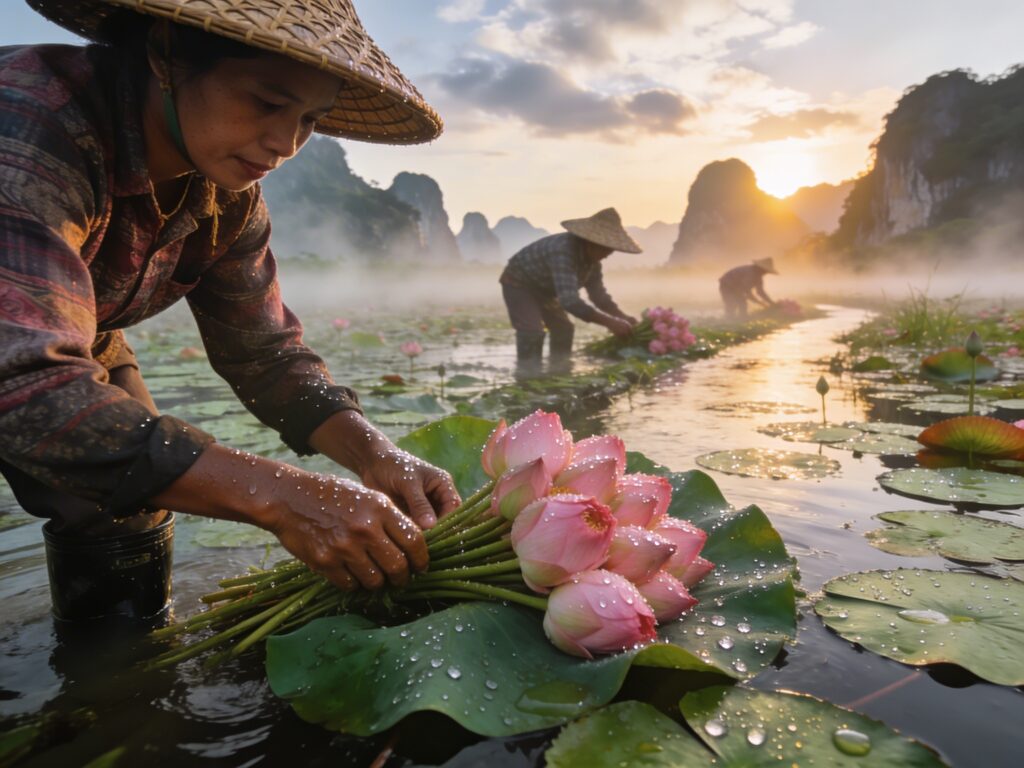
Ang Thong’s Golden Basin Lotus Harvest: Gathering Sacred Blooms with Wetland Keepers in the Daybreak Dew
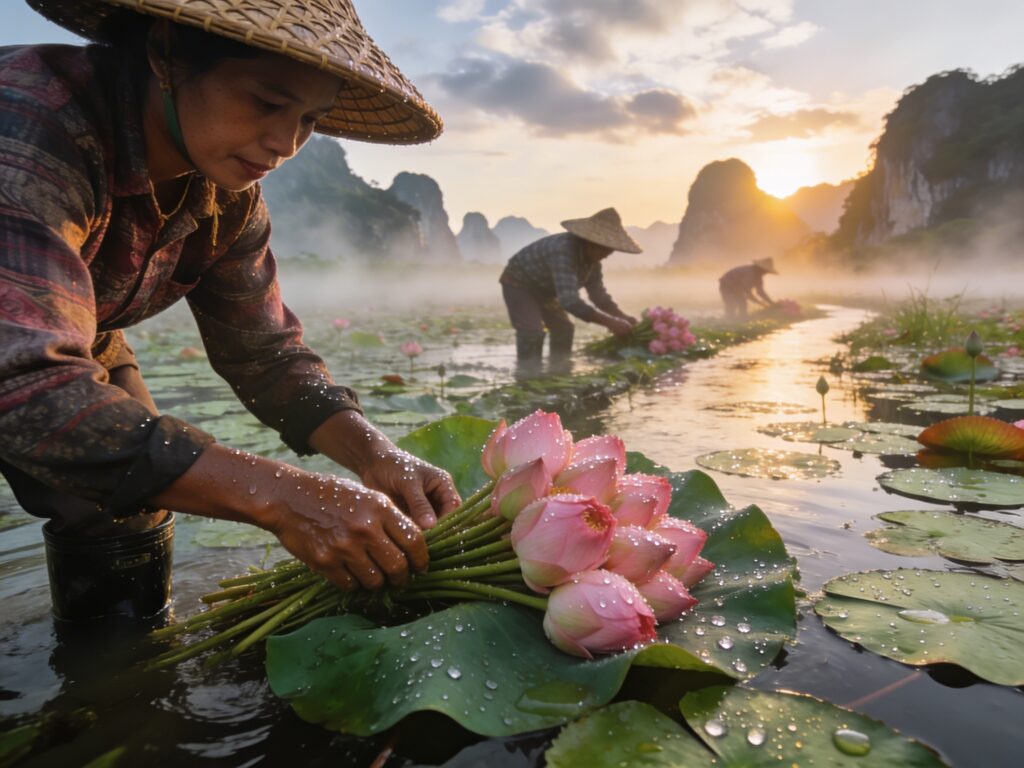
The Sacred Harvest: Dawn Among Ang Thong’s Lotus Guardians
The first whispers of light begin to soften the indigo sky, painting the horizon in delicate hues of peach and rose. Mist curls gently over the vast, placid waters of Ang Thong’s wetlands. This is no ordinary dawn; this is the sacred hour when the ‘Golden Basin’ comes alive with the quiet, determined work of its guardians – the wetland keepers – harvesting the revered Bua Luang, the magnificent lotus blooms.
Ang Thong: Thailand’s Golden Basin
Nestled in the heart of Thailand’s Central Plains, Ang Thong province lives up to its evocative name – the “Golden Basin.” Renowned for its intricate network of canals, rivers, and fertile floodplains, this landscape transforms into a breathtaking sea of green and pink during the lotus season (roughly November to February, peaking around December/January). As the dry season progresses and water levels recede slightly, the conditions become perfect for the spectacular bloom of the native lotus varieties, primarily the large-petaled Bua Luang.
Meeting the Wetland Keepers: Stewards of the Sacred
Long before tourists arrive, the wetland keepers – often local farmers and families who have nurtured these waters for generations – slip into the cool, waist-deep water. Clad in practical clothing and wide-brimmed hats, they move with practiced grace. These aren’t just harvesters; they are custodians of a tradition deeply intertwined with Thai culture and Buddhism. The lotus (bua) is a profound symbol of purity, rising unblemished from the mud, representing enlightenment and spiritual awakening.
Their work is meticulous and respectful. Using sharp knives or simply deft fingers, they carefully cut the long, sturdy stems just below the water’s surface, ensuring the plant’s root system remains intact for future growth. Each bloom is handled with reverence, knowing its destination might be a temple altar, a royal ceremony, a local market, or a household shrine.
Why the Dew-Kissed Dawn?
Harvesting at daybreak isn’t just picturesque; it’s essential:
- Bloom Perfection: Lotus flowers naturally begin to open at dawn. Harvesting them as they unfurl ensures they are captured at their most vibrant and pristine.
- Preserving Freshness: The cool morning air and the protective layer of dew help keep the delicate petals fresh and hydrated for longer, crucial for their journey.
- Practical Comfort: Working in the water during the cooler morning hours is far more bearable than under the intense midday sun.
- A Moment of Tranquility: The pre-dawn silence, broken only by the gentle splash of water and the calls of waking birds, adds a layer of serene spirituality to the task.
Experiencing the Lotus Harvest
Witnessing this ritual is a privilege and an unforgettable immersion into rural Thai life and spirituality. Several communities in Ang Thong, particularly around districts like Pa Mok and Wiset Chai Chan, open their wetlands to respectful visitors during the season:
- Predawn Arrival: Tours typically start *very* early (4:00 AM – 5:00 AM) to reach the ponds at first light. Dress for getting muddy and wet!
- Boat or Wading: Access the lotus fields via small, traditional boats or by wading cautiously into the shallows alongside the keepers (follow their instructions!).
- Learn and Participate (Respectfully): Listen to the keepers explain their techniques, the different lotus varieties, and the cultural significance. You may be invited to try harvesting under their guidance – always handle the blooms gently.
- Capture the Magic: The soft dawn light illuminating the sea of pink and green, dotted with the figures of the harvesters, creates ethereal photographic opportunities.
- Beyond the Harvest: Visits often include seeing how the lotus is prepared – stems bundled, blooms arranged, sometimes sampling local lotus-based snacks or tea.
More Than Just Flowers: A Connection to Culture
The Ang Thong lotus harvest is far more than an agricultural activity. It’s a living tapestry woven from:
- Deep-Rooted Tradition: Techniques passed down through generations, connecting the present to the past.
- Spiritual Significance: The lotus is central to Thai Buddhist practices, making this harvest a service to faith.
- Community & Livelihood: It supports local families and sustains the wetland ecosystems they protect.
- Harmony with Nature: A testament to sustainable practices that work *with* the rhythms of the land and water.
Planning Your Sacred Dawn
If you seek an experience that touches the soul and reveals the heart of rural Thailand, journey to Ang Thong during the lotus season:
- Timing is Crucial: Aim for December or January for peak bloom. Confirm specific harvest tour dates with local operators or your accommodation, as it depends on water levels.
- Book a Responsible Tour: Seek out local tour operators or community-based tourism initiatives in Ang Thong that prioritize respectful interaction and fair support for the wetland keepers.
- Come Prepared: Wear clothes and shoes you don’t mind getting very wet and muddy. Bring insect repellent, sunscreen (for later), a hat, a change of clothes, and a waterproof bag for your camera/phone.
- Respect is Paramount: Remember this is their livelihood and sacred tradition. Follow instructions, ask permission before taking close-up photos of people, and handle everything with care.
Standing in the cool, dewy silence of an Ang Thong dawn, surrounded by a sea of unfolding lotus blossoms and the quiet dedication of the wetland keepers, offers a profound connection to Thailand’s natural beauty and spiritual core. It’s a glimpse into a golden basin where tradition, reverence, and nature bloom together at daybreak.