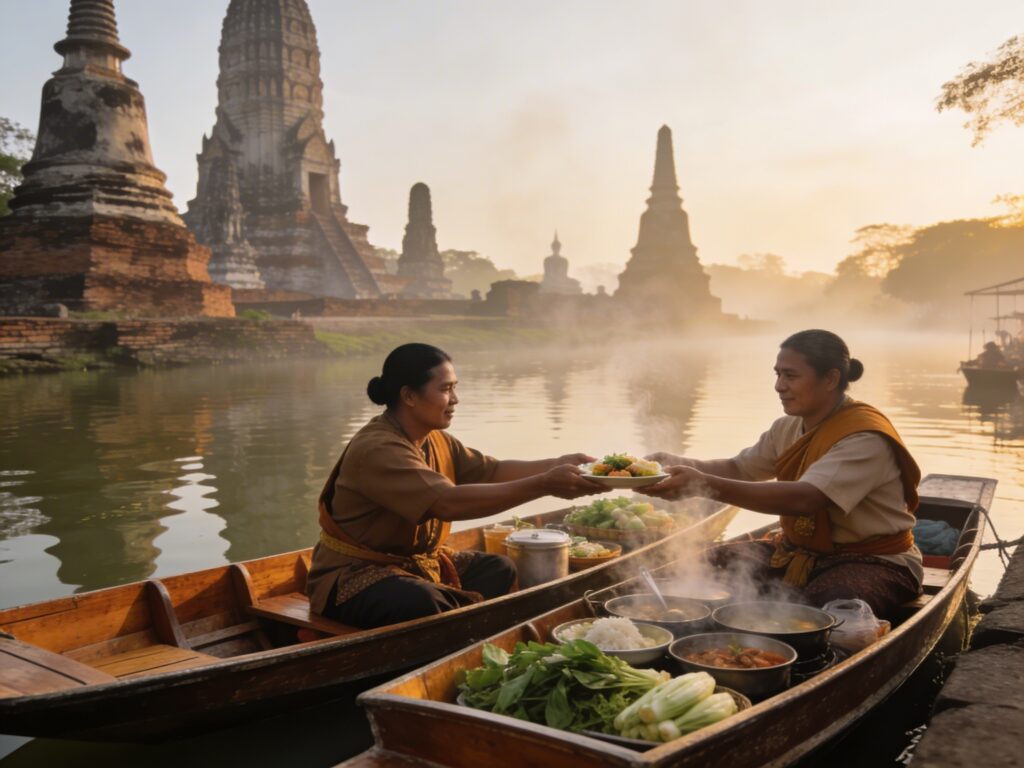
Ayutthaya’s Floating Kitchen Boats: Serving Chanting Sustenance to UNESCO Temple Workers in the Canal’s Morning Murmur
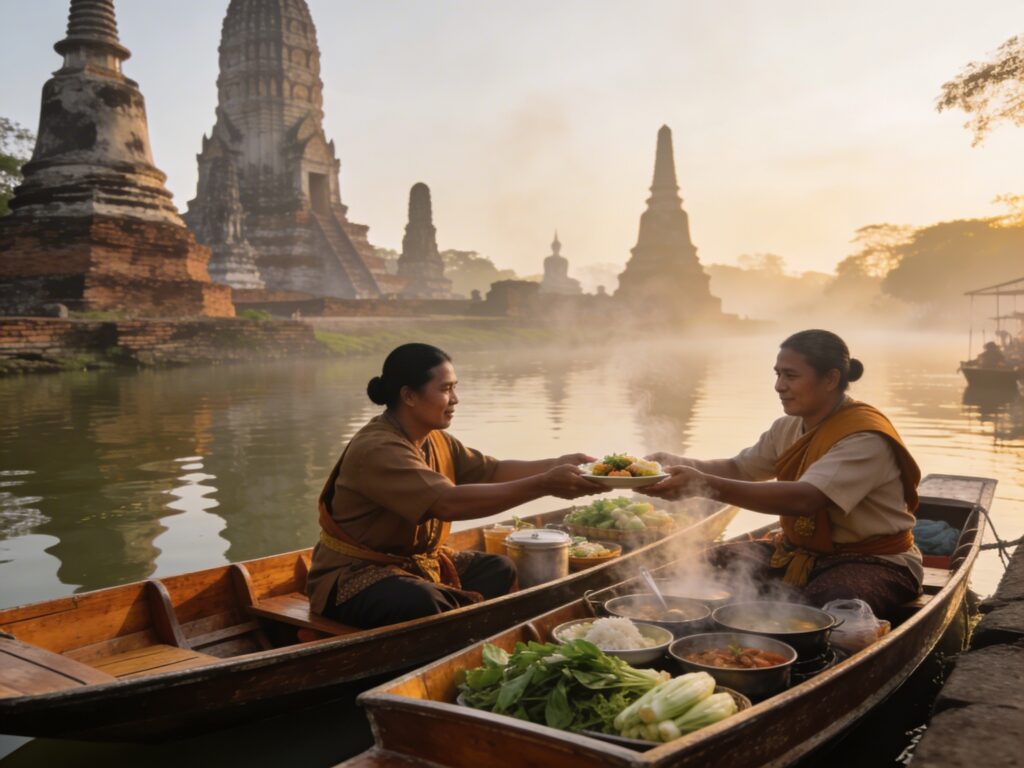
The Canal’s Dawn Chorus: Where Stone Whispers Meet Sizzling Pans
The first light of day in Ayutthaya, Thailand’s ancient capital, paints the UNESCO World Heritage ruins in hues of soft gold. Mist curls off the Chao Phraya and Pasak Rivers, and the labyrinthine canals (khlongs) that crisscross the city begin to stir. Before the tourist buses arrive and the heat intensifies, a unique symphony unfolds – the gentle putter of long-tail boats mingles with the rhythmic clatter of pots and pans, and the fragrant aroma of simmering broths cuts through the cool morning air. This is the realm of Ayutthaya’s floating kitchen boats, serving not tourists, but the dedicated guardians of the past: the temple workers.
Breakfast Afloat: Sustenance for the Stone Keepers
These aren’t the floating markets of Damnoen Saduak. These are functional, mobile kitchens operated by local vendors, navigating the canals specifically to cater to the teams responsible for preserving Ayutthaya’s majestic, crumbling temples. As the sun barely crests the horizon, these boats become vital lifelines:
- The Early Crew: Temple groundskeepers, restoration laborers, security personnel, and monks often begin their duties long before the official sites open. Their work is physically demanding, conducted amidst ancient stone and under the growing sun.
- The Mobile Canteen: Floating kitchens, often simple wooden long-tails fitted with gas stoves, steaming pots, and baskets of fresh ingredients, glide towards known mooring spots near temple complexes like Wat Mahathat, Wat Ratchaburana, or along the inner city canals.
- Speed & Convenience: For workers on a tight schedule, the boats offer unbeatable convenience. No need to travel far; hot, fresh, affordable food comes directly to the waterside.
Chanting Sustenance: A Menu Rooted in Tradition
The fare offered is quintessential Thai breakfast comfort food, designed for energy and warmth. Forget elaborate tourist dishes; here, practicality and flavour reign supreme:
- Khao Tom (Thai Rice Soup): The undisputed star. Fragrant jasmine rice simmered in a flavourful broth (often pork or chicken), topped with minced pork, an egg (soft-boiled or century), slivers of ginger, fresh coriander, and crispy garlic. It’s restorative, easy to eat, and deeply satisfying.
- Jok (Thai Congee): A smoother, more porridge-like rice soup, often topped with similar accompaniments as Khao Tom – minced pork, egg, ginger, spring onions, and sometimes pork balls or offal for the adventurous.
- Khanom Jin (Fermented Rice Noodles): Served with various curries like Nam Ya (fish) or Nam Prik (chilli), providing a lighter but flavour-packed option.
- Grilled Sticky Rice (Khao Niew Ping): Portable, filling, and often eaten with a sweet or savoury accompaniment.
- Hot Coffee & Tea: Strong, sweet Thai iced coffee (Oliang) or hot tea served in plastic bags with a straw – the essential caffeine kickstart.
The air fills with the comforting scent of garlic frying for the soup toppings, the rich aroma of simmering broths, and the sweet, smoky hint of grilling sticky rice. The clinking of spoons against bowls and the murmur of workers exchanging morning greetings blend with the sounds of the waking canal – a gentle lapping of water, distant bird calls, and the soft drone of boat engines. It’s a soundscape of sustenance and shared purpose.
More Than Just a Meal: A Ritual of Community and Continuity
This daily ritual transcends mere convenience. It represents a vital thread in Ayutthaya’s living tapestry:
- Sustaining the Sustainers: These meals provide the essential fuel for the physically demanding work of preserving these irreplaceable historical treasures. The workers maintain the grounds, assist with restorations, and safeguard the sites.
- Local Economy & Tradition: The floating kitchen vendors are local entrepreneurs, continuing a traditional form of mobile food service adapted perfectly to Ayutthaya’s aquatic geography. Their presence supports families and keeps culinary traditions alive.
- A Moment of Calm: Before the day’s crowds descend, this is a time for quiet camaraderie among the workers. Sitting by the canal, enjoying a hot bowl of soup amidst the ancient ruins, creates a unique sense of place and community.
- Living Heritage: While the temples stand as monuments to the past, the floating kitchens represent the vibrant, everyday life that continues to flow around them. It’s a beautiful juxtaposition – ancient stones and the ephemeral steam of breakfast.
Witnessing the Murmur
For the observant traveler seeking an authentic glimpse beyond the main sights, experiencing this morning ritual is possible:
- Timing is Everything: Be near the canals, particularly near major temple complexes, between 6:00 AM and 8:00 AM.
- Listen & Look: Follow the sound of boat engines and the smell of cooking. Look for small, unassuming boats moored along canal banks, often with workers clustered nearby eating.
- Respect the Space: Remember this is primarily a service for workers. Observe quietly and respectfully from a distance. Use a long lens if you wish to photograph. Don’t intrude or disrupt their routine.
- Ask Locally: Your guesthouse or a local guide might know specific spots or times where this scene reliably unfolds.
The floating kitchen boats of Ayutthaya are more than just mobile eateries; they are an integral part of the city’s dawn rhythm, a vital service ensuring those who tend to the echoes of history are well-nourished. In the soft morning light, with the scent of ginger and garlic mingling with the damp stone, the simple act of sharing breakfast becomes a poignant connection between the present-day caretakers and the enduring spirit of Ayutthaya itself. It’s sustenance served with history, whispered across the water at the break of day.