**Mae Hong Son’s Morning Mist Medley: Harvesting Wild Tea Leaves with Lisu Foragers in the Highland Haze**
Chasing the Haze: An Ethereal Dawn with Mae Hong Son’s Lisu Tea Foragers
The alarm pierces the pre-dawn stillness of Mae Hong Son, a province cradled by Myanmar and wrapped in the embrace of Thailand’s highest mountains. Outside, the world is a monochrome painting – dense, cool mist swallows valleys and clings to every ridge. This isn’t just fog; it’s the signature canvas of the highlands, the essential ingredient for an experience few travelers encounter: harvesting wild tea leaves with the Lisu people.
Into the Veil: Meeting the Masters of the Mist
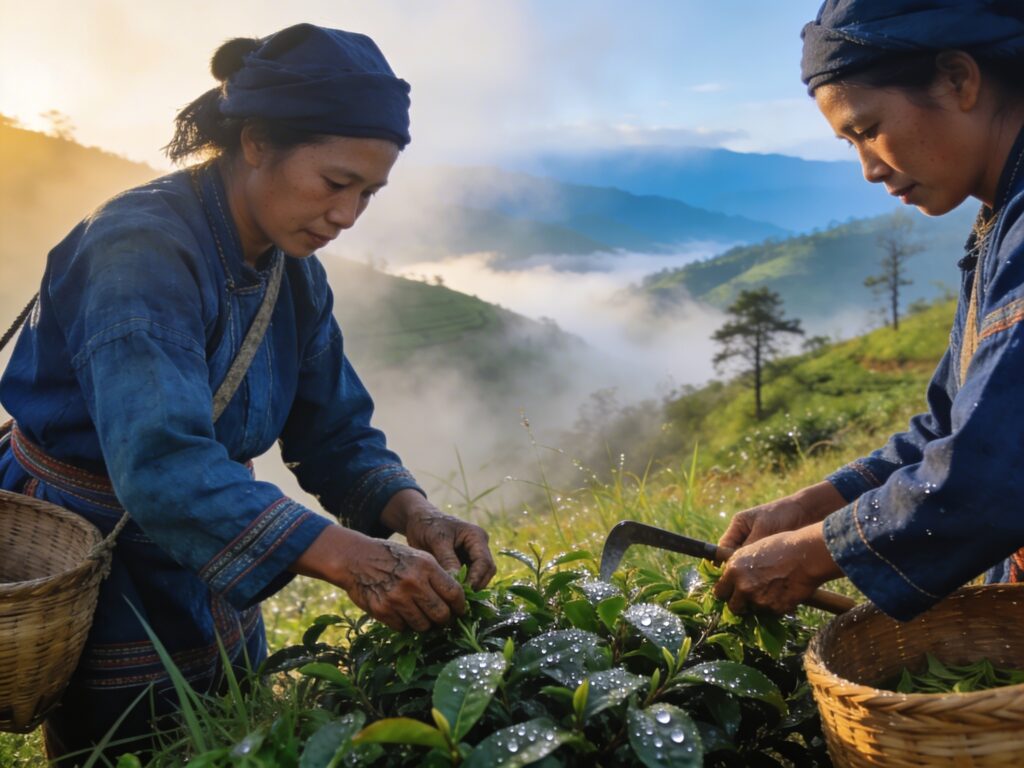
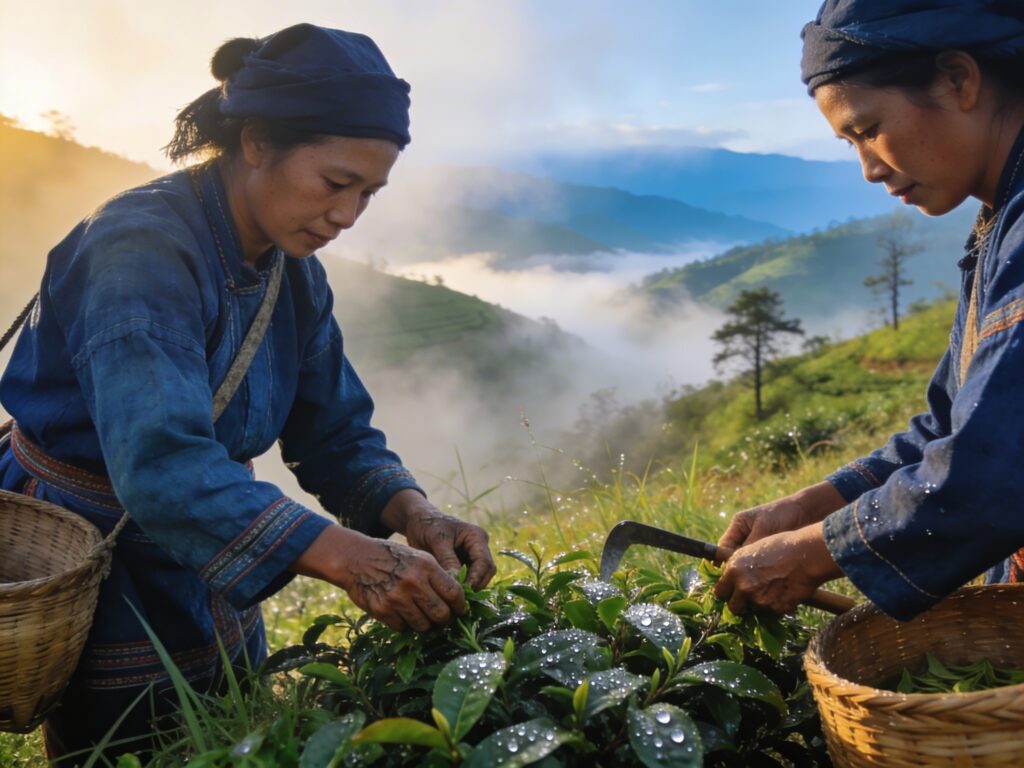
We meet our Lisu guides, Nicha and Paw Lu, at first light, their faces etched with the quiet resilience of mountain life. Bundled in vibrant, hand-embroidered jackets over practical layers, they carry woven baskets slung across their backs. No manicured plantations here. We follow them on narrow, slippery trails that snake upwards, disappearing into the ethereal white. The air is thick, cool, and incredibly still, muffling sound and amplifying the crunch of leaves underfoot and the distant calls of unseen birds. Breathing feels like sipping chilled silk.
“The mist is good for the tea,” Paw Lu explains softly, his voice barely disturbing the haze. “It keeps the leaves tender, slows the growth, concentrates the flavor.” This high-altitude shroud, often lingering until mid-morning, is what gives Mae Hong Son’s wild tea its unique character.
The Dance of Harvest: Precision in the Pale Light
Emerging onto a steep, forested slope, the ancient tea trees reveal themselves. Gnarled trunks, some centuries old, stand draped in moss and lichen. Their branches are adorned with small, dark green leaves – the prized Camellia sinensis var. assamica, growing untamed. Nicha demonstrates the technique: a swift, precise pinch of the stem, taking only the top two or three tender leaves and the unopened bud – the “two leaves and a bud” revered by tea connoisseurs. It’s a delicate balance between speed and care.
- Respect for the Tree: Never stripping a branch bare, ensuring future growth.
- Selectivity: Choosing only the freshest, healthiest buds and leaves, identifiable by their vibrant color and suppleness.
- Gentle Handling: Avoiding bruising the delicate leaves, which would start oxidation prematurely.
My own attempts are clumsy at first. My fingers feel numb in the damp chill, and mimicking their economical, graceful movements is harder than it looks. But slowly, a rhythm develops. The repetitive motion, the quiet concentration, the scent of damp earth and crushed tea leaves – it becomes meditative. The mist wraps around us like a cocoon, isolating our small group in a timeless world of green and white.
More Than Leaves: The Heart of Lisu Tea Culture
This isn’t merely agricultural labor; it’s a cultural ritual passed down through generations. As we fill our baskets, Nicha shares stories – of ancestors who first discovered these wild trees, of tea’s role in Lisu hospitality, medicine, and ceremony. Traditionally, the leaves are processed simply: often pan-fired in a wok over a wood fire or sun-dried, resulting in a smoky, robust brew known locally as Miang, or sometimes fermented for a unique local variation.
Harvesting wild tea is arduous. The terrain is challenging, the hours are long and start impossibly early, and the yield from ancient trees is modest compared to cultivated bushes. Yet, there’s a profound pride in their work. They are custodians of this wild resource, their knowledge irreplaceable.
The Reward: Sipping the Essence of the Mountains
Descending as the mist reluctantly begins to thin, we return to Paw Lu’s simple wooden home perched on the mountainside. The air inside is fragrant with woodsmoke. He heats an iron wok over the fire, tossing in our morning’s harvest. The leaves sizzle and wilt, releasing an intense, grassy, slightly floral aroma that mingles with the smoke – the first step in creating their traditional tea.
Moments later, steaming cups are passed around. The liquor is a pale amber, surprisingly smooth yet complex. It carries the undeniable freshness of the highland forest, a subtle smokiness from the firing, and an underlying sweetness. But most profoundly, it tastes alive. It tastes of the mist, the ancient soil, the cool dawn air, and the generations of Lisu hands that have nurtured this tradition. It is the distilled essence of Mae Hong Son’s mountains.
Embracing the Medley
Joining the Lisu foragers in the morning mist of Mae Hong Son is more than a unique activity; it’s a profound immersion. It’s a journey into a landscape defined by ethereal beauty, a connection with an ancient indigenous culture, and a deep appreciation for the humble tea leaf transformed by tradition and terroir. It requires effort – the early start, the hike, the chill – but the reward is a sensory symphony: the sight of the mist-cloaked valleys, the feel of dew-laden leaves, the sound of quiet concentration, the aroma of the forest and the firing wok, and finally, the unforgettable taste of the mountains themselves, warming you from within long after the mist has burned away. It’s the Morning Mist Medley, an experience that lingers on the palate and in the soul.