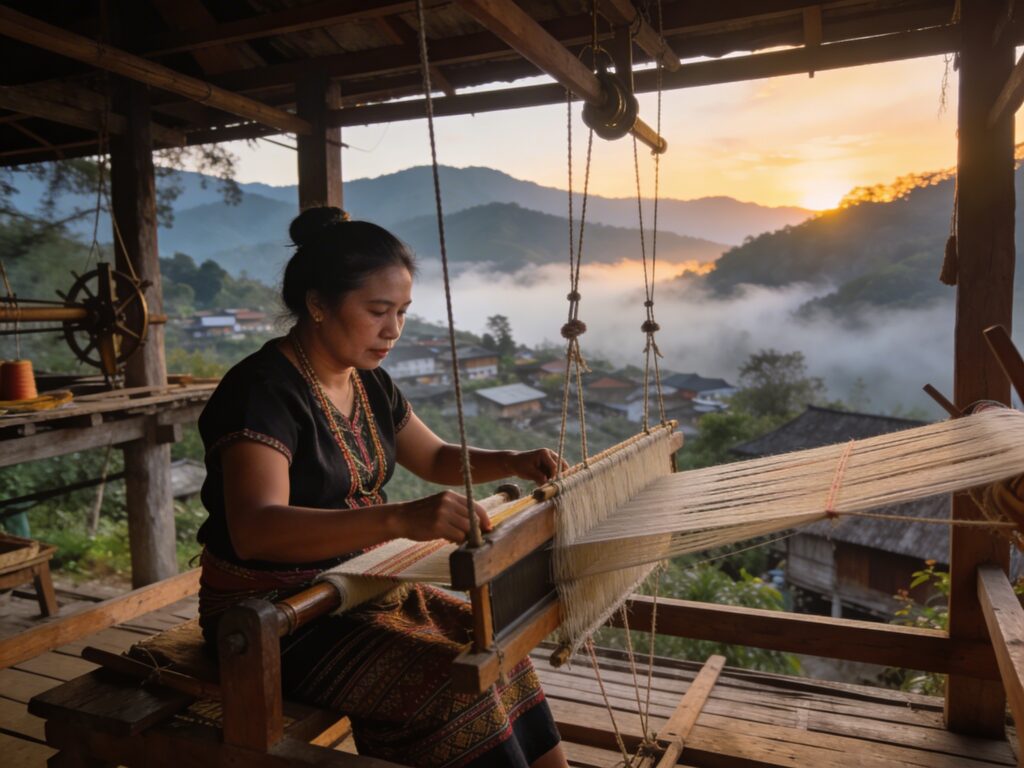
**Mae Hong Son’s Shan Silk Sonata: Weaving Heritage with Loom Mistresses in the Mountain-Hugged Dawn**
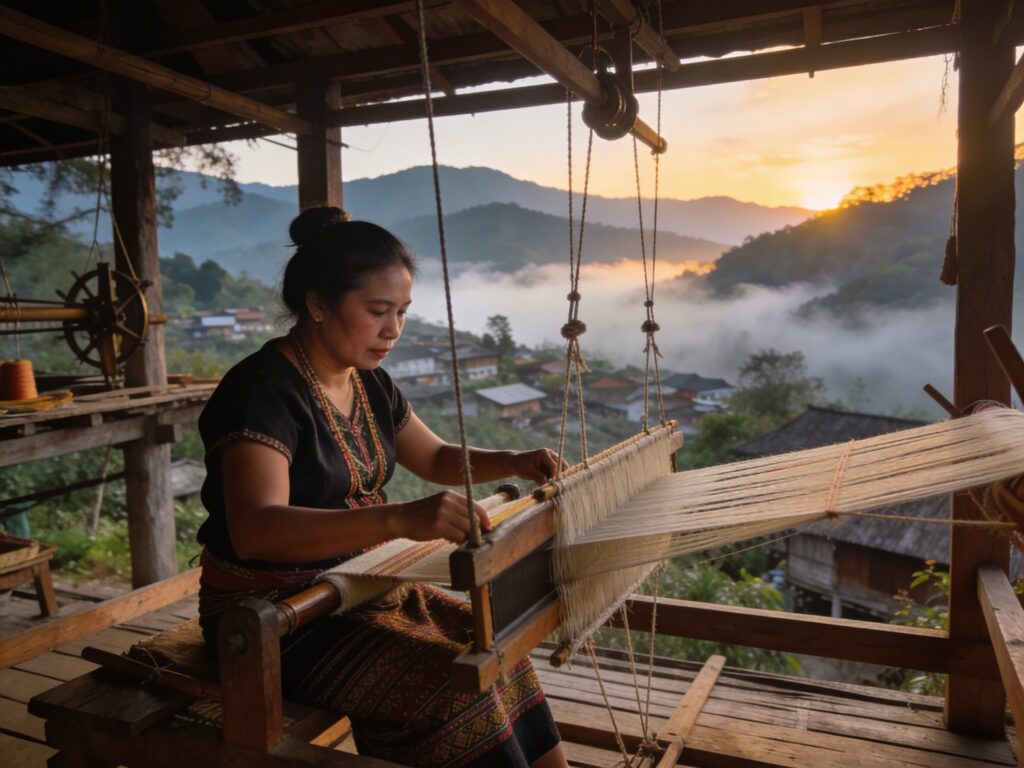
The Mist-Wrapped Loom: Where Mountains Weave Silk
In the pre-dawn hush, when the highest peaks of Mae Hong Son pierce a sky shifting from indigo to pearl, a different kind of music begins. It’s not the call of birds, but the rhythmic click-clack of wooden looms, a gentle percussion echoing through valleys still cradled in mist. This is the Shan Silk Sonata, a centuries-old symphony played by the deft hands of master weavers, the guardians of an exquisite textile heritage nestled deep within Thailand’s mountainous northwest.
The Shan Legacy: Threads of History and Identity
Mae Hong Son, bordering Myanmar, is deeply entwined with the Shan people (Tai Yai), whose ancestors migrated across the mountains centuries ago. They brought with them not just their language and traditions, but an unparalleled artistry in silk weaving. For the Shan, silk is more than fabric; it’s a woven chronicle of their history, beliefs, and identity. Intricate patterns passed down through generations tell stories of nature, mythology, and community life.
The role of women, revered as Pha Mae or “Loom Mistresses,” is central. They are the custodians of this knowledge, mastering complex techniques from raising silkworms (sericulture) to the demanding art of the backstrap loom. Their skill transforms delicate threads into shimmering tapestries of breathtaking beauty.
The Alchemy of Creation: From Worm to Wonder
Creating Shan silk is an alchemical process demanding patience and profound skill:
- The Silent Partners: It begins with the humble silkworm, meticulously cared for, feeding on mulberry leaves specific to the region’s climate.
- Spinning Gold: The precious cocoons are carefully harvested, softened, and the incredibly fine filaments painstakingly reeled onto spools – a testament to patience.
- Nature’s Palette: True artistry shines in dyeing. Loom Mistresses are masters of natural dyes: vibrant yellows from jackfruit wood, deep blues from indigo, rich reds from lac insects, earthy tones from bark and leaves. Each batch is unique, echoing the hues of the surrounding mountains and forests.
- The Dance of the Loom: The backstrap loom, seemingly simple yet astonishingly complex, is where magic happens. Tied around the weaver’s waist and anchored to a post, it requires immense physical control and mental focus. Hands and feet move in a coordinated dance, interlacing warp and weft threads to create intricate patterns – zigzags symbolizing mountains, mythical Naga serpents, floral motifs, or geometric precision. A single scarf can take days or even weeks.
Meeting the Mistresses: Weaving Wisdom in Mountain Villages
Visiting Mae Hong Son offers a rare privilege: witnessing this heritage alive. Venture beyond the provincial capital into villages like Huay Pha, Pang Ung, or communities near Mae Aw (Ban Rak Thai). Here, you’ll find cooperative weaving groups and family workshops where Loom Mistresses welcome respectful visitors.
- Dawn Chorus: Arrive early. The cool, misty mornings are the traditional time for weaving, offering the best light and atmosphere to observe the rhythmic work.
- Quiet Observation: Sit respectfully, listen to the loom’s song. Watch the intense concentration, the swift, sure movements of hands threading shuttles and beating the weft.
- Conversations in Colour: Many Mistresses, especially through younger family members or group leaders, are happy to share their craft. Ask about the patterns, the dyes, the stories woven in. Understand the deep connection between their art and the land.
- Treasures to Cherish: Support this living heritage directly. Villages and cooperatives sell stunning pieces – scarves, shawls (pha biang), traditional skirts (pha sin), and wall hangings. Each purchase directly sustains the weavers and their families.
More Than Fabric: A Tapestry of Resilience
Mae Hong Son’s Shan silk is more than just a beautiful textile; it’s a profound act of cultural preservation. In the face of modernization and cheaper alternatives, the Loom Mistresses persevere. Their dedication ensures that intricate patterns don’t fade into history, that the knowledge of natural dyes isn’t lost, and that the rhythmic clatter of the loom continues to greet the mountain-hugged dawn.
To witness it, to touch the cool, luminous silk, to understand the skill and story woven into every thread – this is to connect with the enduring spirit of the Shan people and the breathtaking landscape they call home. It’s a sonata composed not of notes, but of patience, heritage, and the quiet, powerful artistry echoing through the valleys of Mae Hong Son.