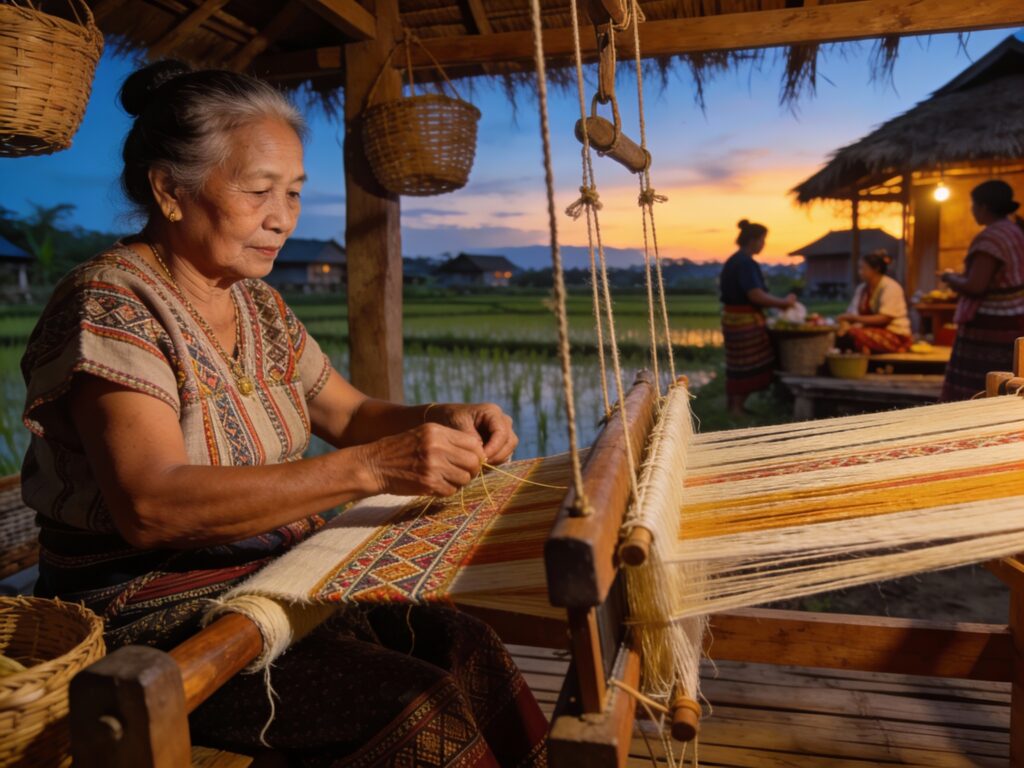
**Nan’s Loom Legacy: Threading Traditions in the Thai Lue Villages at Dusk**
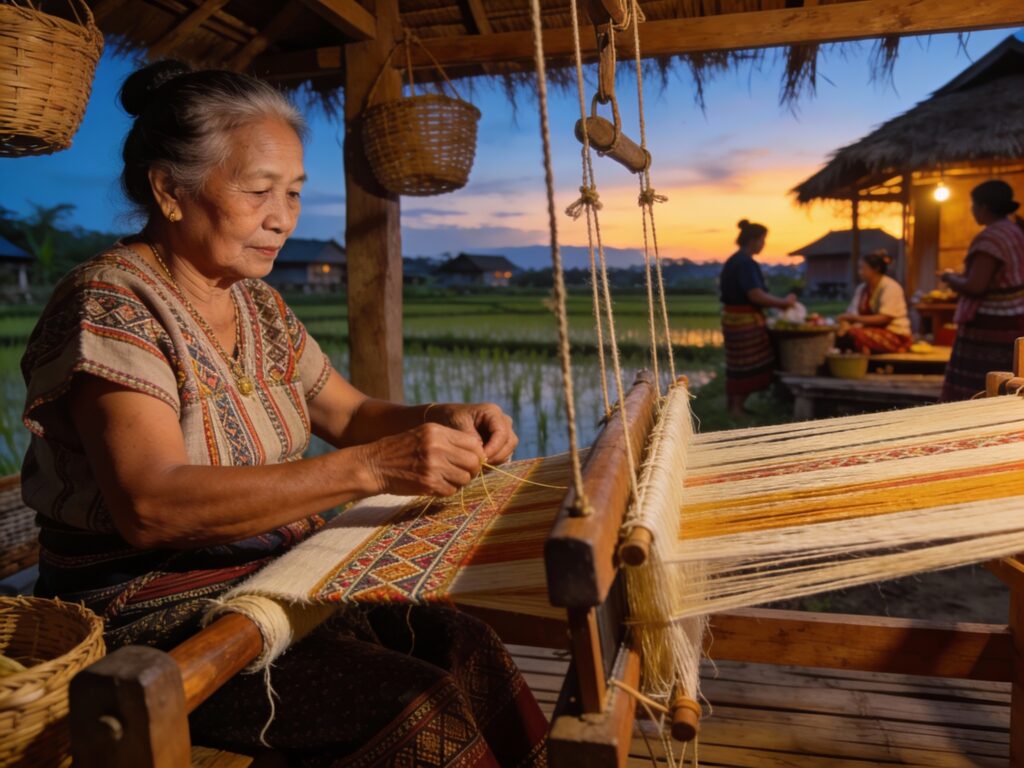
The Rhythm of the Shuttle at Day’s End
As the fiery orb of the sun dips behind the emerald mountains cradling Nan Province, a different kind of light begins to glow in the villages scattered along the Nan River valley. This is the domain of the Thai Lue people, guardians of a textile legacy so intricate and vibrant it seems woven from the very soul of Northern Thailand. And dusk? Dusk is when the rhythm of the loom often finds its most poignant voice.
Threads of Migration, Weaves of Identity
The story of Nan’s textiles is inseparable from the story of the Thai Lue. Originating centuries ago from Xishuangbanna in southern China, the Thai Lue migrated south, bringing their rich cultural tapestry with them. Nan, with its fertile valleys and relative isolation, became a significant haven. Their weaving skills, passed down matrilineally for generations, became more than just craft; it became a language of identity, history, and spiritual belief.
Each village, like Ban Nong Bua or Ban Luang Nuea, possesses its own distinct patterns, colour palettes, and techniques, often identifiable to the trained eye. Motifs whisper stories: the mythical Naga serpent symbolises protection and water, geometric patterns represent agricultural abundance, and intricate floral designs echo the surrounding natural beauty. The dyes, historically sourced from roots, bark, leaves, and even insects (like the coveted lac beetle for crimson red), connect the fabric deeply to the land.
Dusk: The Weaver’s Transition
Visiting a Thai Lue village as daylight fades offers a unique intimacy. The harsh sun softens, casting long, golden shadows. The intense heat of the day begins to relinquish its grip. This is often the time when the rhythmic clack-clack-clack of the traditional wooden loom, the huad, becomes the soundtrack of the village.
- Finishing Touches: Weavers who spent the hotter hours on other tasks often return to their looms in the cooler late afternoon, concentrating on intricate sections requiring the best natural light before it completely vanishes.
- Community Connection: Porches and open-air weaving areas become social hubs. Neighbours might gather, children play nearby, and the shared act of weaving fosters conversation and continuity.
- Lantern Light: As true darkness approaches, electric bulbs or traditional lanterns are lit, casting a warm, focused glow on the weaver’s hands and the emerging pattern. This intimate illumination highlights the incredible dexterity and focus required.
- From Craft to Hearth: The slowing rhythm of the loom often signals the transition from work to home life. The scent of woodsmoke and evening meals begins to mingle with the earthy smell of cotton and dye.
More Than Fabric: A Living Heritage
Watching a master weaver at dusk, her hands moving with unconscious precision, is witnessing a profound connection to ancestry. It’s not merely about producing cloth; it’s about preserving a worldview, a cosmology stitched into every inch. The complex supplementary weft technique, where decorative threads are painstakingly inserted by hand to create the raised, elaborate patterns Nan is famous for, demands immense patience and skill – skills honed over decades, often starting in childhood.
This legacy faces modern challenges – synthetic dyes replacing natural ones for speed, cheaper machine-made imitations flooding markets, and younger generations seeking opportunities beyond the village. Yet, the quiet persistence seen at dusk is a testament to resilience. Cooperatives and dedicated master weavers work tirelessly to ensure the knowledge isn’t lost, teaching apprentices and finding sustainable markets that value authenticity and fair compensation.
Experiencing the Legacy Responsibly
For the traveler seeking authenticity in Nan, venturing into the Thai Lue villages at dusk is a privilege. Here’s how to engage respectfully:
- Visit Workshops & Cooperatives: Seek out established village cooperatives like those in Ban Nong Bua or support family-run workshops. This ensures your visit benefits the artisans directly.
- Observe Quietly: If you see someone weaving, admire their work with quiet respect. Ask permission before taking photographs, especially close-ups of faces.
- Learn Before You Buy: Take time to understand the processes, the natural dyes, and the meaning behind patterns. This appreciation makes purchasing a textile far more meaningful.
- Invest in Authenticity: Handwoven Thai Lue textiles using natural dyes are investments in heritage. Be prepared to pay a fair price that reflects the immense skill and time involved.
- Embrace the Pace: Slow down. Sit. Listen to the looms and the evening sounds. Let the tranquility of dusk in the village wash over you.
A Tapestry Woven in Time
As the last threads of daylight fade and the stars emerge over Nan, the glow from a weaver’s lamp might still be visible. It’s a beacon of tradition, a quiet defiance against the erosion of time. The legacy of the Thai Lue loom isn’t confined to museums; it lives and breathes in these villages at dusk, in the rhythmic clatter of the shuttle, in the concentration on a weaver’s face, in the vibrant patterns emerging from skilled hands guided by ancestral memory. To witness it is to see the very fabric of Northern Thai culture being woven, one meticulous thread at a time, in the beautiful, fleeting light of evening.