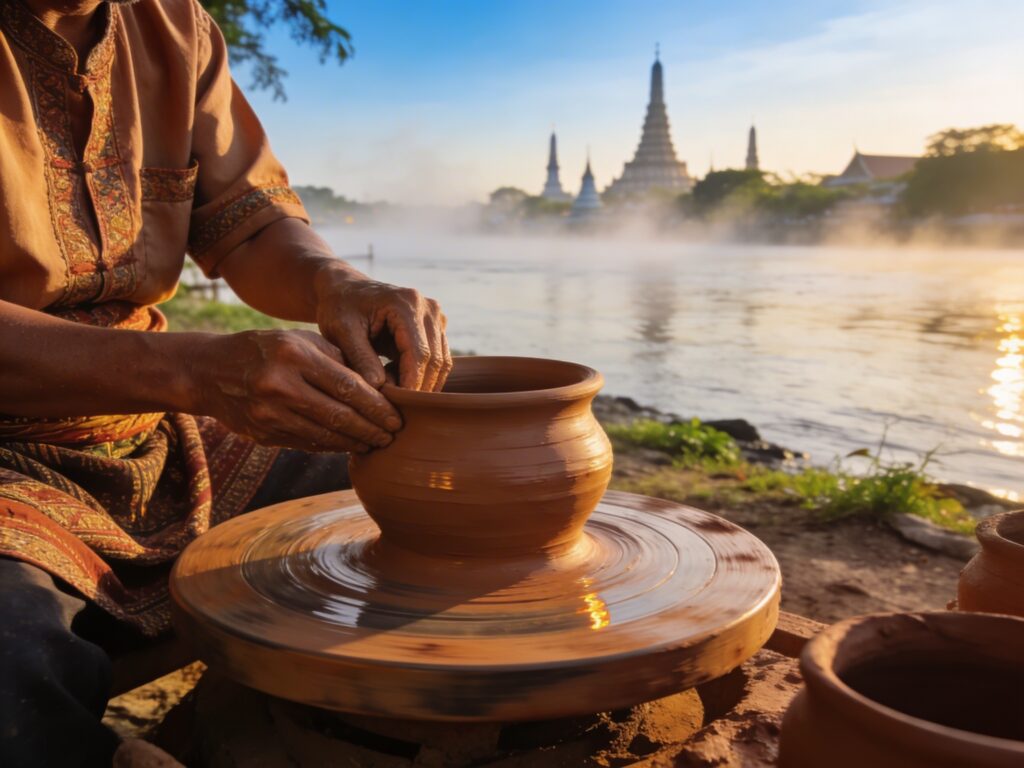
Nonthaburi’s Riverside Rotations: Crafting Terracotta with Mon Potters in the Morning Calm
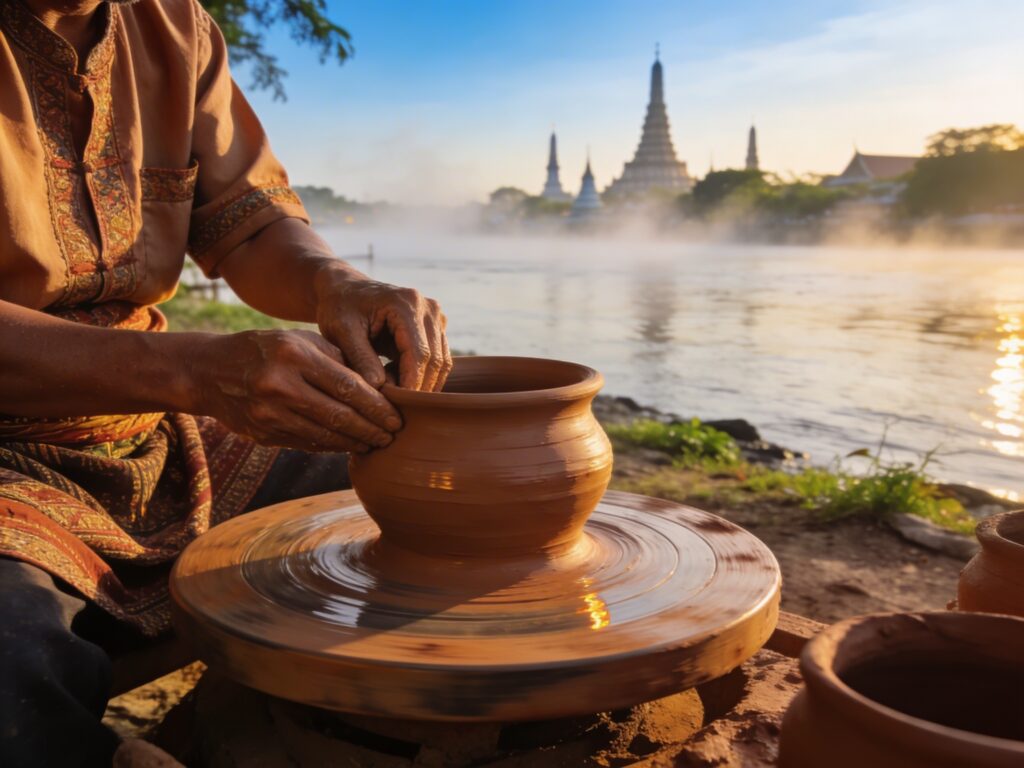
Whispers of Clay at Dawn: Finding Serenity with Nonthaburi’s Mon Potters
Just a stone’s throw from Bangkok’s relentless energy, the province of Nonthaburi cradles pockets of profound tranquility and living heritage. Along the sleepy stretches of the Chao Phraya River’s tributaries, particularly around areas like Ko Kret, an island formed by a canal, the ancient art of Mon pottery breathes softly in the morning calm. This isn’t a staged show; it’s the daily rhythm of artisans preserving a centuries-old legacy. To witness Nonthaburi’s riverside rotations is to step into a meditative world of earth, water, and patient creation.
The Mon Legacy: Echoes Across the River
The Mon people, one of Southeast Asia’s oldest civilizations, have profoundly influenced Thai culture, especially in central regions like Nonthaburi. Their migration centuries ago brought distinctive artistic traditions, including their unique terracotta pottery techniques. Settling near the life-giving river, they found the perfect combination of essential resources: rich, workable clay from the riverbanks and water to shape it.
Unlike the high-fired celadon of the North or the intricate Benjarong of the Central Plains, Mon pottery is characterized by its rustic charm and functionality. Traditionally unglazed or featuring simple, naturalistic designs, these pieces – water jars, cooking pots, spirit houses, and decorative items – were born from necessity but elevated to artistry through generations of skilled hands.
Morning Calm: The Potter’s Sacred Time
Arriving in Nonthaburi as the first light paints the river in hues of gold and pink is essential. The air is cool, the world is quiet save for birdsong and the gentle lapping of water, and the potters begin their work. This early start isn’t just romantic; it’s practical. The cool morning air prevents the clay from drying too quickly during the delicate forming process.
Find a humble workshop nestled amidst banana trees and wooden houses, often with kilns built from brick and clay nearby. Here, the magic unfolds:
- The Rhythm of the Wheel (or Lack Thereof): Don’t expect fast-spinning electric wheels. Traditional Mon pottery often employs hand-building techniques like coiling or paddle-and-anvil methods. You might see a potter rhythmically beating a slab of clay against a rounded stone (the anvil) with a wooden paddle, coaxing it into the shape of a pot. Others expertly coil ropes of clay, smoothing them into seamless vessels.
- Earth to Art: The potter’s hands, guided by decades of ingrained knowledge, are the primary tools. Watch as a lump of dark river clay transforms under gentle, assured pressure – a pinch here, a smoothing stroke there. It’s a dance of immense patience and precision.
- Nature’s Canvas: Simple decorations might be added using natural tools – a bamboo sliver for incised lines, a carved wooden stamp for repeating patterns (often floral or geometric motifs echoing Mon textiles), or smoothed pebbles to burnish the surface for a subtle sheen.
- The Kiln’s Embrace: Once dried, the greenware pieces are carefully stacked in the kiln. Firing is an event, often using wood or coconut husks, transforming the fragile clay into resilient terracotta over many hours. The resulting color ranges from deep reddish-browns to warm oranges, kissed by the fire’s intensity.
More Than Souvenirs: The Soul of the Craft
While beautiful decorative items are increasingly made for visitors, the core of Mon pottery remains rooted in tradition and spirit. Many potters still create:
- Jars for Water and Blessings: Unglazed water jars (nam ton) allow water to seep through, cooling it naturally – a simple, effective ancient technology. Spirit houses (san phra phum) for homes and businesses are also significant outputs.
- Connections to Community: Pottery isn’t just an individual craft; it’s often a family or community affair, with knowledge passed down through generations. Purchasing a piece directly supports this vital cultural continuity.
- A Meditative Practice: Observing the potters, absorbed in their task, the repetitive motions, the connection with the earth – it’s inherently calming. It invites visitors to slow down, mirroring the pace of the riverside life.
Experiencing the Rotation: A Visitor’s Guide
To truly embrace the morning calm with Nonthaburi’s Mon potters:
- Go Early: Aim to arrive between 7:00 AM and 9:00 AM. This is when potters are most actively shaping clay before the heat intensifies.
- Ko Kret is Key: This man-made island in Pak Kret district is the epicenter of Mon culture in Nonthaburi and renowned for its pottery. Rent a bicycle to explore its narrow paths.
- Seek the Workshops: Venture beyond the main souvenir stalls near the pier. Wander the quieter lanes; the sound of tapping paddles or sight of a smoking kiln will guide you to active workshops (often family homes).
- Respectful Observation: Be mindful. This is their workplace and home. Ask permission before taking close-up photos. A smile and a simple “sawasdee krap/ka” go a long way.
- Engage Gently: Some potters, especially if not overwhelmed, might welcome gentle questions or even offer a brief demonstration. Let their focus guide your interaction.
- Buy Thoughtfully: Purchasing a piece directly from the artisan is the most meaningful support. Look for the unique character of hand-built items – slight asymmetries are marks of authenticity.
A Legacy Molded by Hand, Fired by Time
Watching the Mon potters of Nonthaburi in the soft morning light is a privilege. It’s a connection to an ancient lineage, a testament to human ingenuity, and a profound lesson in patience and presence. In the gentle rotations of clay under their hands, in the rhythmic taps of paddle on anvil, you witness more than just pottery being made; you witness a culture breathing, persisting, and sharing its quiet beauty with those willing to seek the calm beside the river. It’s a rotation not just of clay, but of history, tradition, and the enduring spirit of the Mon people, forever shaping the soul of Nonthaburi.