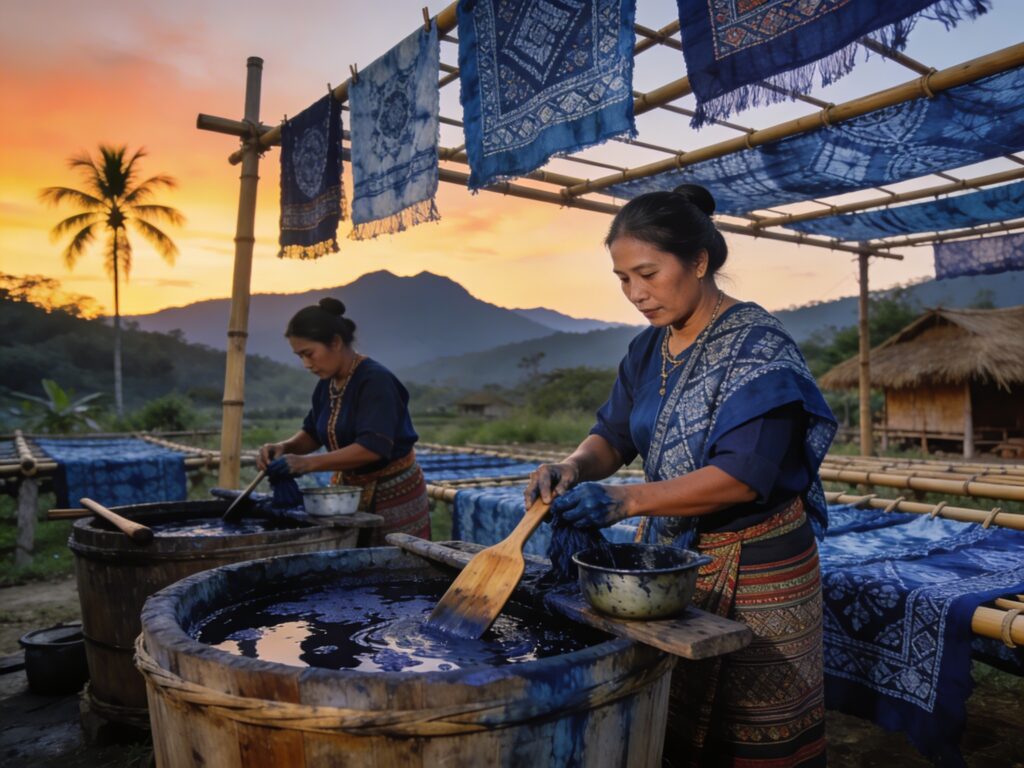
Phrae’s Indigo Alchemy: Crafting Midnight Blues with Hill Tribe Artisans Under the Dusk Sky
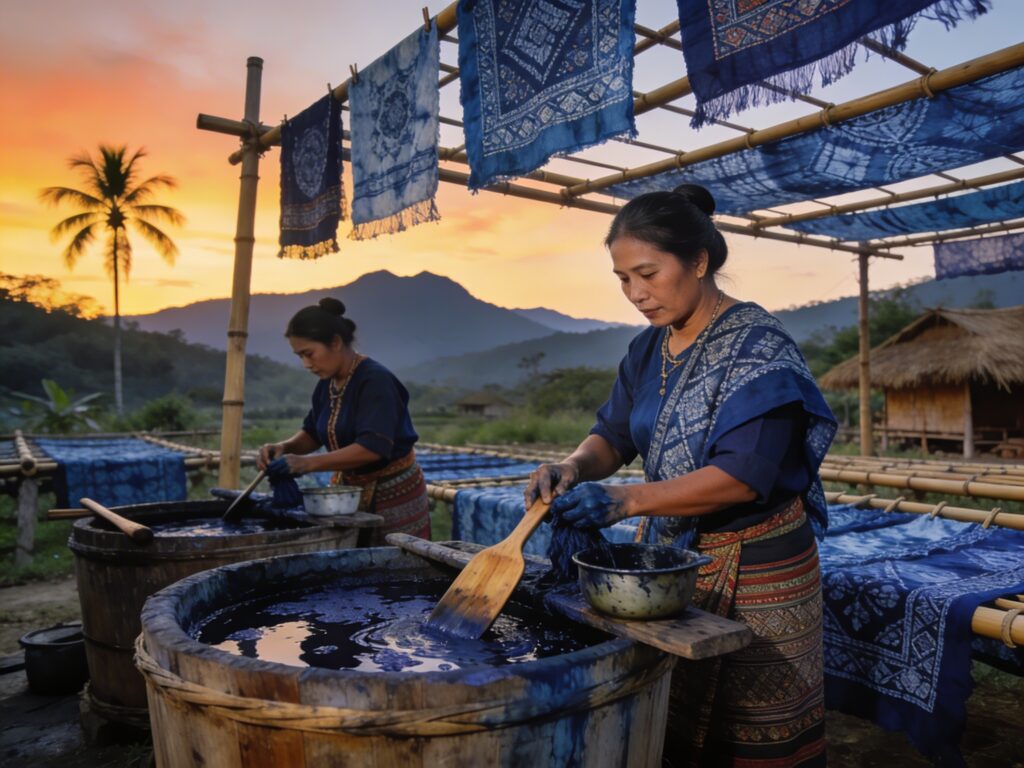
The Whispering Vats of Phrae: Where Sky Meets Earth in Dye
Northern Thailand whispers secrets of ancient craftsmanship, and in the serene province of Phrae, one secret runs particularly deep – a deep, mesmerizing blue. Here, amidst rolling hills and a slower pace of life, an extraordinary alchemy unfolds. It’s the transformation of humble leaves into the profound, captivating shades of indigo, a tradition lovingly preserved by skilled hill tribe artisans, often practiced as the sun dips low, painting the sky in hues that rival the very dye they create.
The Roots of Blue: Tai Lue Heritage & Natural Indigo
Phrae’s indigo legacy is intrinsically linked to the Tai Lue people, an ethnic group whose ancestors migrated from Southern China centuries ago, bringing their profound textile knowledge with them. They settled in villages like Ban Thung Hong and Mae Kham Mi, where the fertile land proved ideal for cultivating Indigofera tinctoria, the plant that holds the key to the coveted midnight blues. This isn’t mass production; it’s a deeply rooted cultural practice, passed down through generations, where respect for nature and ancestral wisdom guides every step.
The Alchemical Process: From Leaf to Legendary Hue
Creating true natural indigo is a patient, almost mystical process, demanding time, intuition, and a deep understanding of natural elements. Witnessing it feels like observing a slow, beautiful ritual:
- Harvest: Mature indigo leaves are carefully hand-picked, often by women whose hands know the plants intimately.
- Fermentation (Suk Phee): The leaves are submerged in large earthen vats filled with water and alkaline agents like lime or wood ash. Sealed and left to ferment for days or even weeks, the mixture transforms. This is where the magic begins – the water turns a murky green-yellow, and the distinct, pungent aroma of fermentation fills the air.
- The “Flower” (Dok Kram): As fermentation progresses, a precious blue froth, known as the “indigo flower,” forms on the surface. This froth is carefully skimmed off – it’s the concentrated pigment.
- Reduction & Oxidation: The collected paste is mixed again with water and a reducing agent (traditionally rice whiskey or molasses) in smaller dye pots. This creates the yellow-green dye bath. When fabric is dipped into this bath and then exposed to air, the true miracle happens: the dye oxidizes, turning from green to turquoise, then deepening through shades of sapphire to the profound, almost black, midnight blue with each successive dip.
Artisans judge the dye bath’s strength by eye and feel, a skill honed over decades. Achieving that perfect, rich depth requires multiple dips and oxidations, sometimes taking days for a single piece.
Under the Dusk Sky: Crafting with the Rhythm of Nature
There’s a poetic synchronicity in the tradition of dyeing as dusk settles. The fading light offers respite from the daytime heat, creating a cooler, more comfortable environment for the meticulous work. But more than practicality, it’s a moment of profound connection. As the sky transitions through its own palette of blues – from cerulean to cobalt to navy – artisans rhythmically dip fabrics into the vats, pulling forth blues that seem to capture the very essence of the twilight. The soft sounds of swishing fabric, the gentle bubbling of the vats, and the low murmur of conversation blend with the evening chorus of insects, creating an atmosphere that is both peaceful and charged with creative energy.
Meeting the Masters: Preserving Heritage in Modern Times
Visiting villages like Ban Thung Hong offers a rare opportunity to meet the guardians of this knowledge. Often working in cooperative groups, these artisans, primarily women, are not just dyers; they are custodians of a cultural identity. Their hands, often stained a permanent, beautiful blue, tell stories of dedication. While synthetic dyes offer cheaper and faster alternatives, these artisans persevere, driven by pride in their heritage and a commitment to sustainable, natural practices. They weave indigo-dyed cotton into intricate patterns, creating stunning pha sin (traditional skirts), scarves, shirts, and homewares that are both beautiful and meaningful.
Experiencing Phrae’s Indigo Magic
For the traveler seeking authentic connection, Phrae offers immersive ways to engage with this living art:
- Village Visits: Join guided tours or respectfully visit villages like Ban Thung Hong. Observe the process, chat with artisans (often facilitated by local guides), and see the vats bubbling away, especially enchanting in the late afternoon.
- Hands-on Workshops: Several cooperatives and homestays offer workshops. Learn to tie simple patterns, experience the thrill of dipping your own fabric into the vat, and watch in amazement as the color blooms before your eyes. It’s a humbling lesson in patience and natural chemistry.
- Ethical Souvenirs: Support the artisans directly by purchasing their exquisite handcrafted textiles. Each piece is unique, bearing the subtle variations that are the hallmark of natural dyeing. Look for items at village cooperatives, the Phrae Walking Street market, or reputable craft shops in town.
Phrae’s indigo is more than just a color; it’s a liquid narrative of heritage, patience, and the profound connection between people and the land. It’s the deep, enduring blue of tradition, crafted under the ever-changing canvas of the dusk sky, a testament to the quiet artistry that continues to thrive in Thailand’s north. To witness it is to understand the true meaning of alchemy.