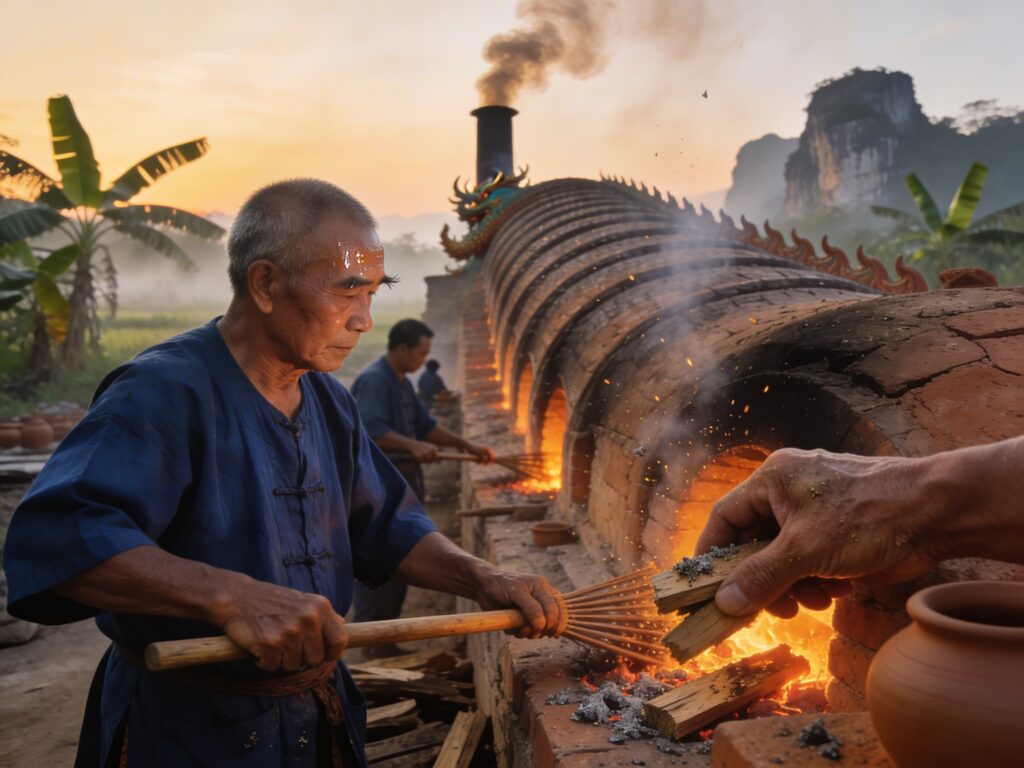
Ratchaburi’s Dragon Kilns: Tending the Celestial Fire with Master Potters in the Pre-Dawn Embers
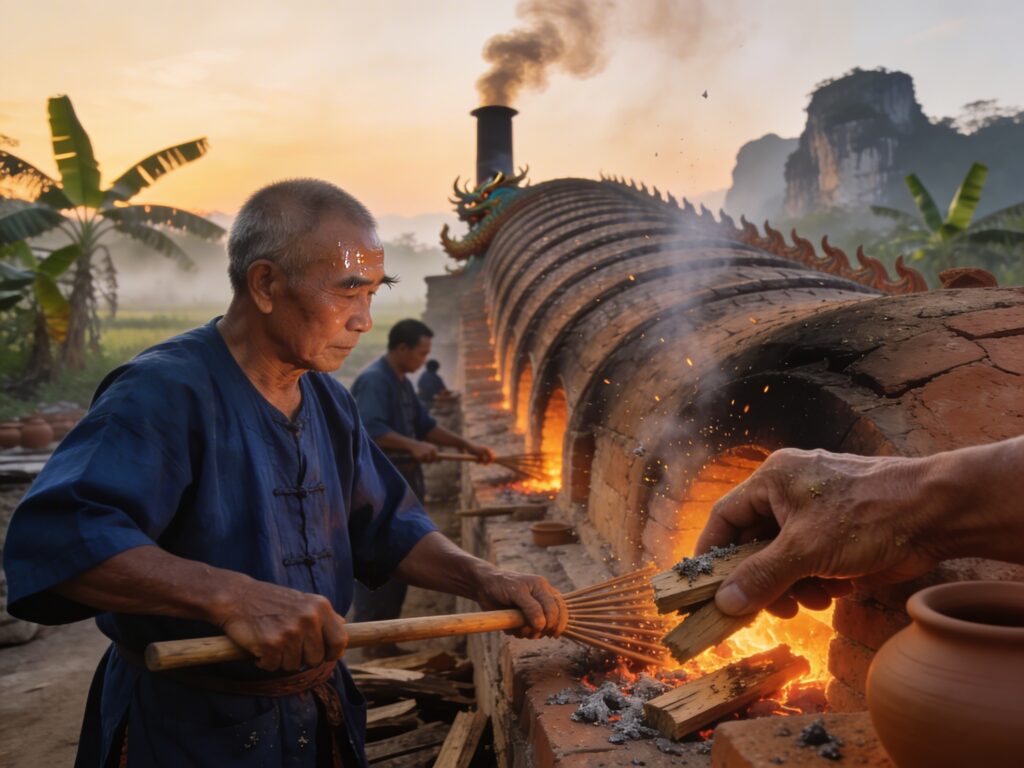
The Dragon Awakens: A Pre-Dawn Pilgrimage
Before the tropical sun even hints at the horizon, casting its first blush over the sleepy province of Ratchaburi, a different kind of fire already roars. Deep within the village of Tha Luang, near the Mae Klong River, ancient beasts stir – not mythical creatures, but colossal, serpentine kilns known as Dragon Kilns (Thai: เตาปูน, Tao Poon). To witness them in their fiery prime demands an early rise, a pilgrimage into the pre-dawn embers where master potters tend the celestial fire.
Whispers of Smoke and Centuries of Craft
These aren’t your average pottery kilns. Stretching an astonishing 40 to 100 meters in length, they coil up gentle slopes like slumbering dragons, their brick and clay bodies covered in layers of ash and history. Their origins trace back centuries, likely influenced by Mon potters migrating from Mawlamyine (now Myanmar) during the Ayutthaya period. The design is pure genius: the steep incline creates a powerful natural draft, pulling intense heat (up to a scorching 1300°C!) from the lowest fire mouths up through multiple chambers to the chimney high above.
A firing isn’t a casual affair. It’s a meticulously planned, physically demanding ritual. For 20-30 hours straight, teams of potters, often working in shifts through the night, feed the beast. Rice husks – abundant waste from the surrounding paddies – are the fuel of choice, shoveled relentlessly into the fiery maws every few minutes. The air crackles with heat, thick with the sweet, smoky scent of burning husk. Standing near the stoke holes during peak firing feels like confronting a contained sun.
Masters of the Flame: Precision in the Heat
This is where the true artistry, honed over generations, becomes evident. Master potters like the renowned Master Eua Pothirat (and others carrying on family legacies) possess an almost supernatural understanding of the kiln’s temperament. They don’t rely on digital gauges; their tools are experience and intuition:
- Reading the Flames: The colour and behaviour of the flames licking from the stoke holes and chimney tell them the temperature profile along the kiln’s length.
- Listening to the Kiln: Subtle shifts in the roar of the fire, the crackling of the bricks, even the sound of air rushing through the chambers, provide vital clues.
- Observing the Glow: Peering through small spy holes, they watch for the tell-tale incandescent glow on the stacked pottery inside different sections.
Each chamber along the kiln’s spine experiences slightly different temperatures and atmospheres. Master potters exploit this, strategically placing different types of pottery – from sturdy water jars (Tan ถัง) and cooking pots (Maw หม้อ) in hotter zones, to more delicate glazed items like the iconic Dragon Jar or beautiful celadon pieces in slightly cooler areas. Achieving the perfect reduction atmosphere for those stunning glazes is a high-wire act performed in an inferno.
Beyond the Fire: A Living Heritage
Visiting Ratchaburi’s Dragon Kilns isn’t just about seeing giant ovens. It’s immersion in a living, breathing cultural heritage. Workshops like Poon Thai Celadon and Eua Pothirat Ceramics offer glimpses into the entire process:
- Clay Preparation: Witness the laborious wedging and preparation of local clay.
- Wheel Throwing & Hand Building: See skilled hands shape the clay on kick-wheels or through coiling.
- Glazing: Observe the application of traditional glazes, often derived from local materials like wood ash and river stones.
- The Kiln Itself: Stand in awe before the magnificent structure, feeling its residual heat, understanding its scale.
- Gallery & Showroom: Appreciate the finished products – functional stoneware and exquisite art pieces born from the dragon’s breath.
Answering the Call of the Dragon
Visiting Tips:
- Timing is Everything: Firings are infrequent (usually every few weeks or months, depending on demand and workshop). Contact workshops directly (Poon Thai Celadon, Eua Pothirat Ceramics) well in advance to confirm firing schedules. Pre-dawn arrival (around 4-5 AM) is essential to see the peak firing activity.
- Location: Focus your search on Tha Luang sub-district, Amphoe Mueang, Ratchaburi. Workshops are often signposted.
- Respect & Etiquette: This is a workplace, often family-owned. Be quiet, respectful, and follow instructions. Keep a safe distance from the intense heat. Ask permission before taking close-up photos of workers.
- What to Wear/Bring: Comfortable, cool clothing you don’t mind getting dusty. Closed-toe shoes are essential. Water, a hat, and perhaps a light snack. A flashlight for the pre-dawn arrival.
Standing in the pre-dawn gloom of Ratchaburi, bathed in the hellish glow of the Dragon Kiln, watching the rhythmic, almost meditative shoveling of rice husk into the maw, is a primal experience. It connects you to centuries of unbroken tradition, to the alchemy of earth, water, and fire. It’s a testament to human ingenuity and endurance, where master potters commune with the celestial fire, breathing life into clay within the belly of the dragon. It’s not just pottery being made; it’s heritage forged in flame. Seek out this ember – it’s one of Thailand’s most profound and visceral artisan experiences.