Samut Songkhram’s Salt Sparkle: Harvesting Dawn Crystals in the Glimmering Fields of Amphawa
Beyond the Floating Markets: Amphawa’s Liquid Silver
Samut Songkhram, Thailand’s smallest province, often finds fame through the bustling canals and floating markets of Amphawa. But venture just a little further, away from the crowded boats and souvenir stalls, and you’ll discover a different kind of magic – a landscape that transforms at dawn into a shimmering sea of white. Welcome to the salt farms of Amphawa, where generations have harnessed the sun and sea to harvest Thailand’s “white gold.”
The Alchemy of Sea and Sun
Amphawa’s unique position near the mouth of the Mae Klong River creates the perfect conditions for traditional salt farming. The process is a beautiful, albeit labor-intensive, dance with nature:
- Channeling the Sea: High tides bring seawater into intricate networks of shallow canals and clay-lined ponds dug into the earth.
- Concentration: The seawater is first held in large, shallow evaporation ponds. Under the intense Thai sun, water begins to evaporate, slowly increasing the salinity.
- Crystallization: Once sufficiently concentrated, the briny water is carefully transferred to smaller, meticulously leveled crystallization pans – the iconic checkerboard fields. Here, under the relentless sun, the magic happens. Pure sodium chloride crystals begin to form.
The resulting landscape, especially in the early morning or late afternoon light, is ethereal. The flat pans reflect the sky, creating vast mirrors that fracture into blinding sparkles as the salt crystals catch the sun.
Harvesting the Dawn Crystals
For the salt farmers, the day starts long before sunrise. The coolest hours are crucial for harvesting the delicate salt crystals formed overnight.
- Pre-Dawn Prep: Farmers arrive under starlight, checking the pans. The ideal salt crust should be thin, crisp, and brilliantly white.
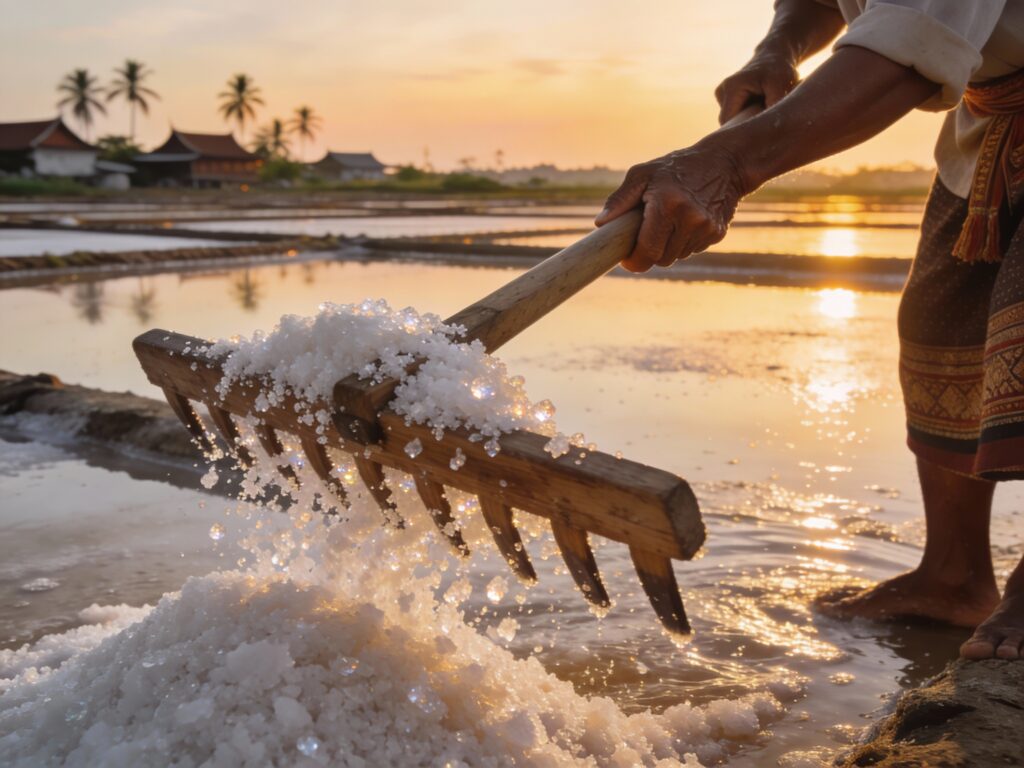
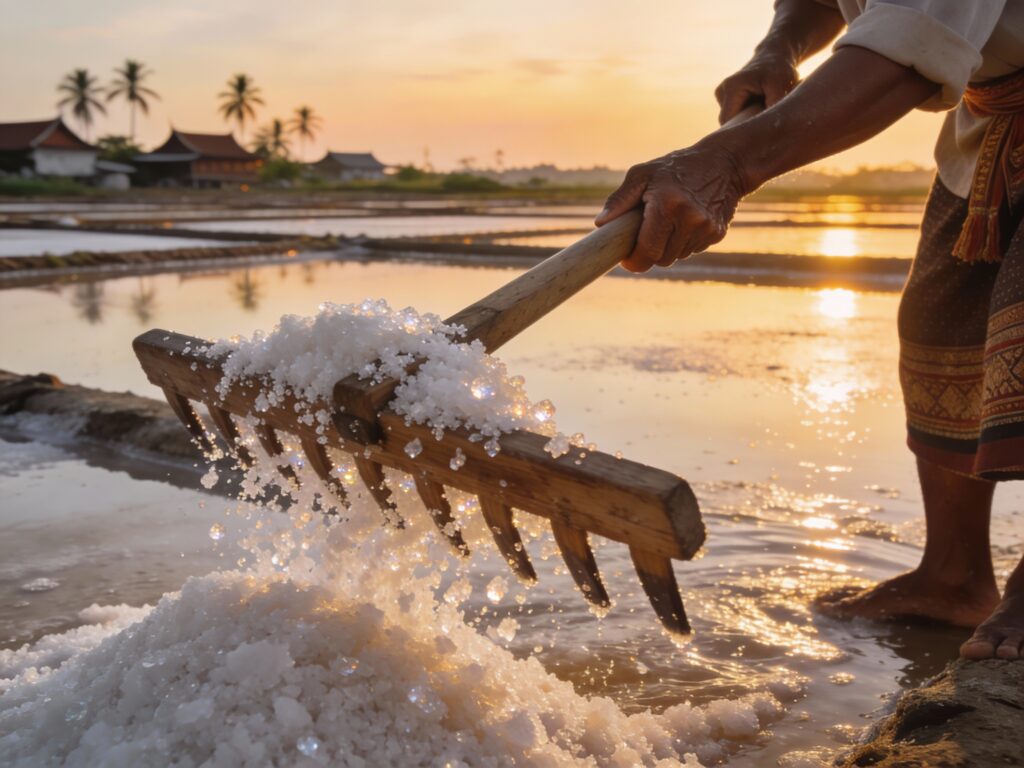
- The Gentle Scrape: Using long-handled wooden rakes or bamboo scrapers, farmers carefully push the fragile salt crust across the pan towards collection points. It’s a rhythmic, practiced motion, designed to gather the crystals without breaking them down into the mud beneath.
- Piling the Pearls: The harvested salt is piled into gleaming white mounds right at the edge of the fields, resembling miniature snowy mountains against the flat earth. These mounds are left to drain and dry further in the sun.
Witnessing this harvest is mesmerizing. The quiet concentration of the farmers, the soft scraping sound, the way the first rays of sun ignite the salt piles into beacons of light – it’s a scene steeped in tradition and quiet dignity.
More Than Just Seasoning: A Cultural Legacy
Amphawa’s salt isn’t just table salt. This traditional method, known locally as “Kluai Pla” (referring to the clay pans), produces mineral-rich salt prized for its clean flavor and texture. It’s used in local cuisine, preserving foods like fish and pickles, and even in traditional medicine and spa treatments.
Salt farming here is a heritage craft, passed down through families. While modern methods exist, many Amphawa farmers maintain these labor-intensive techniques, preserving a vital connection to the land and sea that defines their province.
Experiencing the Glimmering Fields
Visiting the salt fields offers a profound contrast to the usual tourist trail:
- Timing is Everything: Aim for early morning (around 5:30 AM – 8:00 AM) to see the harvest in action and witness the fields sparkling at sunrise. Late afternoon (around 4:00 PM onwards) offers beautiful golden light on the drying salt piles. The season typically runs from December to May, peaking in the hot, dry months (March-April).
- Where to Go: Look for fields along the roads leading out of the main Amphawa floating market area towards the coast, particularly in areas like Bang Khonthi. Keep an eye out for the distinctive checkerboard patterns and gleaming white mounds.
- Respectful Observation: Remember these are working farms. Stay on the paths or raised berms between the fields. Never walk on the salt pans themselves – it damages the delicate clay lining and the salt. Ask permission before photographing farmers up close, and a smile goes a long way.
- Local Purchase: Support the farmers by purchasing bags of fresh salt directly from them at roadside stalls near the fields. It makes for a unique and authentic souvenir.
Samut Songkhram’s salt fields are a testament to human ingenuity working in harmony with nature’s rhythms. The sight of the “dawn crystals” sparkling across the glimmering fields of Amphawa offers a moment of pure, tranquil beauty and a deep appreciation for a tradition as essential and enduring as salt itself. It’s a hidden sparkle waiting to be discovered.