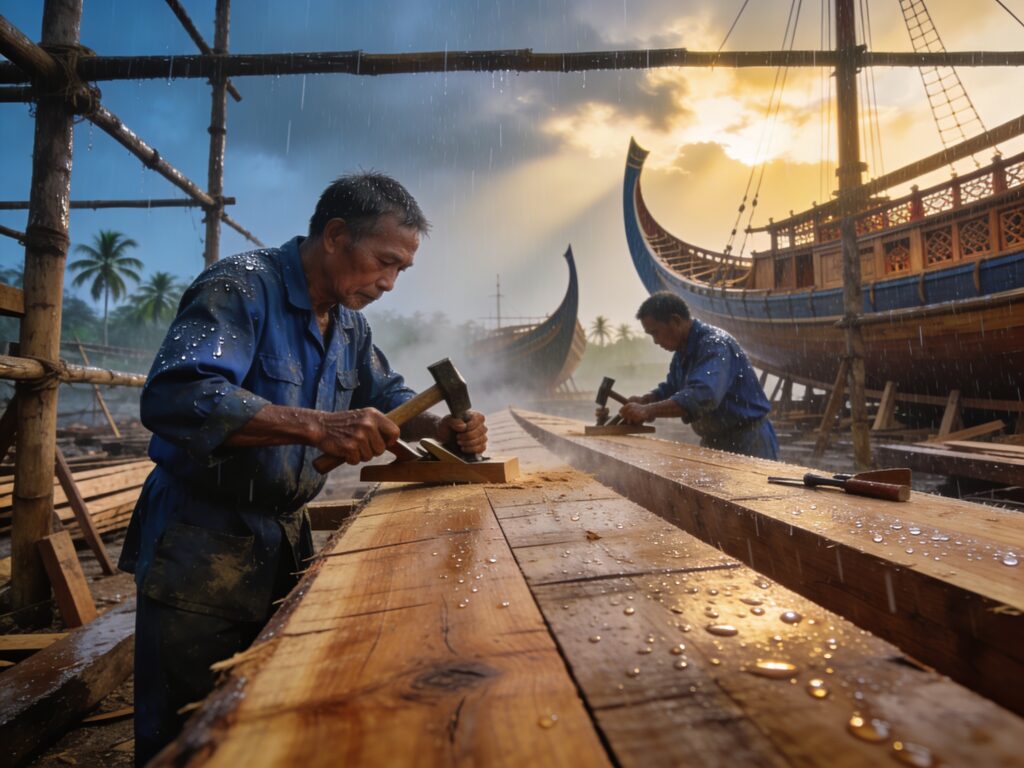
Songkhla’s Monsoon Craft: Shaping Century-Old Junk Boats with Master Shipwrights in the Rain-Slicked Timber Yard
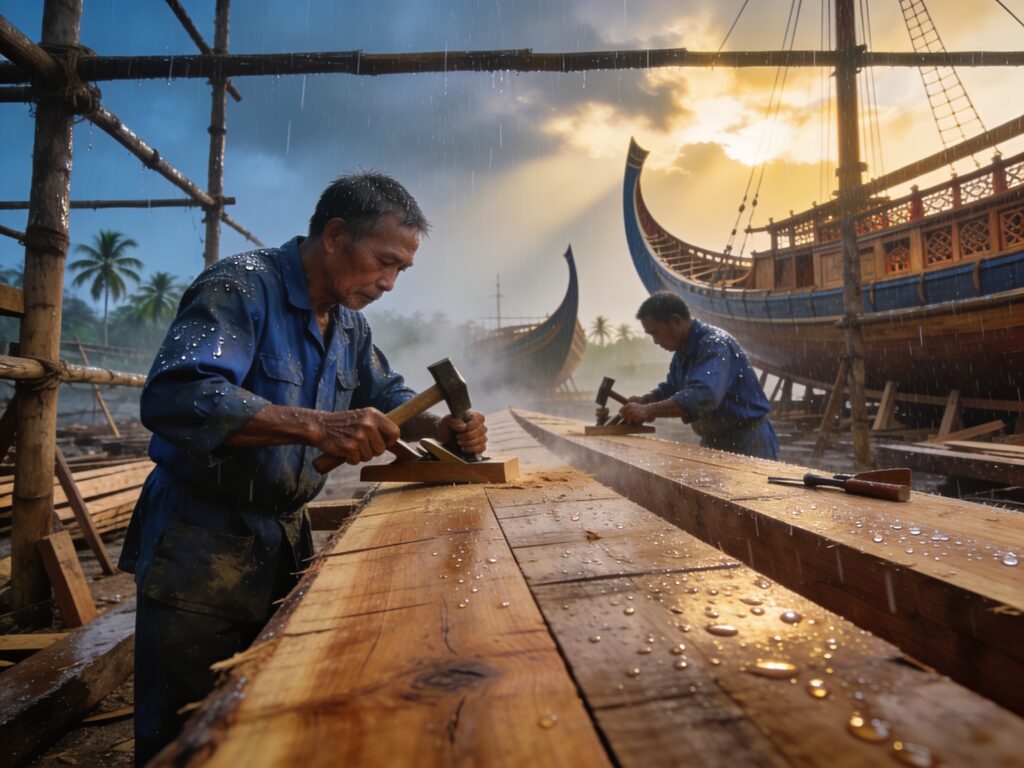
Songkhla’s Monsoon Magic: Where Rain, Timber, and Timeless Craft Collide
Forget pristine beaches for a moment. Venture south to Songkhla, a historic port city whispering tales of maritime trade, and step into a world where the rhythm of the monsoon dictates the heartbeat of an extraordinary craft. Here, in rain-slicked timber yards, amidst the drumming on corrugated roofs and the scent of wet wood, master shipwrights shape history – they build traditional junk boats, century-old designs reborn in the downpour.
The Legacy Carved in Rain-Soaked Wood
The distinctive silhouette of the Songkhla junk boat – high stern, sweeping lines, often painted in vibrant blues, reds, and greens – is an icon of the Gulf of Thailand. Its roots trace back centuries, heavily influenced by Chinese trading vessels that plied these waters. Unlike modern fiberglass speedboats, these are vessels born from nature: sturdy tropical hardwoods like takien tong (ironwood) and mai daeng (redwood), painstakingly shaped by hand using techniques passed down through generations. The monsoon season isn’t an interruption here; it’s an integral part of the process.
The Shipyard Symphony: Craftsmanship in the Downpour
Stepping into one of Songkhla’s traditional boatyards during the rainy season (roughly May to December) is a sensory immersion:
- The Rain’s Role: Far from being a hindrance, the constant humidity and rain are allies. They keep the precious timber pliable, crucial for the intricate steaming and bending required to form the junk’s characteristic curves and hull shape. Dry wood would crack and splinter under the stress.
- Masterful Hands: Watch the shipwrights, their hands weathered like the driftwood they work with. They move with unhurried precision, wielding adzes, chisels, drawknives, and saws with an intimacy born of lifelong practice. Every cut, every joint, every measured tap of the mallet is deliberate, guided by an internal blueprint honed by decades of experience.
- Tools of Tradition: While electric saws might buzz occasionally, the core work relies on hand tools. The rhythmic scrape of a drawknife peeling long ribbons of wood, the resonant *thunk* of an adze shaping a beam, the careful tap-tap-tap driving wooden pegs (treenails) instead of nails – it’s a symphony of traditional craftsmanship.
- Shaping the Soul: The process is slow, deliberate. Massive logs are transformed plank by plank. Hulls take shape, rising from the muddy ground like skeletal giants gradually being clothed in wood. The iconic high sternpost and sweeping sheer line emerge, testament to the shipwrights’ deep understanding of form, function, and the sea’s demands.
More Than Just Boats: Keepers of a Vanishing Heritage
Building a traditional Songkhla junk is an act of profound cultural preservation. Each vessel represents:
- Living History: These boats are floating museums, embodying centuries of maritime knowledge, adaptation, and the unique shipbuilding identity of Southern Thailand.
- Generational Wisdom: The master shipwrights are irreplaceable libraries of practical knowledge. Apprentices learn by doing, absorbing techniques and nuances impossible to capture in manuals. The monsoon season becomes their classroom.
- Community Anchor: The yards are hubs of activity, supporting local timber suppliers, caulkers (who seal the hulls with a traditional mix of lime, oil, and cotton), painters, and riggers. The craft sustains a network of specialized skills.
- Enduring Spirit: Despite the pressures of cheaper, faster, modern boat construction, these artisans persist. Their dedication ensures that the majestic silhouette of the Songkhla junk, born from rain and seasoned wood, continues to grace the local waters.
Witnessing the Craft: A Traveler’s Respectful Encounter
Seeking out these monsoon shipyards offers an unforgettable, authentic experience:
- Where to Look: Explore areas around Songkhla Lake, particularly near traditional fishing communities like Ko Yo island or along the canals leading towards the old port. Ask locals respectfully for directions to boatyards building “ruea khai yon” (traditional junk boats).
- Observe with Respect: Remember this is a workplace. Be quiet, unobtrusive, and always ask permission before entering a yard or taking photographs. A smile, a polite “wai,” and genuine interest go a long way.
- Embrace the Atmosphere: Stand back under shelter if possible. Listen to the rain, the tools, the murmured instructions. Watch the focused movements. Smell the wet wood and linseed oil. Feel the dedication in the air.
- Appreciate the Scale: Realize that the boat you see taking shape might represent months, even years, of labor, entirely dependent on the monsoon’s cooperation and the shipwright’s unwavering skill.
Songkhla’s monsoon craft is more than just boat building; it’s a profound dialogue between humans and nature, between the present and the past. It’s the rain softening the wood, the master’s eye guiding the chisel, and the timeless form of the junk boat emerging, resilient and beautiful, from the mist and the mud. Witnessing this is to witness the living, breathing soul of Thailand’s maritime heritage, shaped drop by drop, plank by plank.