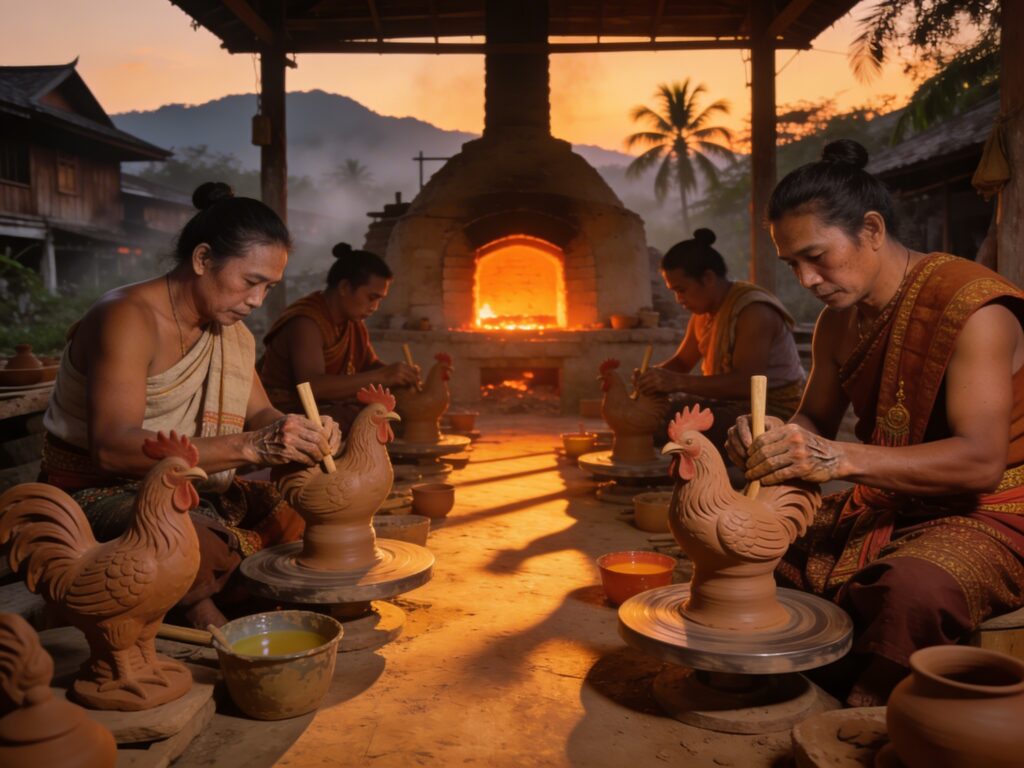
**Topic Title:** Lampang’s Kiln-Fired Guardians: Molding Sacred Ceramic Roosters with Village Potters at Twilight Kiln Glow
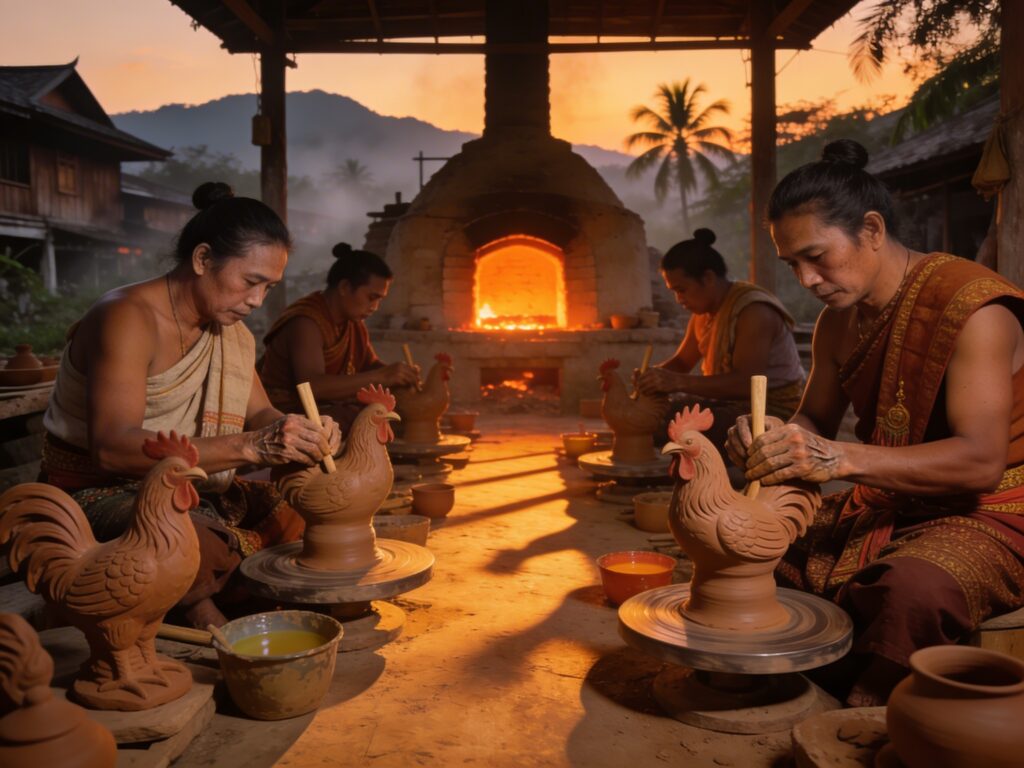
The Twilight Alchemy of Lampang’s Sacred Clay
Beyond the well-trodden paths of Thailand’s northern capitals, Lampang whispers tales of a unique heritage, where earth, fire, and ancient belief converge in a most unexpected form: the ceramic rooster. More than mere souvenirs, these vibrant figures are revered guardians, born from the skilled hands of village potters and the mesmerizing glow of traditional wood-fired kilns as dusk settles over the countryside.
Guardians Cast in Clay: The Rooster’s Sacred Legacy
The ubiquitous ceramic rooster, locally known as “Kai Look Koom,” is far more than a decorative chicken. Its origins intertwine with Lampang’s rich history, heavily influenced by Burmese (Shan) culture. In local belief, particularly within communities tracing ancestry to Myanmar, the rooster is a powerful symbol of protection and good fortune. Placed prominently atop homes, temples, and businesses – often in pairs – these figures are believed to ward off evil spirits, usher in prosperity, and safeguard the inhabitants. The vibrant glazes, often in deep greens, rich browns, and earthy yellows, aren’t just aesthetic; they signify the life and vitality the rooster brings.
Where Tradition Takes Shape: The Potter’s Villages
To witness the birth of these sacred guardians, venture into the pottery villages nestled around Lampang, particularly in areas like Ko Kha district. Here, generations of artisans keep ancient techniques alive. Unlike mass-produced ceramics, Lampang’s roosters are predominantly hand-molded or slip-cast by local potters using locally sourced clay. Step into a humble workshop, and you’ll see:
- Masterful Hands: Artisans, often working within family compounds, deftly shape the clay – forming the proud chest, distinctive comb, flowing tail feathers, and alert stance that defines the Kai Look Koom.
- Sun-Dried Patience: Once shaped, the raw roosters are left to dry naturally under the warm northern sun, a crucial step before they face the transformative fire.
- Glazing the Guardian: Using mineral-based glazes passed down through families, the potters apply color. The choices are deliberate, often reflecting traditional palettes believed to enhance the rooster’s protective power.
The Kiln’s Twilight Symphony: Where Fire Breathes Life
The true magic, the moment where craft transcends into something spiritual, unfolds as the sun begins to dip. This is when the ancient dragon kilns (“Tao Huad” or “Tao Mor Kang”) – long, brick-built structures snaking up hillsides – are stoked to life. Firing with wood, often over many hours or even days, is an art in itself:
- Preparing the Kiln: Carefully, the dried and glazed roosters are loaded deep into the kiln’s chambers, stacked with precision to maximize the heat flow.
- Feeding the Dragon: As twilight paints the sky, the firing intensifies. Potters and their assistants meticulously feed wood into the fire mouths, controlling the temperature – a dance requiring immense skill and experience.
- The Kiln Glow: As darkness falls, the kiln transforms. Intense heat radiates from its brickwork, casting an otherworldly, fiery glow across the workshop yard. Flames lick from stoke holes, and the kiln itself seems to breathe, alive with the energy of the fire within. This is the “Twilight Kiln Glow” – a mesmerizing spectacle where the mundane world fades, replaced by the primal energy of creation.
- Alchemy Complete: The firing cycle culminates, and the kiln is sealed to cool slowly. When opened days later, the transformation is complete: raw clay and glaze have fused, vitrified by the intense heat, emerging as the iconic, lustrous ceramic guardians.
Experiencing the Ritual: A Traveler’s Encounter
Visiting these pottery villages, especially in the late afternoon, offers an unparalleled glimpse into living tradition:
- Seek Out Workshops: Explore villages like Nakhon Lampang Pottery or smaller family studios around Ko Kha. Look for signs advertising “Kai Look Koom” or simply follow the sight of stacked ceramics.
- Respectful Observation: Be mindful that this is a livelihood and a sacred craft. Ask permission before taking photos, especially of artisans at work. A friendly “sawasdee” and a smile go a long way.
- Embrace the Twilight: Plan your visit to coincide with late afternoon. Witnessing the kiln being prepared and the initial stages of firing as dusk settles is magical. If you’re exceptionally lucky and timing aligns, you might witness the full fiery glow after dark (confirm firing schedules if possible, as they aren’t daily).
- Take Home a Guardian: Purchasing a rooster directly from the potter is the most meaningful souvenir. Choose one that speaks to you, knowing it carries the skill of the artisan and the spirit of the kiln’s fire.
Lampang’s ceramic roosters are more than clay; they are vessels of faith, tradition, and community spirit. To stand beside a glowing kiln at twilight, watching the artisans tend the sacred fire that births these guardians, is to connect with the profound soul of Northern Thailand – a place where history is molded by hand and illuminated by flame.