Ubon Ratchathani’s Molten Devotion: Carving Sacred Candlelight Dreams in Sala Kaew Ku’s Lamplight Glow
The Molten Alchemy of Devotion
The air in Ubon Ratchathani hangs thick, not just with tropical heat, but with anticipation. As the monsoon clouds gather, heralding the start of Buddhist Lent (Khao Phansa), a different kind of energy pulses through this northeastern Thai province. It’s the energy of creation, of devotion poured not from a pitcher, but painstakingly carved and molded from massive blocks of beeswax. This is the season of the Ubon Candle Festival, where faith transforms into intricate, ephemeral art, and nowhere does the spectacle feel more profound than when witnessed within the surreal, lamplit embrace of Sala Kaew Ku.
Khao Phansa: When the Rains Bring Forth Light
Khao Phansa marks the beginning of the three-month Buddhist Rains Retreat, a time when monks traditionally remain within their monasteries for intensive study and meditation. In Ubon Ratchathani, this period is inaugurated with the spectacular Candle Festival. Far from simple sticks of wax, these are monumental sculptures – towering chariots, intricate depictions of Buddhist lore, and dazzling scenes from Thai mythology – all painstakingly crafted from pure beeswax.
Wax Dreams Made Manifest: The Artisan’s Sacred Craft
The creation of these candle floats is an act of profound communal devotion, months in the making. Skilled artisans, often working within temple grounds or dedicated workshops, become alchemists:
- The Melt & Mold: Blocks of raw beeswax are melted down, purified, and often mixed with vibrant natural dyes.
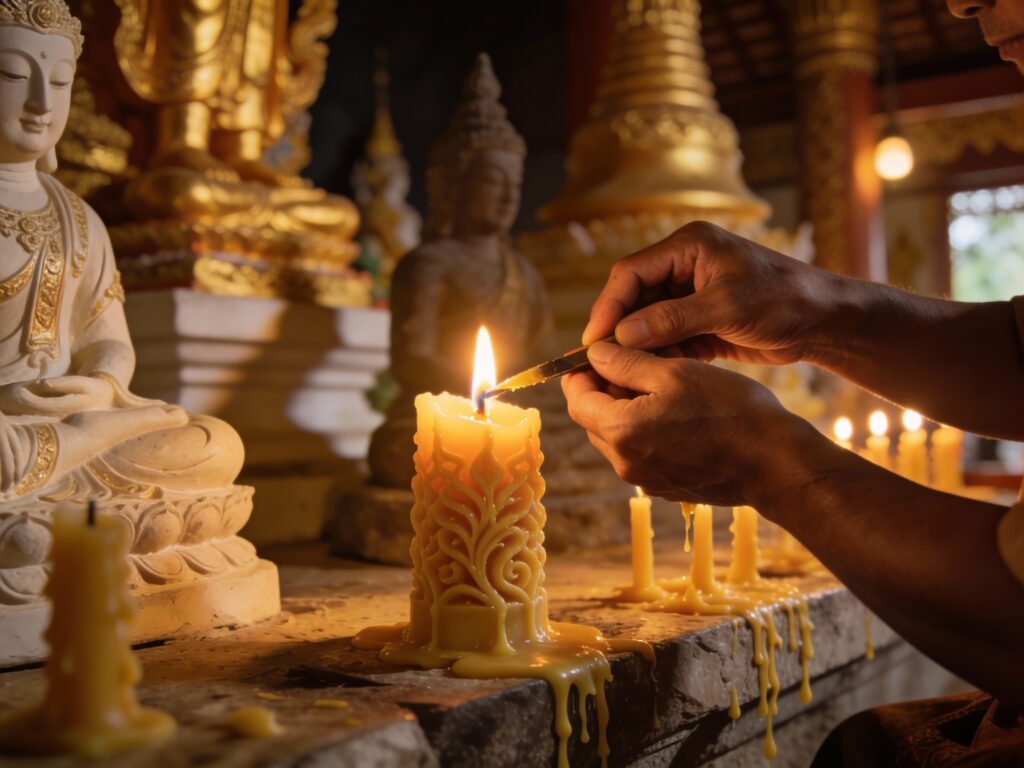
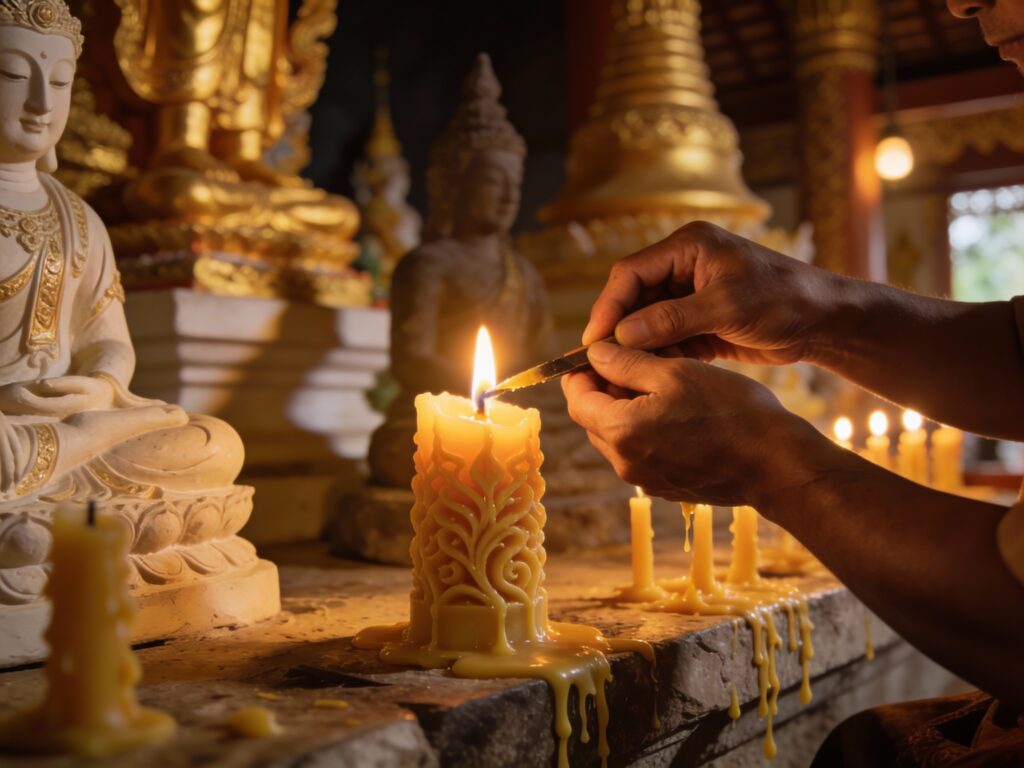
- The Carving: Once cooled into manageable slabs or built upon bamboo and wooden frames, the real magic begins. Using specialized tools, artisans chisel, etch, and sculpt the wax with astonishing precision. Mythical Naga serpents coil, lotus flowers bloom, celestial beings take flight – all rendered in intricate relief.
- The Assembly: Smaller carved pieces are meticulously attached to massive floats, building layer upon layer of narrative and symbolism.
- The Spark of Life: The true purpose, of course, is illumination. Hundreds, sometimes thousands, of candles are embedded within the sculptures, waiting to be lit.
The result? Not just floats, but moving temples of light, born from unwavering faith and breathtaking artistry.
Sala Kaew Ku: Where Concrete Fantasies Meet Flickering Faith
While the grand parade through Ubon city is the festival’s dazzling climax, experiencing the candle floats within the grounds of Sala Kaew Ku offers a uniquely mystical dimension. This sprawling sculpture park, the life’s work of the eccentric shaman-artist Luang Pu Bunleua Sulilat, is a phantasmagoria of concrete giants.
Imagine:
- A colossal three-headed elephant (Erawan) piercing the skyline.
- Serene Buddhas seated amidst writhing Naga serpents.
- Towering Hindu deities frozen in dynamic poses.
- Surreal structures blending Buddhist, Hindu, and animist iconography into a dreamlike landscape.
When Lamplight Glow Transforms the Concrete Garden
As dusk settles over Sala Kaew Ku during the candle festival period, the park undergoes a profound transformation:
- Sacred Placement: Finished candle floats, or sometimes specific, large carved candle pieces created for the occasion, are brought into the park. They are placed strategically – perhaps before the giant Buddha, beside the serene pond reflecting the sculptures, or near the imposing main temple structure.
- The Illumination Ritual: As darkness deepens, the candles are lit. The warm, flickering glow of countless flames spills over the intricate wax carvings, bringing their celestial scenes and mythical beasts to life in a dance of light and shadow.
- An Atmosphere of Awe: The juxtaposition is breathtaking. The solid, timeless concrete sculptures stand sentinel, while the ephemeral wax creations radiate a soft, living light. The air hums with the quiet reverence of devotees making merit, offering prayers, and simply basking in the otherworldly atmosphere. The scent of beeswax mingles with incense and night-blooming flowers.
This is “Molten Devotion” made tangible. The meticulous carving, representing months of dedication, meets the ancient, enigmatic energy of Sala Kaew Ku. The lamplight glow doesn’t just illuminate the park; it seems to awaken the spirits within the concrete, creating a dialogue between the temporary beauty of human devotion and the enduring power of spiritual imagination.
How to Experience the Magic
To witness this unique convergence:
- Timing is Key: Visit Ubon Ratchathani in mid-July, specifically around the days leading up to and including Khao Phansa (the date varies yearly based on the lunar calendar). The main parade is usually on the day before Khao Phansa.
- Sala Kaew Ku by Lamplight: Inquire locally or check festival schedules. Candle displays and lighting ceremonies within Sala Kaew Ku often occur on the evenings surrounding the main parade day. Arrive before dusk to see the floats placed and witness the lighting.
- Respect the Sanctity: Remember this is a deeply spiritual event for locals. Dress modestly, speak softly, and observe rituals respectfully. Photography is usually allowed, but be mindful.
- Explore Fully: Visit Sala Kaew Ku during the day to fully appreciate the scale and detail of the sculptures, then return for the transformative candlelit experience.
Ubon Ratchathani’s Candle Festival is a testament to faith made visible. But to see that faith – that molten devotion, meticulously carved into dreams of light – cast its glow upon the surreal, sacred giants of Sala Kaew Ku is to step into a realm where art, spirituality, and community burn brightly against the Isaan night. It’s an experience that etches itself onto the soul, as luminous and unforgettable as the candlelight itself.