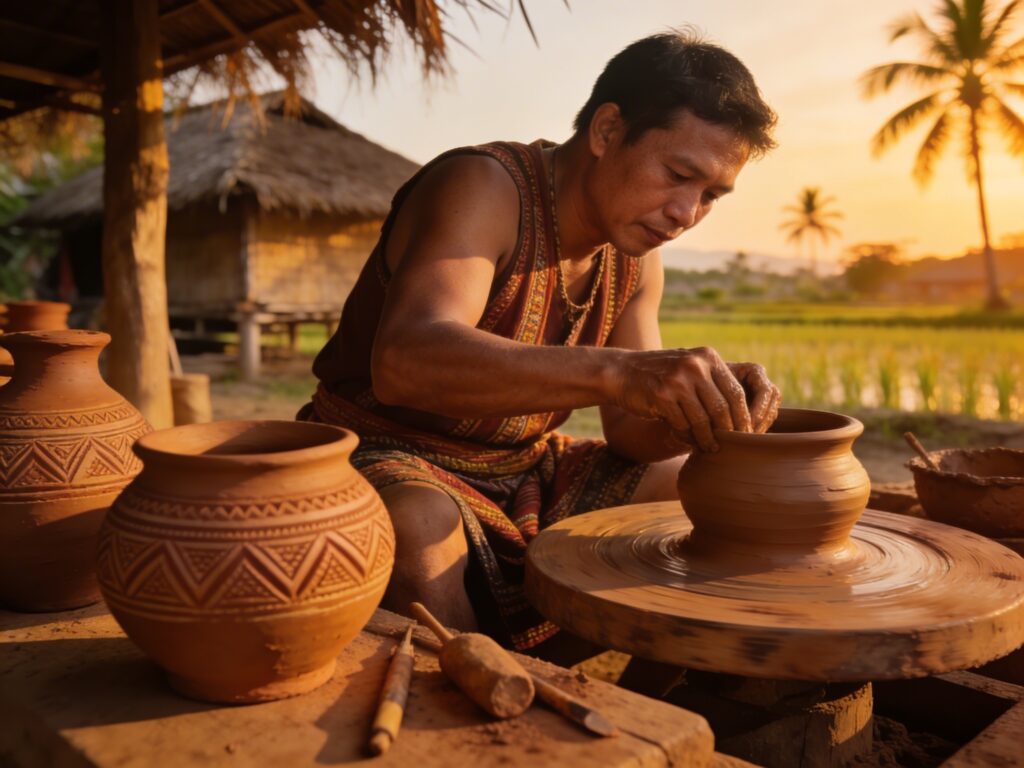
Udon Thani’s Twilight Echoes: Sculpting Ancient Pottery with Ban Chiang Artisans in the Village’s Amber Glow

The Whisper of Clay: A Ban Chiang Twilight Experience
Udon Thani, Thailand’s northeastern gateway, often conjures images of bustling markets and serene lotus lakes. But venture beyond the city, as dusk begins to paint the sky, and you’ll find yourself drawn into a different kind of magic – the ancient, amber-lit world of Ban Chiang pottery. This UNESCO World Heritage site isn’t just a museum exhibit; it’s a living, breathing tradition, best experienced hands-on as the sun dips below the horizon.
Stepping into History’s Embrace
Arriving in Ban Chiang village as afternoon fades feels like crossing a threshold in time. The modern world seems to recede, replaced by the gentle rhythm of rural life. Small workshops, often attached to family homes, dot the lanes. Here, descendants of the artisans who created some of Southeast Asia’s oldest known pottery (dating back over 5,000 years!) keep the craft vibrantly alive. The air is thick with the scent of damp earth and woodsmoke, a prelude to the creative encounter ahead.
Hands in the Clay: Learning from the Masters
This isn’t a passive observation. The true magic of Ban Chiang unfolds when you sit down beside a master artisan. Forget the potter’s wheel – here, the ancient coil-building technique reigns supreme. Under their patient guidance, you’ll learn:
- The Feel of the Earth: Kneading the locally sourced clay, feeling its texture and plasticity, connecting you directly to the land.
- Coil by Coil: Rolling smooth ropes of clay and carefully layering them, building the vessel’s form from the base up – a method unchanged for millennia.
- Shaping & Smoothing: Using simple tools – sometimes just a bamboo paddle and a smooth stone – to shape the curves and refine the surface, discovering the meditative rhythm of the process.
- Ancient Motifs: Trying your hand at incising the distinctive Ban Chiang patterns – swirling spirals, graceful curves, and geometric designs – using pointed tools, echoing symbols found on archaeological treasures.
It’s humbling. Your creation will be rough compared to the masterpieces surrounding you, but the connection forged through touch, through replicating gestures perfected over countless generations, is profound.
The Village’s Amber Glow
As your session progresses, the sun completes its descent. This is when Ban Chiang truly transforms. Electric lights are sparse; instead, the village embraces a softer illumination:
- Lantern Light: Warm, golden light spills from traditional lanterns hanging near workshop entrances and doorways.
- Kiln’s Hearth: The faint, flickering glow from wood-fired kilns (if firing is happening) casts dancing shadows, reminding you of the ancient alchemy that turns soft clay into enduring pottery.
- Fireflies: In the surrounding fields and gardens, fireflies begin their nightly dance, adding pinpricks of living light to the deepening blue.
Working under this gentle, amber canopy is transformative. The world shrinks to the circle of light illuminating your hands and the clay. The sounds soften – the distant chirp of insects, the murmur of conversation in Isan dialect, the rhythmic scrape of smoothing tools. It’s incredibly peaceful, almost sacred. You’re not just making a pot; you’re participating in a ritual bathed in the glow of history.
More Than Just Souvenirs: The Legacy Lives
The pottery you see, and help create, carries the weight of immense history. Ban Chiang’s archaeological significance revealed a sophisticated prehistoric culture. Today’s artisans aren’t replicating museum pieces; they’re innovating while respecting tradition. You’ll see:
- Functional Beauty: Everyday items like water jars, rice steamers, and cooking pots, still made using the old methods.
- Artistic Expression: Decorative vessels featuring intricate modern interpretations of ancient designs.
- Passing the Torch: Often, younger family members work alongside elders, ensuring these skills continue to echo through future generations.
Purchasing a piece directly from the artisan isn’t just acquiring a souvenir; it’s supporting the survival of this irreplaceable cultural heritage.
Planning Your Twilight Encounter
To truly embrace the amber glow experience:
- Time it Right: Aim to arrive at a workshop around 4:00 – 4:30 PM. This gives you ample daylight to start learning and allows you to experience the magical transition into twilight during your session (usually 1.5-2 hours).
- Seek Authenticity: Look for family-run workshops near the Ban Chiang National Museum or ask locally. Many welcome walk-ins, but a gentle inquiry beforehand is appreciated.
- Embrace Imperfection: Your creation will be unique! Focus on the experience, not perfection. Your piece will likely need to dry and be fired, so discuss shipping options if needed.
- Respect the Space: Remember, you’re often guests in their workspace and home compound. Be mindful, patient, and express gratitude (a simple “Khop Khun Mak” – Thank you very much – goes a long way).
Shaping clay in the twilight glow of Ban Chiang is more than a craft workshop; it’s a communion with the deep past. It’s the feel of ancient earth in your hands, the patient guidance of living history, and the enveloping warmth of a village illuminated by tradition. In the amber light, as your fingers trace patterns older than memory, you become part of Ban Chiang’s enduring echo. It’s an experience that leaves an imprint on the soul, as lasting as the fired clay itself.