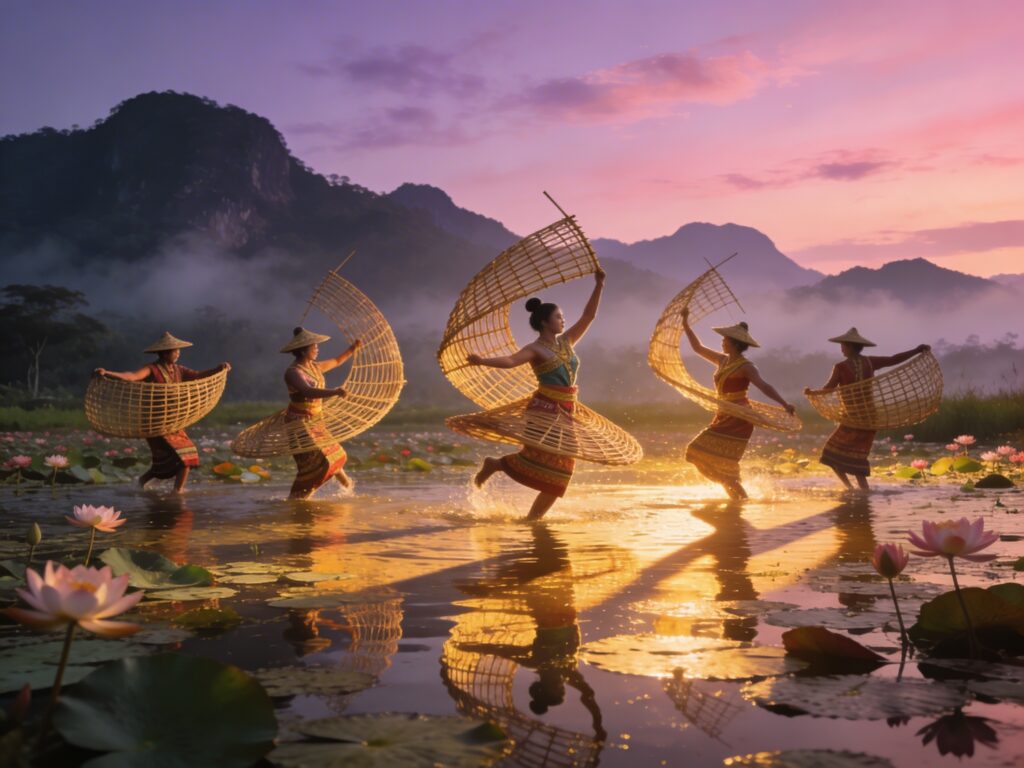
**Ang Thong’s Bamboo Ballet: Sculpting Aquatic Grace with Basket Weavers in the Lotus Marsh Twilight**
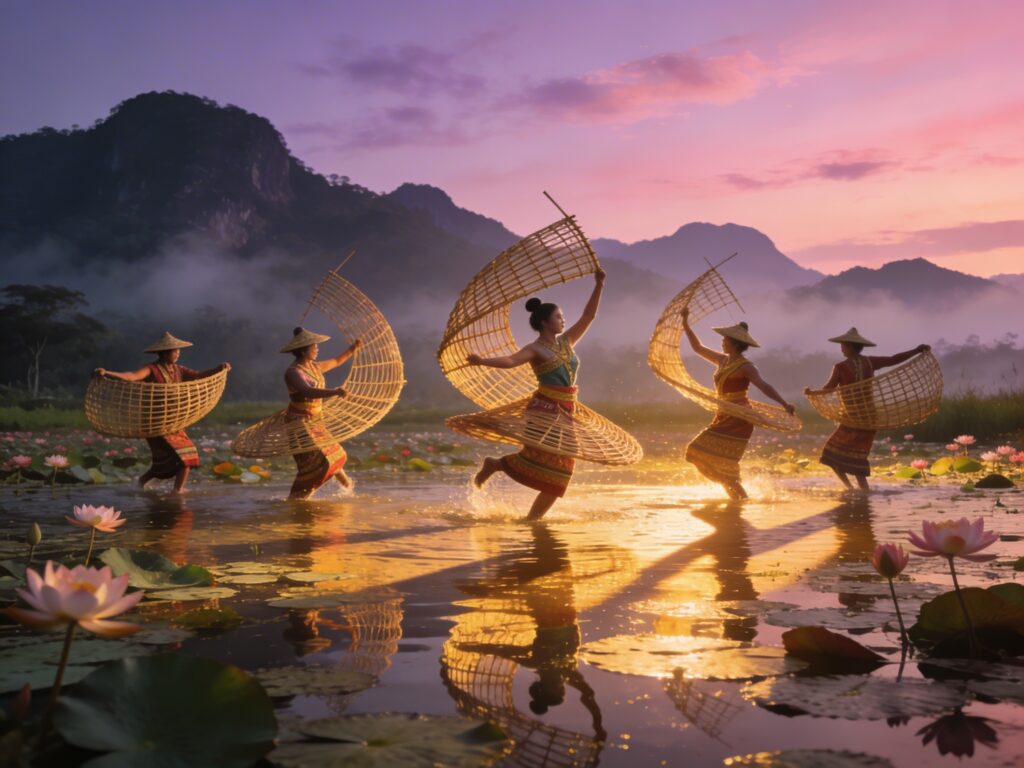
Where Water Meets Craft: Ang Thong’s Unique Bamboo Ballet
Beyond the well-trodden paths of Thailand’s bustling cities and famed beaches lies Ang Thong, a province cradled by the fertile Chao Phraya basin. Here, amidst a landscape etched with shimmering waterways and emerald rice paddies, unfolds a spectacle as delicate and profound as nature itself: the Bamboo Ballet of the lotus marshes. It’s not a performance on a stage, but the living art of local basket weavers, transforming twilight into a canvas of aquatic grace.
The Stage: A Lotus-Clad Amphitheatre
Imagine vast expanses of water, not deep, but wide and tranquil, carpeted with the giant, circular leaves of lotus plants. Their pink and white blossoms rise like jewels towards the sky, their scent mingling with the damp, earthy perfume of the marsh. As the relentless tropical sun begins its descent, painting the sky in hues of apricot, lavender, and deep indigo, this watery world undergoes a transformation. The lotus flowers gently close, and the marsh becomes a stage bathed in the soft, ethereal glow of twilight. This is the setting for Ang Thong’s unique artistry.
The Artisans: Masters of Aquatic Weaving
The dancers in this twilight ballet are the local basket weavers, predominantly women whose skills are passed down through generations. Their craft is deeply intertwined with the marsh environment. They don’t work in workshops on dry land; instead, they wade into the shallow waters, becoming part of the landscape they harvest and utilize. Their material is bamboo – strong, flexible, and abundant. But not just any bamboo; it’s carefully selected, treated, and split into incredibly fine, pliable strips.
Perched on small wooden stools or half-submerged platforms, submerged sometimes waist-deep, they work with an astonishing dexterity. Their tools are simple: sharp knives for splitting, perhaps an awl, and above all, their experienced hands.
The Performance: Sculpting Grace in the Glow
This is where the “ballet” truly manifests. As twilight deepens:
- Rhythmic Movement: Their hands move with practiced, fluid motions – pulling, twisting, weaving the supple bamboo strands. Each movement is efficient, graceful, almost hypnotic in its repetition. It’s a dance born of necessity, elevated to art.
- Silhouettes Against the Sky: Bent over their work, their figures create striking silhouettes against the fading light. The reflections on the still water double the scene, adding a layer of dreamlike symmetry.
- Soundscape: The gentle lapping of water, the rustle of lotus leaves brushing against each other, the soft *snick-snick* of bamboo being worked – these are the subtle sounds of the ballet.
- Transformation: From their skilled hands emerge intricate forms: delicate baskets for fruit or offerings, sturdy fish traps designed with age-old wisdom, mats, and even decorative pieces. They aren’t just making objects; they are sculpting functional beauty from the very essence of their environment.
Twilight’s Magic: The Perfect Moment
Timing is everything. The coolness of twilight offers respite from the day’s heat, making the labor in the water more bearable. The fading light is kinder, softer, ideal for the detailed work without the harsh glare of midday. Crucially, the twilight hours often coincide with a moment of stillness in the marsh – a pause between the day’s activities and the sounds of the night. This tranquility amplifies the beauty and focus of the weavers’ movements. The water mirrors the kaleidoscope sky, and the darkening lotus pads frame the scene, turning the act of weaving into a profound communion with place and time.
More Than Craft: A Connection Forged
Witnessing Ang Thong’s Bamboo Ballet is more than observing a craft; it’s understanding a deep-rooted relationship. It speaks of:
- Resourcefulness: Utilizing locally abundant materials (bamboo, water plants) sustainably.
- Harmony: Working *within* the environment, not imposing upon it. The weavers move through the marsh with minimal disturbance.
- Cultural Continuity: Preserving skills and traditions intrinsically linked to the wetland ecosystem.
- Quiet Resilience: The dedication and quiet strength of the artisans, continuing their craft in the serene embrace of twilight.
To experience this is to step into a living postcard of rural Thai life, where human ingenuity and natural beauty perform a silent, graceful duet. It’s a reminder of the profound artistry found not in galleries, but in the quiet, watery twilight of a lotus marsh, sculpted one bamboo strand at a time.
Experiencing the Ballet
Seeking out this experience requires venturing to smaller communities within Ang Thong, particularly those bordering significant marshland areas. Homestays or community-based tourism initiatives are often the best way to respectfully arrange a visit. Go with patience, quiet observation, and deep respect for the weavers’ space and work. Be prepared for mosquitoes, and embrace the tranquility. Your reward is a glimpse into a timeless tradition, a true Bamboo Ballet etched against the canvas of a Thai twilight.