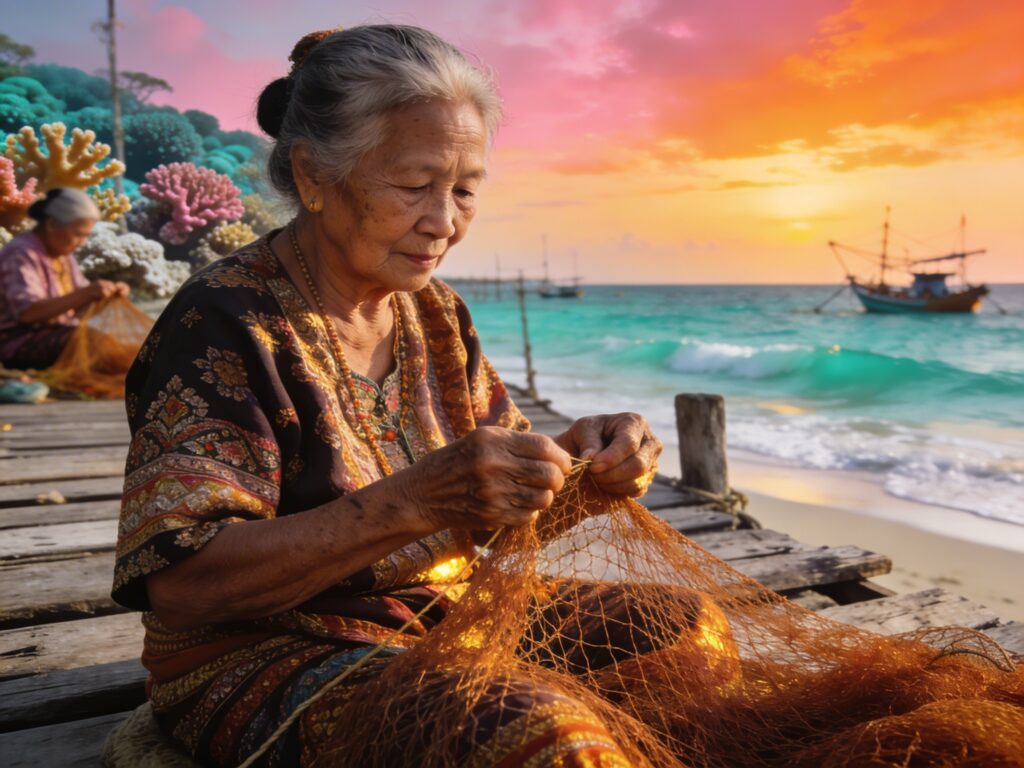
Rayong’s Amber Nets: Mending Maritime Memories with Seafaring Grandmothers in the Coral Coast Sunrise
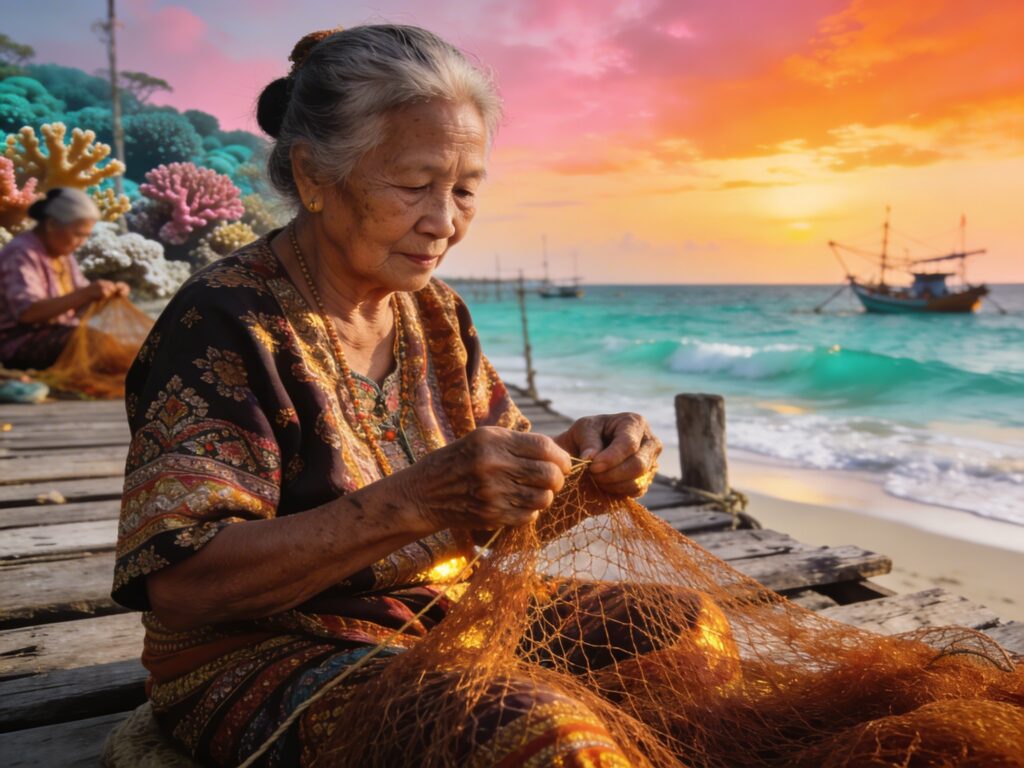
As dawn breaks over the Gulf of Thailand, painting the sky in hues of tangerine, rose, and gold, the quiet beaches of Rayong’s eastern coast awaken not just to the rhythm of waves, but to the soft, persistent whispers of a fading heritage. Here, away from the bustling piers and industrial zones, a unique cultural tapestry unfolds daily, woven by the weathered hands of Rayong’s seafaring grandmothers and their iconic Amber Nets.
The Amber Nets: More Than Just Tools
These aren’t your ordinary fishing nets. Rayong’s “Amber Nets” (แหอำพัน – Hae Ampan) are distinctive hand-woven traps, traditionally crafted for catching small crabs and marine life along the shallow, coral-rich coastline. What sets them apart is their material and colour. Historically woven from natural fibres treated with tree bark extracts (often from the “Samae” or “Takhian” trees), the nets acquire a beautiful, translucent amber hue over time, intensified by saltwater and sun. This amber glow is especially magical when illuminated by the first rays of the Coral Coast sunrise.
The intricate weaving technique itself is a marvel of practical design, creating funnel-shaped traps that allow entry but hinder escape. Each knot, each twist, represents generations of accumulated knowledge about tides, currents, and the behaviour of the sea’s smaller inhabitants.
The Keepers of the Craft: Rayong’s Seafaring Grandmothers
While fishing is often perceived as a male-dominated activity, the tradition of crafting and tending the Amber Nets in Rayong has long been the domain of the women, particularly the matriarchs. These seafaring grandmothers (ยายหาปลา – Yai Ha Pla) are the living repositories of this maritime heritage.
You’ll find them before sunrise, wading into the shallow, clear waters near coral formations or rocky outcrops:
- Setting the Nets: Carefully placing the amber funnels in strategic locations known only through years, often decades, of experience.
- Checking the Catch: Returning later, often waist-deep, to lift the nets, their practiced eyes quickly sorting the small crabs, shrimp, or fish.
- Mending the Memories: In the afternoons or during low tide, they gather on shaded verandas or under stilted houses, meticulously repairing any tears in the nets. This mending is more than practical; it’s an act of preserving tradition, sharing stories, and passing down techniques often learned from their own mothers and grandmothers.
Their faces, etched by sun and sea salt, tell stories of resilience. Their hands, nimble and strong despite the years, move with a rhythm born of a lifetime connected to the ocean’s pulse. They embody a deep, intuitive understanding of this specific coastal ecosystem.
Where the Coral Coast Meets Tradition
Experiencing this tradition authentically requires seeking out the quieter, less developed coastal villages east of Rayong city:
- Ban Phe Area (East): Explore the coastal stretches east of the main ferry pier towards places like Laem Mae Phim, looking for small local fishing communities.
- Hat Mae Ramphueng: While parts are developed, the quieter eastern and western fringes still harbour pockets of traditional fishing activity.
- Smaller Villages (e.g., near Khao Laem Ya – Mu Ko Samet National Park): Coastal villages tucked away from major tourist spots are your best bet.
The Coral Coast Sunrise: This isn’t just a pretty backdrop; it’s the essential time to witness the tradition. Arrive before dawn. The soft morning light filtering through the amber nets, the silhouettes of the grandmothers against the pastel sky, the gentle sounds of water and murmured conversation – it’s a scene of profound tranquillity and timeless connection.
A Heritage Hanging by a Thread
Like many traditional crafts, the art of making and using the true Amber Nets faces challenges:
- Modern Materials: Synthetic nets are cheaper and faster to produce, replacing the labor-intensive natural amber nets.
- Changing Livelihoods: Younger generations often seek opportunities outside fishing and traditional crafts.
- Environmental Pressures: Coastal development and pollution impact the delicate marine ecosystems these nets rely upon.
Watching a grandmother meticulously repair her amber net becomes a poignant metaphor – she is literally and figuratively mending a fragile link to Rayong’s maritime past.
Experiencing and Honoring the Tradition
For the responsible traveler, witnessing this tradition is a privilege:
- Observe Respectfully: Keep a quiet distance, especially while they are working in the water. Use a long lens if taking photos; always ask permission for close-ups.
- Engage Gently: If approached or if they seem receptive, a warm smile and a polite “Sawasdee” (hello) go a long way. Some might be willing to briefly explain their work.
- Support Local: If you see grandmothers selling their fresh, small catch (like tiny crabs or shrimp) or sometimes even small, simple handicrafts near their homes, consider buying some. It directly supports their livelihood.
- Seek Cultural Centers: Check if local museums or community centers (like some near Ban Phe) showcase the net-making craft or related history.
A Sunrise Worth Waking For
Rayong’s Amber Nets and the seafaring grandmothers who tend them offer more than just a picturesque sunrise scene. They represent a tangible thread to Thailand’s rich coastal heritage, a story woven from resilience, deep ecological knowledge, and the quiet strength of its matriarchs. To witness them at dawn on the Coral Coast is to glimpse a fading world of beauty and tradition, a poignant reminder of the intricate connections between people and the sea. It’s a memory woven not just into the nets, but into the heart of anyone fortunate enough to experience it.