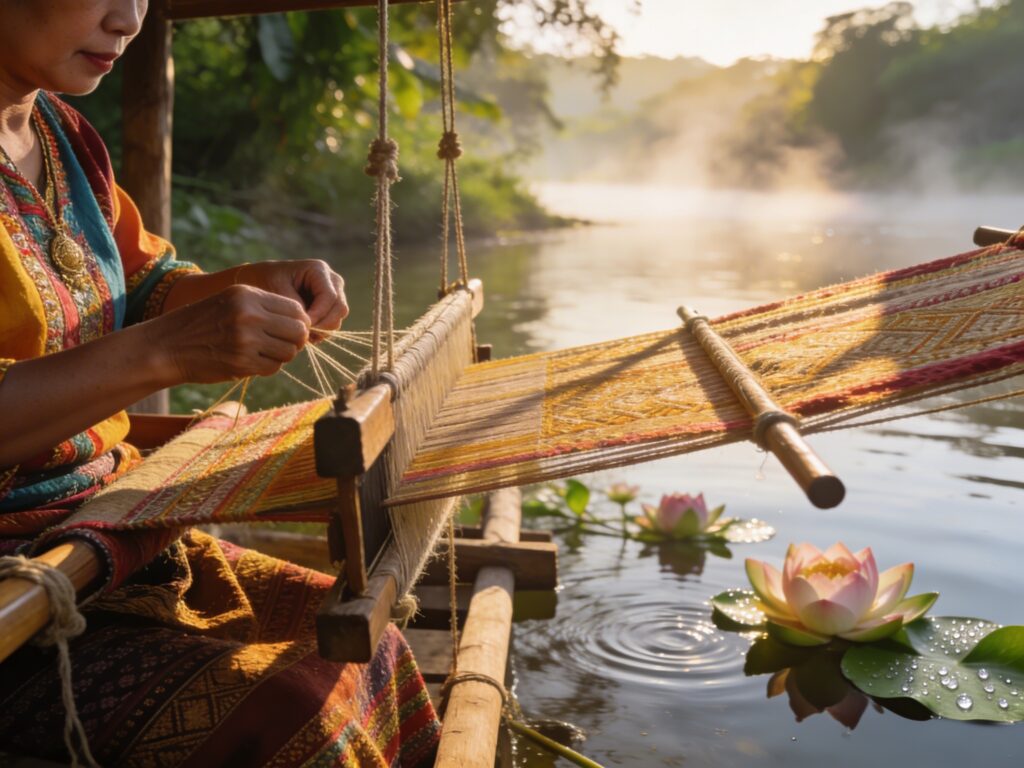
**Ang Thong’s Lotus Loom: Crafting Sacred Garments with Riverside Weavers in the Morning Stillness**
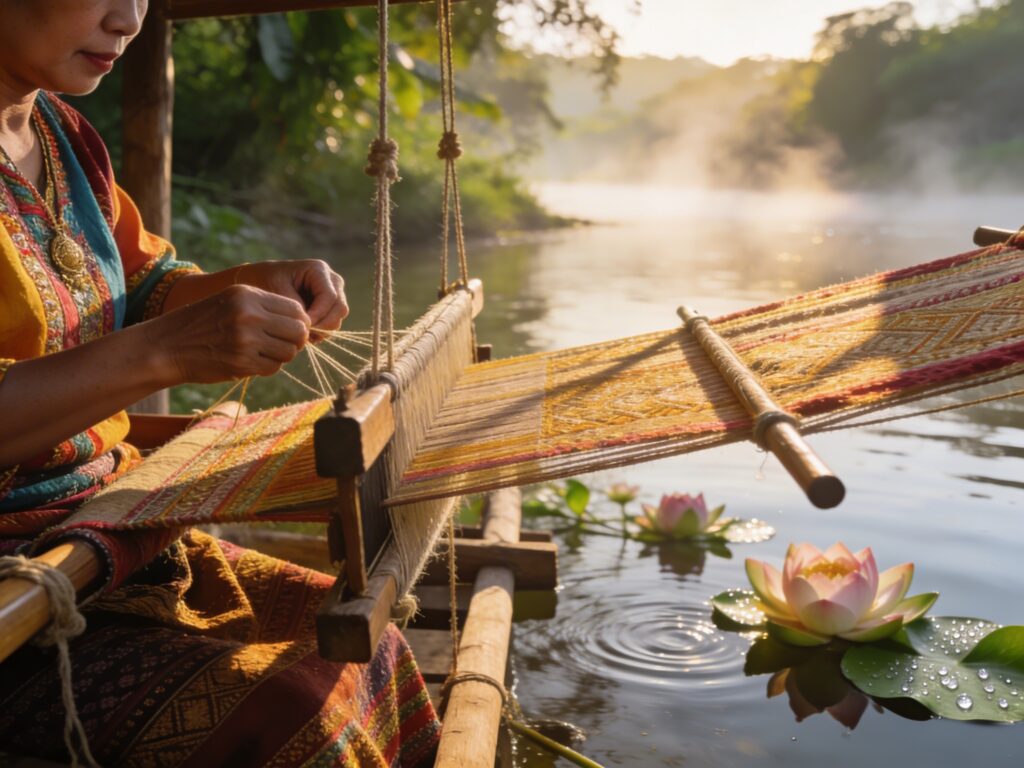
The Whispering Looms: Where Dawn Meets Devotion
Forget the clamour of Bangkok or the beach parties of the south. Deep in the heart of Thailand’s fertile Central Plains, the province of Ang Thong holds a secret woven from water, faith, and the first fragile light of day. Here, along the serene banks of the Chao Phraya River and its tributaries, a unique and sacred craft unfolds in the hushed stillness of the morning: the weaving of lotus fiber garments.
More Than Thread: The Sacred Lotus Fiber
This isn’t just any textile. The raw material comes from the stems of the sacred lotus flower (Nelumbo nucifera), revered in Buddhism as a symbol of purity, enlightenment, and detachment – rising pristine from muddy waters. Transforming this humble aquatic plant into wearable cloth is a labor of profound patience and dedication.
- The Harvest: Before the sun climbs high and heats the air, skilled gatherers wade into lotus ponds. They select mature stems, cutting them carefully underwater to maximize fiber length.
- Extracting the Silk: This is the magic. The outer layer of the stem is gently scraped, revealing sticky, gossamer-thin filaments. Dozens, sometimes hundreds, of stems are needed for just a small amount of usable fiber. Workers roll these filaments on a wet board, joining them end-to-end by hand to create a continuous, fragile thread. The process must be done swiftly, while the stems are fresh and supple.
- Spinning & Preparation: The delicate threads are meticulously hand-spun, often combined with a small percentage of fine silk thread for strength, creating the unique “lotus silk.” It’s then dyed using natural pigments, often in earthy tones or the subtle pinks and yellows reminiscent of the flower itself.
The Riverside Ateliers: Weaving in Harmony
The true soul of this craft resides in the small, often open-air weaving workshops nestled beside the water. Visiting these communities, especially in the cool, tranquil hours of the early morning, is an experience that transcends mere observation.
- Rhythm of the River: The gentle lapping of water against the banks provides a natural soundtrack. The air is cool and often misty, carrying the faint scent of lotus and damp earth.
- Skill Passed Down: You’ll find predominantly female weavers, masters of traditional handlooms. Their movements are rhythmic, practiced, and meditative. The soft clack-clack of the loom becomes part of the morning’s quiet symphony.
- A Sacred Act: Weaving lotus cloth is often imbued with spiritual significance. Many weavers approach their work with a sense of reverence, sometimes chanting prayers or mantras as they weave. The resulting fabric is considered pure and auspicious.
Crafting the Sacred: Purpose of the Lotus Cloth
This isn’t fabric destined for fast fashion. Lotus fiber cloth is precious, time-consuming to produce, and carries deep meaning:
- Monastic Robes (Phâ Káo): The highest purpose. Offering lotus cloth for monks’ robes is considered an act of immense merit, directly linking the purity of the lotus to the spiritual path. These robes are incredibly lightweight, breathable, and possess a unique, subtle sheen.
- Special Ceremonial Attire: High-ranking monks or for use in particularly important Buddhist ceremonies may wear garments made entirely or partially from lotus silk.
- Amulets & Sacred Objects: Smaller pieces are used to wrap sacred amulets (Phra Khrueang) or create pouches for Buddhist texts, enhancing their sanctity.
- Heirloom Textiles: Occasionally, exquisite scarves or small pieces are crafted for discerning individuals seeking a tangible connection to Thai spiritual heritage.
Experiencing the Lotus Loom: A Traveler’s Encounter
Visiting Ang Thong’s lotus weaving communities requires respect and mindful travel:
- Timing is Key: Aim for early morning (around 6:00 AM – 9:00 AM) to witness the most active period – the fiber extraction and the start of weaving, bathed in that magical morning light. Avoid weekends if possible for a quieter experience.
- Seek Out Communities: Villages like Ban Pa Mok are renowned centers for this craft. Local homestays or community tourism initiatives can arrange respectful visits. Ang Thong’s tourism office is also a helpful resource.
- Observe Quietly: This is a place of work and devotion. Speak softly, ask permission before taking photos (especially close-ups of weavers’ faces), and avoid disrupting the rhythm.
- Understand the Value: Genuine lotus silk products are rare and expensive due to the immense labor involved. Appreciate the craft; purchasing directly supports the weavers and preserves this heritage. Even a small scarf represents weeks of work.
- Feel the Fabric: If offered the chance, handle a piece of lotus cloth. Notice its incredible lightness, breathability, and unique texture – a tactile connection to centuries of tradition.
A Tapestry of Tradition and Tranquility
Ang Thong’s lotus loom is more than a handicraft; it’s a living meditation, a profound link between nature’s purity, human devotion, and spiritual aspiration. Witnessing the weavers at their looms by the riverside in the morning stillness offers a rare glimpse into a Thailand that moves to the rhythm of tradition and faith. It’s a reminder of the extraordinary beauty that can emerge from patience, skill, and a deep connection to the land and its sacred symbols. To experience it is to touch a thread of Thailand’s spiritual soul.