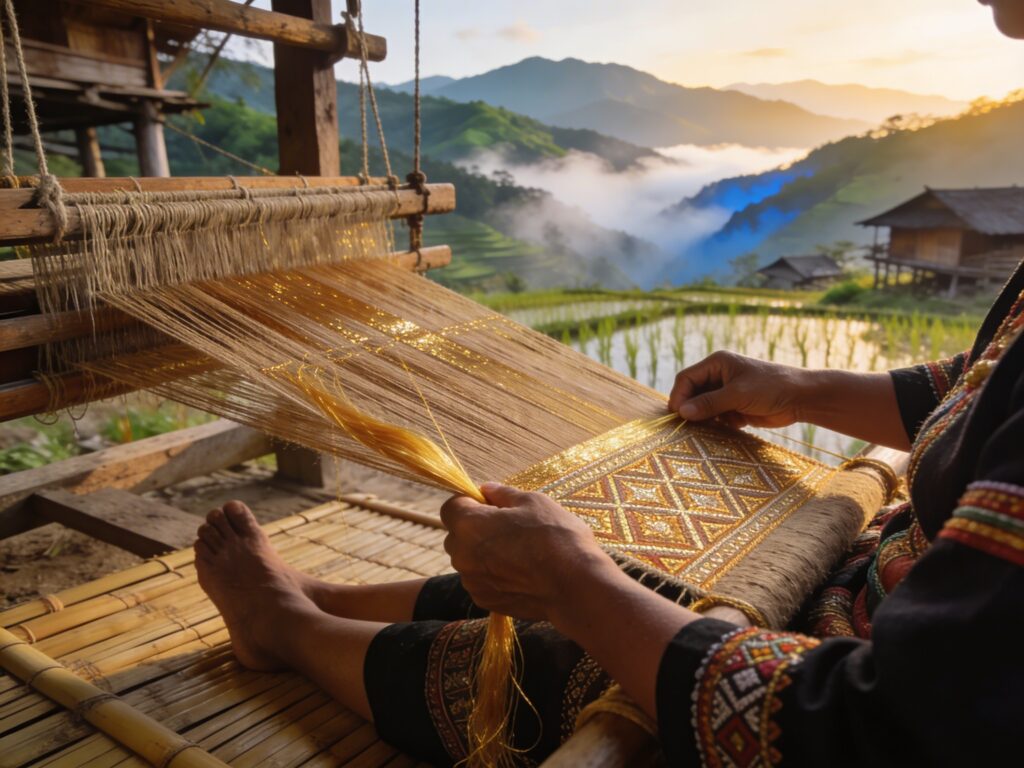
Chiang Rai’s Golden Threads: Weaving Lanna Patterns with Hill Tribe Artisans in the Mountain Dawn Mist
“`html
Beyond the Loom: Where Mist, Mountains, and Magic Intertwine
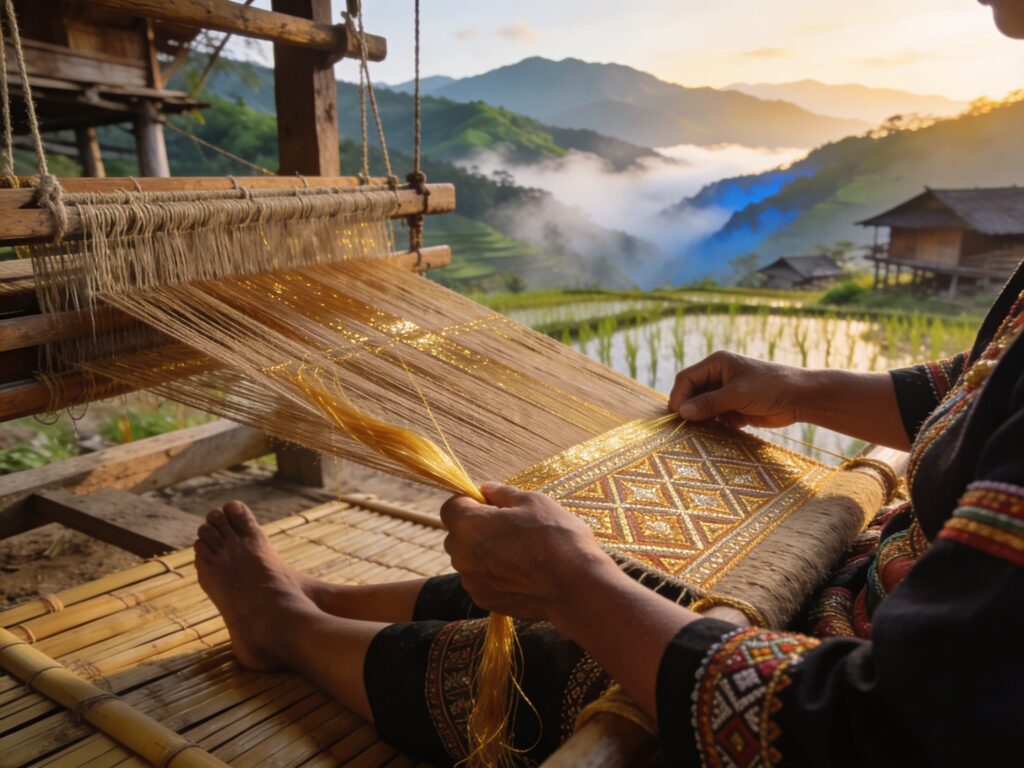
Chiang Rai, Thailand’s northernmost jewel, is a land sculpted by emerald hills, cloaked in ethereal dawn mist, and echoing with ancient stories. Here, amidst the cool mountain air, a different kind of gold glimmers – not mined from the earth, but meticulously crafted by the hands of master artisans. This is the realm of Chiang Rai’s legendary textiles, where intricate Lanna patterns dance with the bold, symbolic artistry of the hill tribes, creating fabrics that are far more than cloth; they are woven narratives of identity, heritage, and breathtaking beauty.
The Lanna Legacy: Elegance Etched in Thread
The historical Lanna Kingdom, centered in Northern Thailand, bequeathed a rich artistic tradition. Lanna weaving is characterized by its sophistication and subtlety. Think intricate geometric patterns – diamonds, zigzags, and complex interlocking designs – often rendered in harmonious, muted palettes drawn from nature: deep indigos, earthy ochres, forest greens, and creamy whites. Fabrics like the exquisite tin chok (supplementary weft weaving) and the subtle sheen of mudmee (ikat) reflect a courtly elegance. Lanna motifs frequently carry auspicious meanings, representing prosperity, continuity, and protection, woven with meticulous precision on traditional wooden looms.
Hill Tribe Heritage: Stories Woven in Symbols and Color
Chiang Rai’s highlands are home to diverse ethnic groups – Akha, Lahu, Karen, Yao, and Hmong, each possessing distinct weaving traditions passed down through generations. Their textiles are vibrant tapestries of cultural identity:
- Akha: Renowned for their elaborate headdresses adorned with silver coins and beads, Akha weaving incorporates bold geometric patterns and striking color contrasts (reds, blacks, blues, yellows). Embroidery and appliqué featuring symbolic motifs like stars, seeds, and animal figures tell stories of ancestry and cosmology.
- Lahu: Often favoring deep indigo-dyed cotton, Lahu textiles feature intricate cross-stitch embroidery in vibrant pinks, greens, and yellows. Their patterns are highly geometric and symbolic, representing their close connection to the natural world and spiritual beliefs.
- Karen (Long Neck): Famous for their stunning tunics, Karen weaving is distinguished by complex supplementary weft patterns. Their signature technique involves weaving narrow bands of intricate designs (often red on a white or natural background) which are then sewn together to form larger garments. Motifs often depict animals, plants, and geometric symbols.
- Yao (Mien): Yao embroidery is exceptionally fine and detailed, often featuring intricate representations of mythical creatures, flowers, and people on dark indigo backgrounds, frequently adorned with striking red piping.
- Hmong: Explosions of color define Hmong textiles, particularly their stunning story cloths (paj ntaub). Using reverse appliqué and intricate cross-stitch, they depict intricate geometric patterns, symbolic motifs (like the snail symbolizing family unity), and even elaborate scenes of daily life, ceremonies, and Hmong folklore.
Golden Threads: The Fusion of Two Worlds
What makes Chiang Rai’s textile scene truly extraordinary is the beautiful confluence of these traditions. This isn’t merely coexistence; it’s a dynamic dialogue:
- Shared Techniques: The fundamental skills of backstrap and foot-treadle loom weaving are common ground. Knowledge exchange happens organically in markets and communities.
- Material Crossovers: Hill tribe artisans sometimes incorporate the finer cottons and silks traditionally favoured in Lanna weaving, adding new textures and drape to their work.
- Motif Inspiration: Lanna weavers might subtly integrate simplified hill tribe geometric patterns or symbolic elements, adding a touch of mountain vitality. Conversely, hill tribe artisans might adapt the more complex, flowing Lanna patterns into their bold palettes.
- Modern Collaborations: Contemporary designers and ethical enterprises actively collaborate with artisans from both traditions. They help reinterpret ancient patterns for modern uses (homewares, fashion accessories) while respecting cultural integrity, ensuring artisans receive fair compensation. Places like Studio Naenna in Chiang Mai (with strong Chiang Rai connections) exemplify this respectful fusion.
Experiencing the Craft: A Journey for the Senses
To truly appreciate Chiang Rai’s golden threads, venture beyond the shops:
- Visit Hill Tribe Villages (Responsibly): Seek out community-based tourism initiatives or established craft cooperatives like those around Doi Tung or Mae Sai. Observe artisans at work, learn about the meanings behind motifs, and purchase directly to support them.
- Explore Local Markets: Chiang Rai’s Walking Street market (weekend evenings) and smaller local morning markets are treasure troves of authentic textiles. Look for stalls run by the artisans themselves or reputable community groups.
- Seek Out Ethical Workshops: Visit social enterprises dedicated to preserving these crafts, such as the Hill Tribe Museum & Education Center in Chiang Rai town, which often has demonstrations and a well-curated shop supporting local villages.
- Appreciate the Process: Notice the natural dyes (indigo, lac, turmeric), the rhythmic clack of the loom, the incredible patience required for intricate embroidery. Each piece holds countless hours of skilled labor.
More Than Fabric: Carrying a Legacy Home
When you acquire a piece of Chiang Rai weaving, you’re not just buying a souvenir. You’re becoming a custodian of a living heritage. You hold a fragment of Lanna’s regal elegance intertwined with the vibrant spirit of the mountains. You carry the dawn mist, the whispers of ancestors, and the resilient creativity of communities who keep their stories alive, one golden thread at a time. It’s wearable art, imbued with the soul of Northern Thailand.
“`