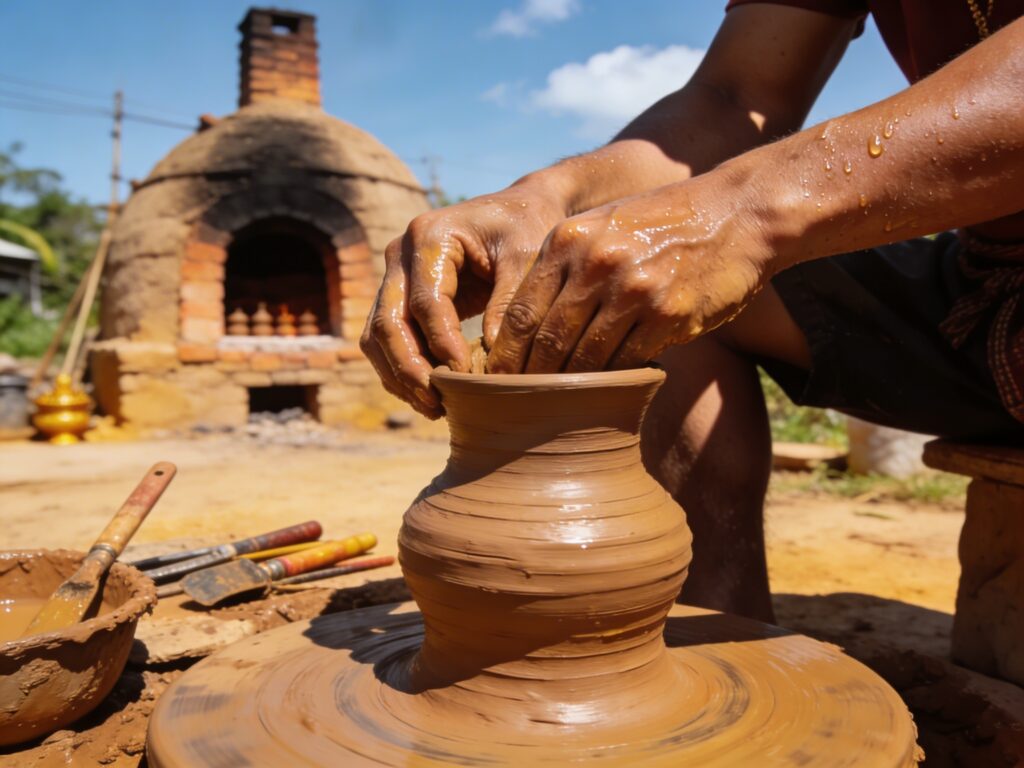
Buriram’s Midday Clay Chronicles: Coiling Sacred Water Vessels with Kiln Masters in the Scorching Sun
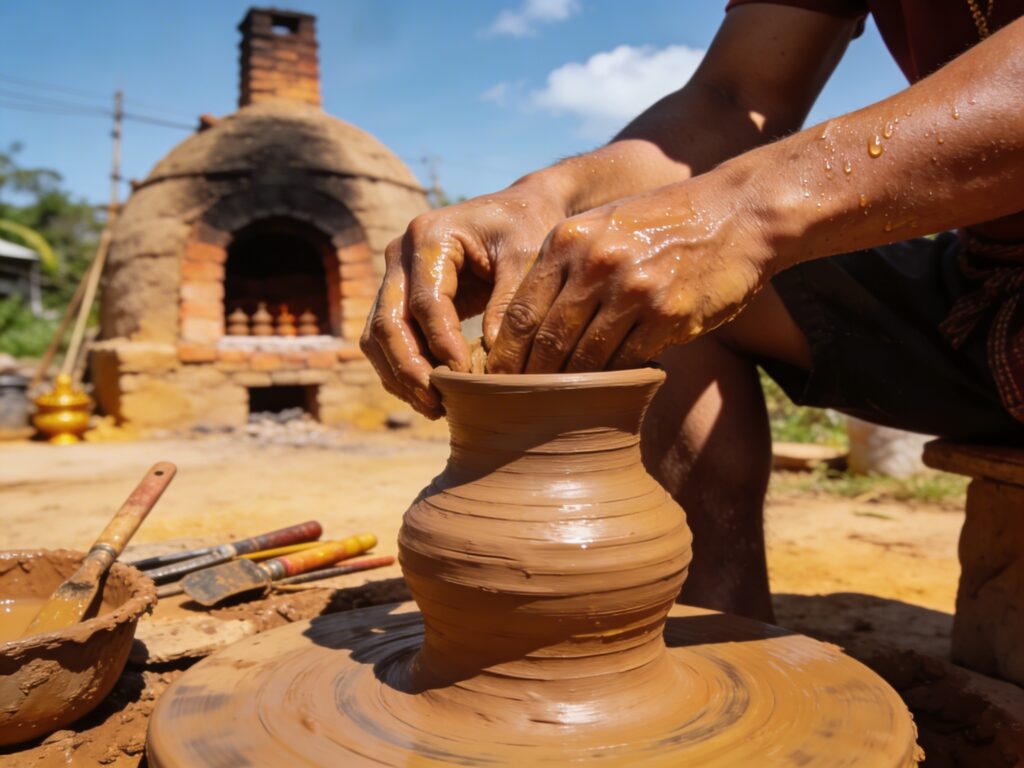
Where Sun, Sweat, and Sacred Clay Converge
Buriram, Thailand’s northeastern powerhouse known for motorsports and majestic Khmer ruins, holds a quieter, earthier secret. Venture beyond the roar of engines and the silent grandeur of Prasat Hin Khao Phanom Rung, and you’ll find villages where an ancient dance with clay unfolds daily, most intensely under the unforgiving midday sun. This is the world of Buriram’s kiln masters, guardians of a pottery tradition where functional necessity meets profound spiritual reverence, centered around the creation of sacred water vessels.
The Crucible of the Midday Sun
Forget air-conditioned studios. In Buriram’s pottery villages like Ban Kruat or Dan Kwian (though Dan Kwian is more Nakhon Ratchasima, the tradition spills over), the kiln masters and their apprentices embrace the sun’s zenith. Why? The scorching heat isn’t just a challenge; it’s an integral tool. Working under the blazing sky allows the clay – locally dug and known for its unique reddish hue and iron-rich properties (“Din Sor Pet”) – to dry consistently and rapidly between crucial stages of coiling and shaping. The heat makes the physical labor grueling, backs bent low over the clay, sweat dripping freely, but it imparts a specific character and resilience to the vessels born in this furnace-like environment.
Coiling Life into Sacred Forms
The primary focus here isn’t decorative vases, but vessels designed to hold life’s most essential element: water. These are not mere pots; they are tao nam tan (sacred water jars) and khan tok (offering bowls), imbued with spiritual significance. The process is mesmerizingly ancient:
- The Ritual of Preparation: Master potters often begin with a quiet moment of respect for the earth spirits, acknowledging the clay’s origin. The local clay is wedged meticulously, removing air bubbles and achieving the perfect plasticity.
- The Art of the Coil: Using no wheel, artisans build the vessels entirely by hand-coiling. Thick ropes of clay are rolled, then painstakingly layered and pinched together on a simple turntable. Fingers, worn smooth by years of practice, are their primary tools – smoothing, blending, coaxing the form upwards.
- Midday Alchemy: As the sun beats down, each coiled layer must firm up slightly before the next is added. This natural, solar-assisted drying prevents collapse and ensures structural integrity, especially vital for the large, bulbous forms of traditional water jars. The masters read the clay’s response to the heat like a language.
- Shaping the Spirit: Once the basic coil-built form is achieved, the shaping begins. For sacred vessels, specific curves, necks, and bases are crucial, believed to influence the vessel’s ability to keep water cool and pure, or to properly hold offerings for spirits and ancestors. This stage demands absolute focus, even as sweat stings the eyes.
The Kiln Master: Keeper of the Fire and Tradition
The “kiln master” is more than just a skilled potter; they are the high priest of the firing process, possessing generations of inherited knowledge. Their understanding of:
- Clay Composition: Knowing exactly how the local Buriram clay reacts to different temperatures.
- Kiln Dynamics: Mastering the unique characteristics of their groundhog kiln or traditional brick kiln, knowing where to place different vessels for optimal heat exposure.
- The Fire’s Breath: Reading the flames and smoke to maintain the precise temperature needed for days on end – often reaching over 1000°C.
- Sacred Timing: Knowing the spiritually auspicious times to begin and end a firing, often involving small offerings.
It’s this mastery that transforms fragile, sun-baked clay into vitrified, resonant pottery capable of holding sacred water for generations.
More Than Pottery: Vessels of Life and Belief
In Buriram’s rural communities, these clay vessels are deeply woven into the fabric of life and spirituality:
- Practical Sanctity: The large water jars (tao nam tan) are essential for storing drinking water, naturally cooling it through evaporation. Their presence near homes and temples is ubiquitous.
- Spiritual Conduits: Smaller vessels like khan tok are used in daily Buddhist merit-making, housewarming ceremonies, and animist spirit offerings. The clay itself, born from the earth, is seen as a pure and grounding medium for connecting with the sacred.
- Enduring Heritage: Creating these vessels under the midday sun, using techniques passed down centuries, is an act of cultural preservation. Each coil pinched, each jar fired, is a testament to Isan’s enduring spirit and connection to the land.
Witnessing the kiln masters of Buriram at work, especially in the furnace of midday, is humbling. It’s a raw, beautiful testament to human ingenuity, endurance, and the deep-seated belief that even the most functional objects can hold sacred space. The cool water drawn later from one of these sun-forged jars carries not just refreshment, but the weight of tradition and the quiet power of the earth itself.
<!– * Detail of a master potter's hands smoothing the neck of a large sacred water jar (tao nam tan). –>
<!– * A weathered, aged sacred water jar (tao nam tan) still in daily use outside a rural Buriram home or temple. –>