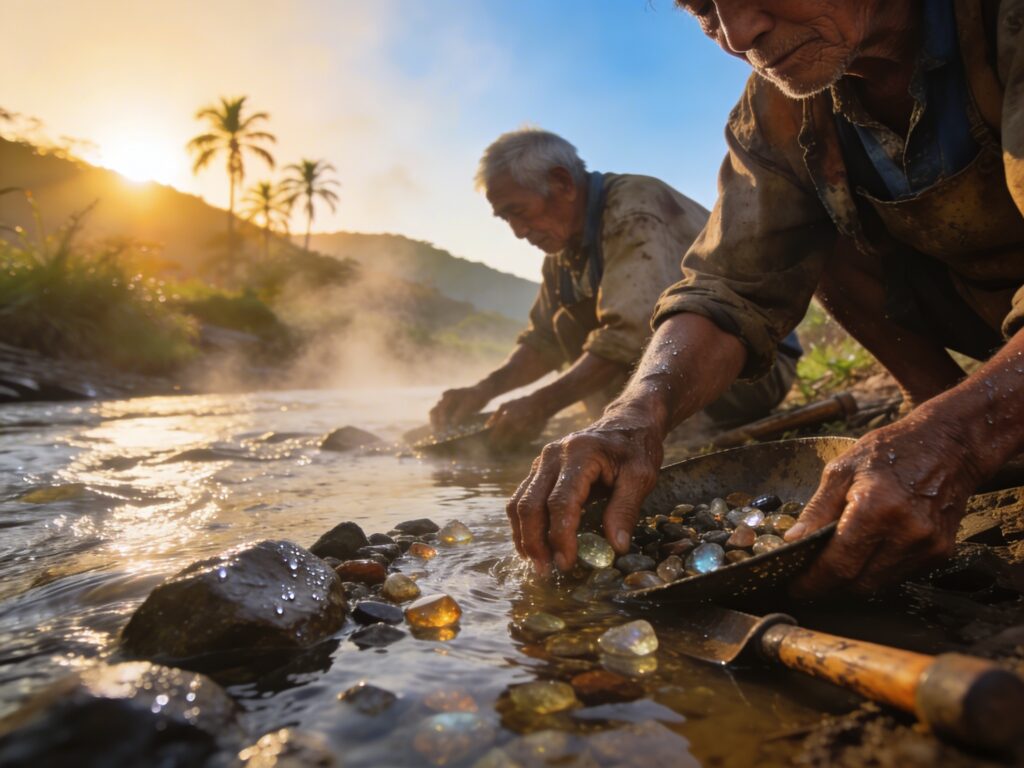
Chanthaburi’s Gemstone Dawn: Sifting River Secrets with Mining Elders in the First Light
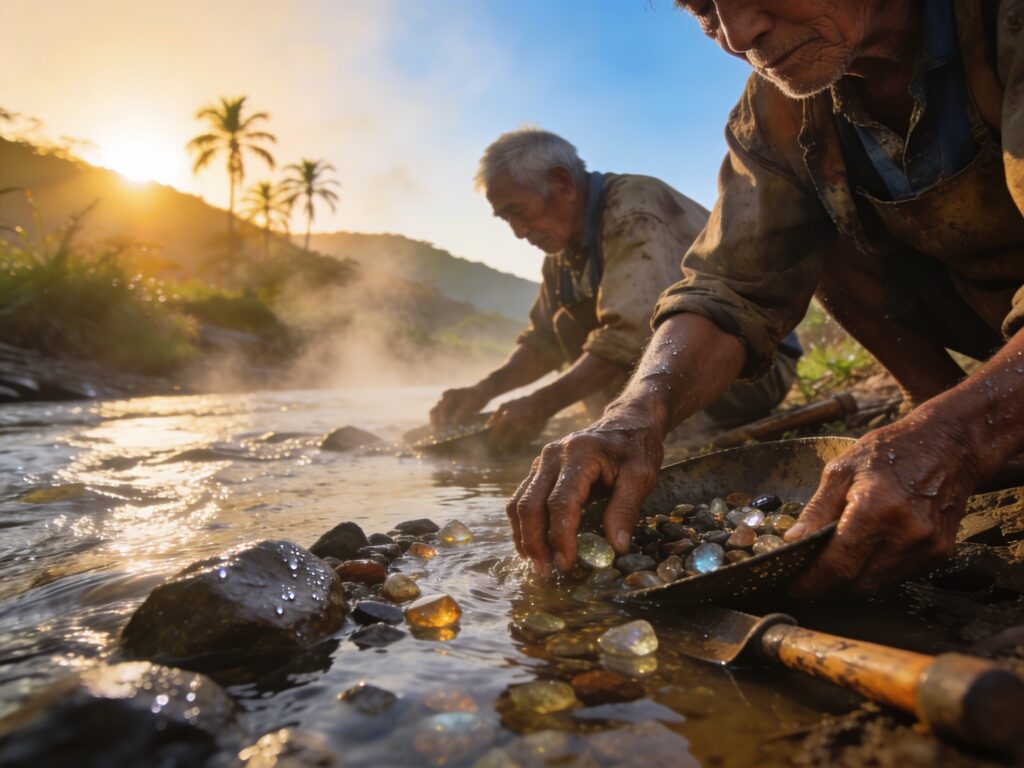
The Whispering Waters of Dawn
As violet shadows retreat from Chanthaburi’s jungle-clad hills, a ritual older than memory unfolds along the Klong Phlio River. Before the tropical sun scalds the air, grizzled figures wade into waist-deep water, their bamboo trays poised like sacred instruments. This is where Thailand’s gemstone legacy breathes at dawn – where elders read river currents like ancient texts, hunting rubies that glow like captive fire and sapphires mirroring twilight skies.
Masters of the River’s Rhythm
These elders, some nearing 80, move with aquatic grace learned over lifetimes. Their calloused hands – mapped with scars from diving knives and rough stones – know each pebble’s secret language. “The river whispers where treasures sleep,” says Grandpa Somsak, whose family has sifted these waters since King Rama V’s reign. “Monsoon currents shift gem-bearing gravel beds overnight. Dawn shows us fresh trails.”
Their tools remain unchanged for generations:
- Chong Teng: Conical bamboo trays that filter gravel with hypnotic swirling motions
- Dap Phet: Iron-tipped poles to dislodge sediment from bedrock crevices
- Look Krok: Handwoven mesh nets for capturing micro-crystals invisible to untrained eyes
The Alchemy of Light and Stone
As first sunlight fractures across the river, magic ignites. A flick of the wrist sends gravel dancing across bamboo lattices. Ordinary pebbles fly aside until – clink – a crimson spark winks from the sludge. Rubies here emerge coated in chalky “rind,” resembling dull marbles until elders rub them with garlic oil, revealing pigeon-blood fire beneath.
Chanthaburi’s volcanic geology gifts prospectors with:
- Star sapphires that trap milky constellations within midnight-blue spheres
- Zircon crystals called “Siam hyacinth,” blazing orange-gold in morning light
- Rare garnets shifting from emerald green to raspberry under torch examination
Echoes in the Sediment
Each stone holds layered history. “This zircon slept near dinosaur bones,” Grandma Mali explains, uncorking a vial of Jurassic-era garnets. “We find stones cut by Khmer Empire tools – proof our ancestors traded gems to Angkor Wat builders.” Modern miners seek commercial volumes, but elders pursue rarities: trapiche rubies with six-pointed star patterns, or sapphires streaked with natural gold filaments called “holy threads.”
Guardians of Vanishing Wisdom
As mechanized mining dominates, dawn sifting becomes living heritage. The elders’ encyclopedic knowledge – distinguishing Thai rubies from African imitations by fracture patterns, predicting sapphire yields from orchid bloom cycles – fades with each passing year. Community efforts now document their wisdom through:
- Oral history projects recording mineral classification songs
- Youth apprenticeships teaching “eye-cleaning” – spotting gems without lenses
- Ethical tourism initiatives where visitors sift under guidance, returning all finds
To stand hip-deep in cool water as elders murmur over gravel is to witness time suspended. When Grandpa Somsak presses a newly found ruby into your palm – still pulsing with river chill and dawn’s first warmth – you hold not just corundum, but the heartbeat of a disappearing art. These river sages remind us that true treasures aren’t merely mined, but earned through communion with earth and water at the fragile cusp of day.