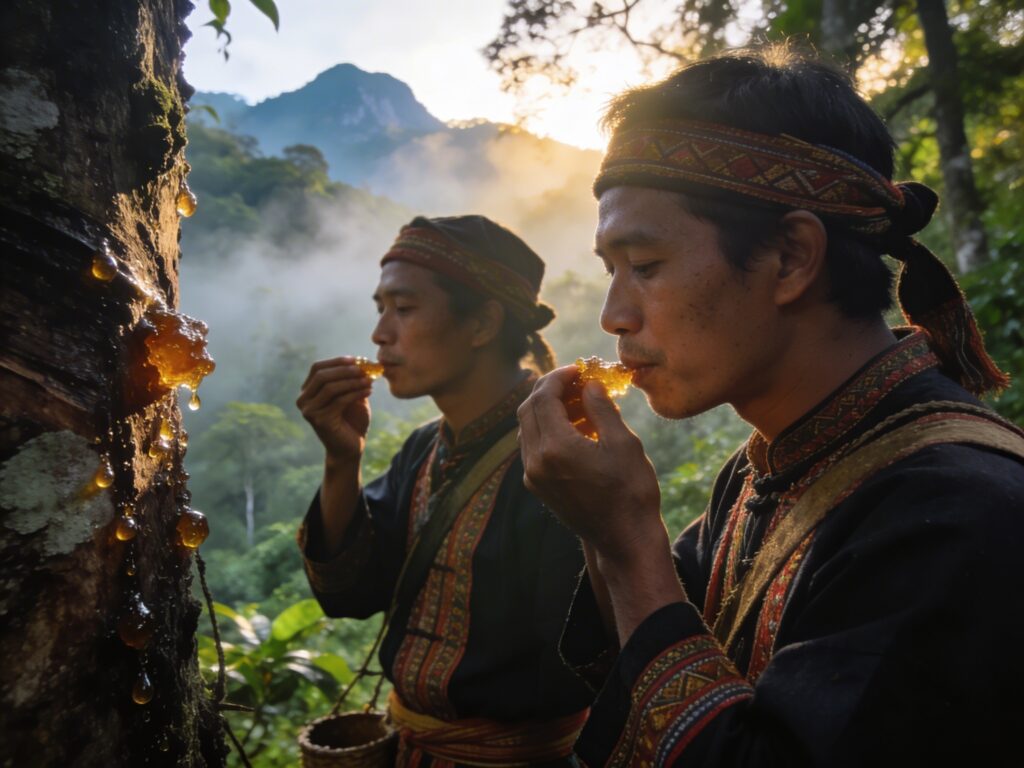
**Chanthaburi’s Emerald Canopy: Tapping Aromatic Resin with Highland Harvesters in the Misty Mountain Glow**
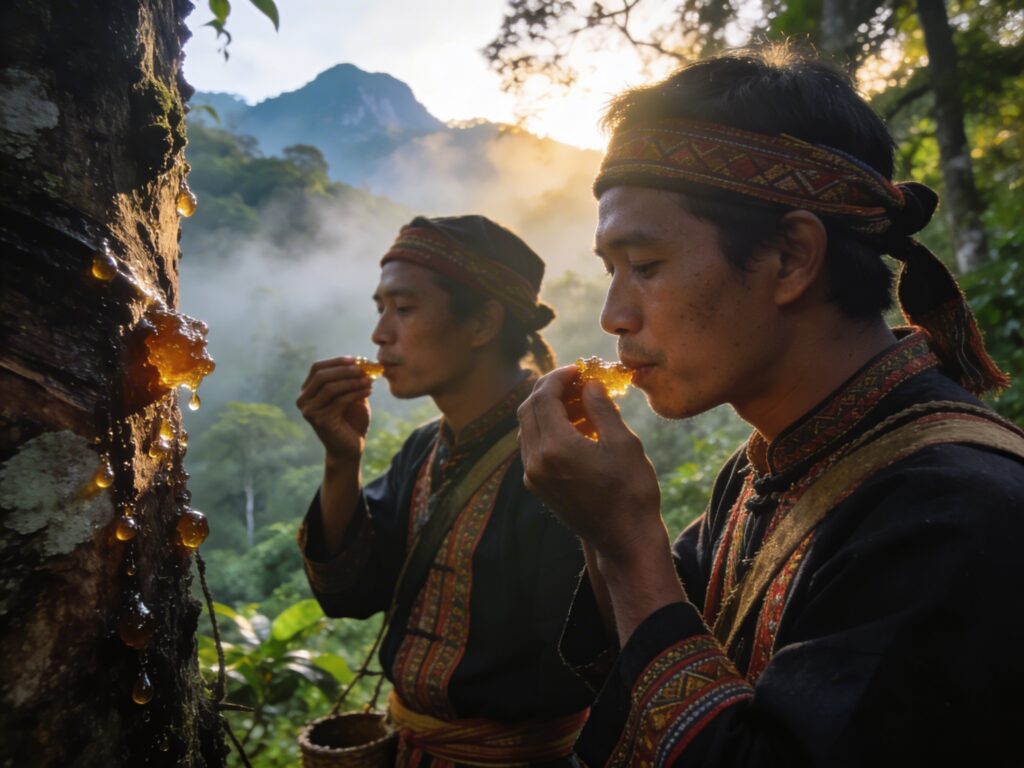
The Emerald Realm of Chanthaburi
Beyond the sun-drenched beaches and bustling markets typical of Thailand’s image lies Chanthaburi province, a verdant kingdom draped over the Cardamom and Banthat mountain ranges. Here, the air hangs thick with moisture, cloaking the landscape in an ethereal mist that softens the sharp peaks of Khao Soi Dao and Khao Chamao. This is a world painted in countless shades of green – the Emerald Canopy. It’s not just the visual spectacle that captivates, but the intoxicating aroma carried on the cool mountain breeze, a scent that leads deep into the forests to an ancient, almost mystical practice: the tapping of aromatic resin.
The Essence of the Forest: Understanding Aromatic Resin
High within these mist-shrouded highlands grow trees whose value isn’t just timber, but their precious sap. Two primary resins are sought after here:
- Gum Benjamin (Styrax benzoin): Harvested primarily from the Styrax tonkinensis tree, this resin hardens into fragrant, tear-shaped nuggets. When warmed or burned, it releases a rich, vanilla-like aroma with balsamic undertones, prized in incense, perfumery, and traditional medicine for centuries.
- Yang Oil (Dipterocarpus alatus resin): Extracted from the towering Yang trees (Dipterocarpus alatus), this oleoresin is thinner and oilier. Locally known as “Nam Man Yang,” it possesses a unique, sharp, almost medicinal scent and is traditionally used for caulking boats, torches, and also finds its way into varnishes and certain therapeutic applications.
These resins are the forest’s liquid treasure, a gift from the trees that requires immense skill and respect to collect sustainably.
Meeting the Highland Harvesters: Masters of the Craft
The journey to witness resin tapping often begins before dawn. Following narrow trails slick with dew, guided by local experts or community members, you ascend into the cool embrace of the mountains. As the first light filters through the dense canopy, painting the mist with a soft, golden glow, you encounter the harvesters.
These are often members of indigenous communities or local highland families who possess generations of knowledge passed down through whispered lore and practiced hands. Their lives are intrinsically tied to the rhythm of the forest and the specific seasons for tapping – usually during the cooler, drier months when the sap flows most readily.
The Ritual of Tapping: Patience and Precision
Watching a resin harvester at work is observing a profound connection between human and tree. It’s a far cry from industrialized extraction; it’s a slow, careful ritual.
The Tools and Technique
- The Climb: Using rudimentary bamboo ladders or simply relying on incredible agility honed over years, harvesters ascend the massive trunks.
- Making the Incisions: With a specialized curved knife or tapping axe, precise, shallow, V-shaped cuts are made into the bark, angled downwards. The depth and angle are crucial – deep enough to encourage sap flow but not so deep as to fatally wound the tree.
- Collecting the Sap: Beneath each cut, a small bamboo tube, coconut shell cup, or plastic container is carefully secured. Over days or weeks, the viscous resin slowly oozes out and collects in these vessels.
- Scraping and Processing: The harvester returns periodically to scrape the collected resin into baskets or sacks. Gum Benjamin is often left to harden further, while Yang oil might be filtered or processed minimally locally.
The air around a tapped tree is thick with fragrance – a potent, natural perfume that defines the essence of Chanthaburi’s highland forests. The harvesters move with quiet efficiency, their hands stained with the precious substance, their movements a testament to sustainable practice. They understand that the tree’s health is paramount; over-tapping or careless cuts can kill it, ending the source of livelihood and fragrance for years to come.
A Journey into Mist and Meaning
Experiencing Chanthaburi’s resin tapping is more than just a unique tourist activity; it’s a portal into a different pace of life, a deeper understanding of Thailand’s natural bounty and cultural heritage. It’s the crunch of leaves underfoot on a misty trail, the sharp, clean scent of the forest mingling with the rich aroma of resin, the sight of sunlight struggling through the emerald canopy to illuminate a harvester high in the branches, and the profound respect for nature that permeates every step.
It’s a reminder that some of the world’s most precious treasures aren’t found in shops, but secreted away in the heart of misty mountains, guarded by the trees and the skilled hands who know their secrets.