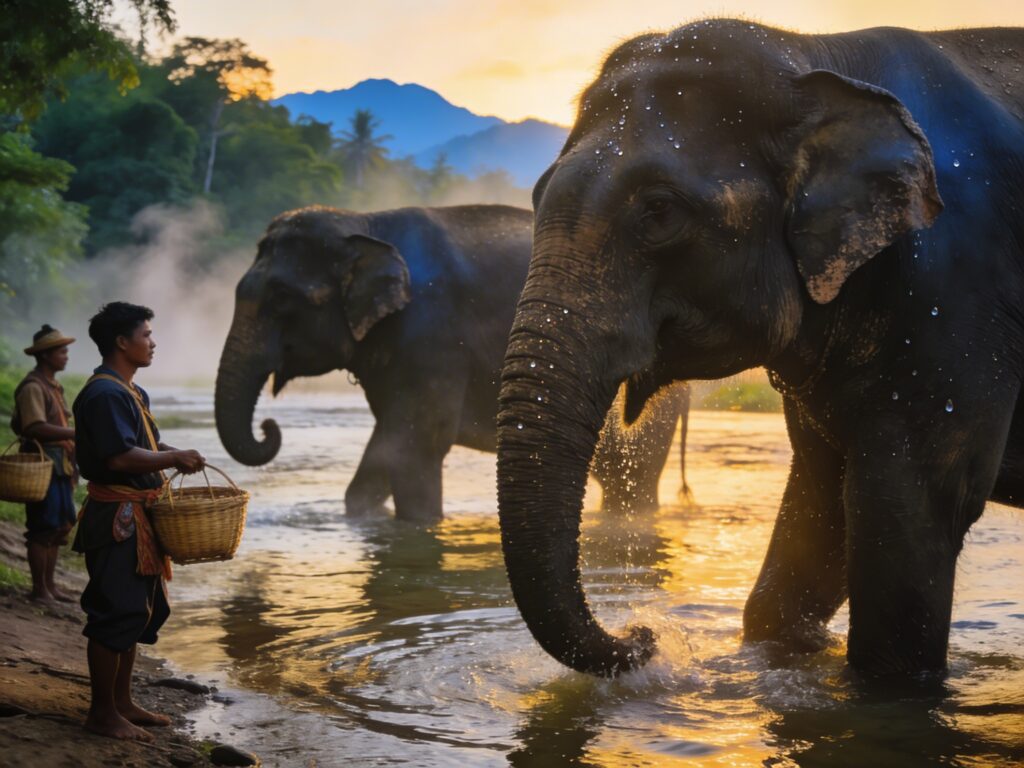
Surin’s Dawn Giants: Bathing Gentle Behemoths with Riverbank Mahouts in First Light
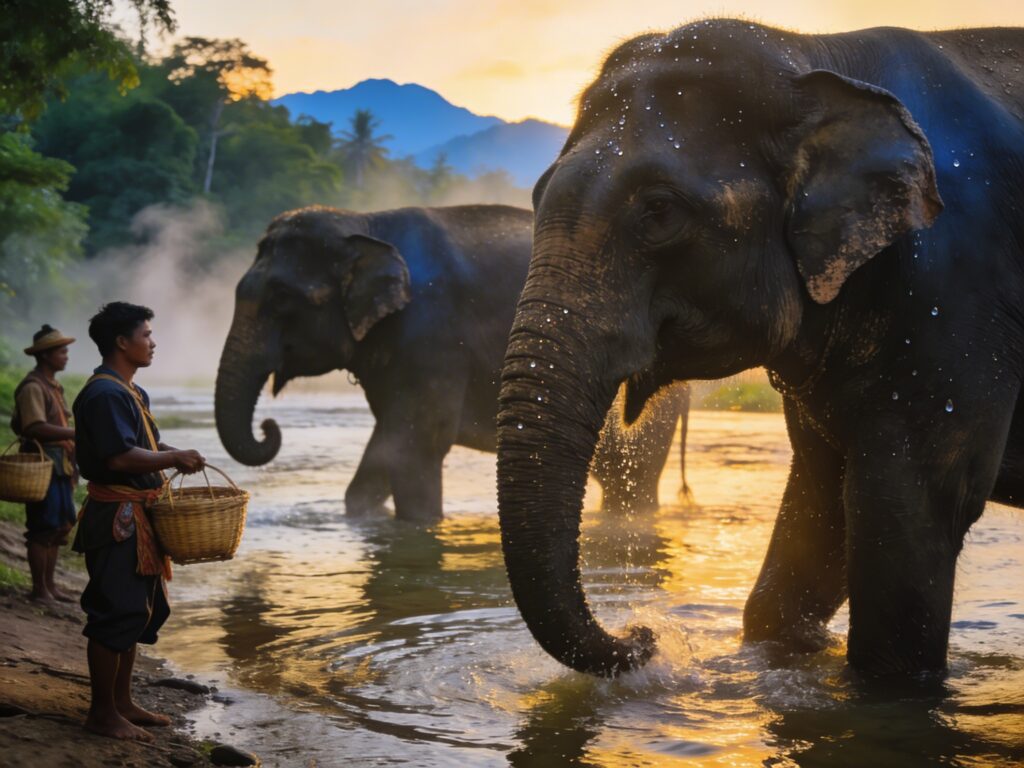
Imagine the world still draped in pre-dawn indigo, the air cool and carrying the scent of damp earth and river reeds. Somewhere in the distance, a rooster crows, breaking the profound silence. This is the magic hour in Surin Province, Thailand’s northeastern gem, where an extraordinary daily ritual unfolds – the bathing of Surin’s revered elephants, known affectionately as the “Dawn Giants.”
The Stage is Set: Surin’s Elephant Heartland
Surin isn’t just *an* elephant province; it’s *the* elephant province. For generations, the indigenous Kui people (often referred to as Suay) have lived alongside these majestic creatures, forging a unique bond rooted in mutual respect and shared history. Their expertise as mahouts (elephant caretakers and handlers) is legendary, passed down through centuries. While the annual Surin Elephant Roundup festival draws crowds, the true essence of this relationship is witnessed not in a stadium, but quietly, intimately, at the river’s edge at daybreak.
First Light: Meeting the Gentle Behemoths
Arriving before sunrise at one of the authentic elephant villages near Surin town (like Ban Ta Klang or facilities associated with the Surin Project), the atmosphere is one of serene anticipation. Mist might cling to the water surface of the Mun River or its tributaries. Then, you hear them.
A deep rumble, the soft shuffle of enormous feet on sand, the occasional trumpet or contented sigh. Emerging like shadows from the surrounding forests and fields, the elephants arrive, led by their mahouts. These aren’t performers; these are family members returning home after a night foraging. Their sheer size, amplified in the soft dawn light, is humbling – true gentle giants.
The Ritual of the River Bath
This is where the magic happens. Mahouts, often clad in simple traditional clothing, wade into the cool, waist-deep water alongside their elephants. The ritual is beautifully simple yet profoundly moving:
- The Scrubbing: Using rough coconut husks or stiff brushes, mahouts diligently scrub every inch of the elephant’s thick, wrinkled skin. You see the elephants lean into the pressure, eyes half-closed in evident pleasure. It’s a deep clean, removing dirt and parasites, crucial for their health.
- The Playful Splash: Water is liberally splashed and poured. Elephants use their trunks like giant hoses, showering themselves and sometimes playfully dousing their mahouts, who respond with laughter and gentle commands. Young calves stick close to their mothers, mimicking the bathing motions.
- The Quiet Bond: Amidst the splashing, observe the silent communication. A touch of the hand, a murmured word in the Kui language, a knowing look. This is a partnership forged over a lifetime, a language of trust that transcends words.
The rising sun, now painting the sky in hues of gold and pink, casts long reflections on the water, illuminating the scene in liquid amber. The soundscape is pure: splashing water, contented elephant rumbles, the rhythmic scrubbing, the distant calls of waking birds.
More Than a Bath: A Living Heritage
Witnessing the Dawn Giants at their bath isn’t merely a tourist activity; it’s a glimpse into a UNESCO-recognized intangible cultural heritage – the knowledge and traditions of Thai elephant mahouts. You’re seeing:
- Deep-Rooted Tradition: This daily care routine hasn’t changed fundamentally for centuries. It’s the foundation of the mahout’s life.
- Mutual Respect: The interaction is based on guidance and affection, not dominance. The elephants cooperate willingly.
- Essential Care: Bathing is vital for the elephant’s skin health, thermoregulation, and social bonding.
Experiencing the Dawn Giants Responsibly
To witness this authentic spectacle respectfully:
- Choose Ethically: Prioritize villages or sanctuaries known for ethical treatment (like those focused on community-based tourism or retired logging elephants). Avoid venues offering riding or unnatural performances.
- Embrace the Early Start: Dawn means *early*! Be prepared for a 5:00 AM or earlier pick-up from Surin city.
- Observe Quietly: Keep voices low. Follow your guide’s instructions on where to stand. Use silent camera modes. Let the mahouts and elephants have their moment.
- Respect the Space: Never approach an elephant without the mahout’s explicit permission. Maintain a respectful distance.
- Support Sustainably: Your visit fee directly supports the elephants’ care and the local Kui community.
Practicalities for Your Surin Dawn Adventure
- Getting There: Fly to Buriram or Khon Kaen, then travel by road (approx. 1.5-2 hours) to Surin town. Trains and buses also connect Bangkok to Surin.
- Best Time: Cool season (November – February) offers the most pleasant temperatures. The river is usually accessible year-round.
- Accommodation: Stay in Surin town. Numerous guesthouses and hotels cater to different budgets.
- Booking: Essential! Book your dawn elephant experience in advance through reputable tour operators in Surin or directly with ethical sanctuaries/villages.
Surin’s Dawn Giants offer more than a photo opportunity; they offer a connection. It’s a connection to ancient rhythms, to the profound bond between species, and to the quiet beauty of a Thai morning steeped in tradition. Standing on that riverbank as the world wakes, watching these gentle behemoths revel in their bath under the care of their lifelong companions, is an encounter that etches itself onto the soul – a pure, powerful reminder of the grace and quiet dignity of nature’s largest land mammals.