**Chiang Mai’s Wild Honey Whispers: Gathering Forest Nectar with Karen Communities at First Light**
## Chiang Mai’s Wild Honey Whispers: Gathering Forest Nectar with Karen Communities at First Light
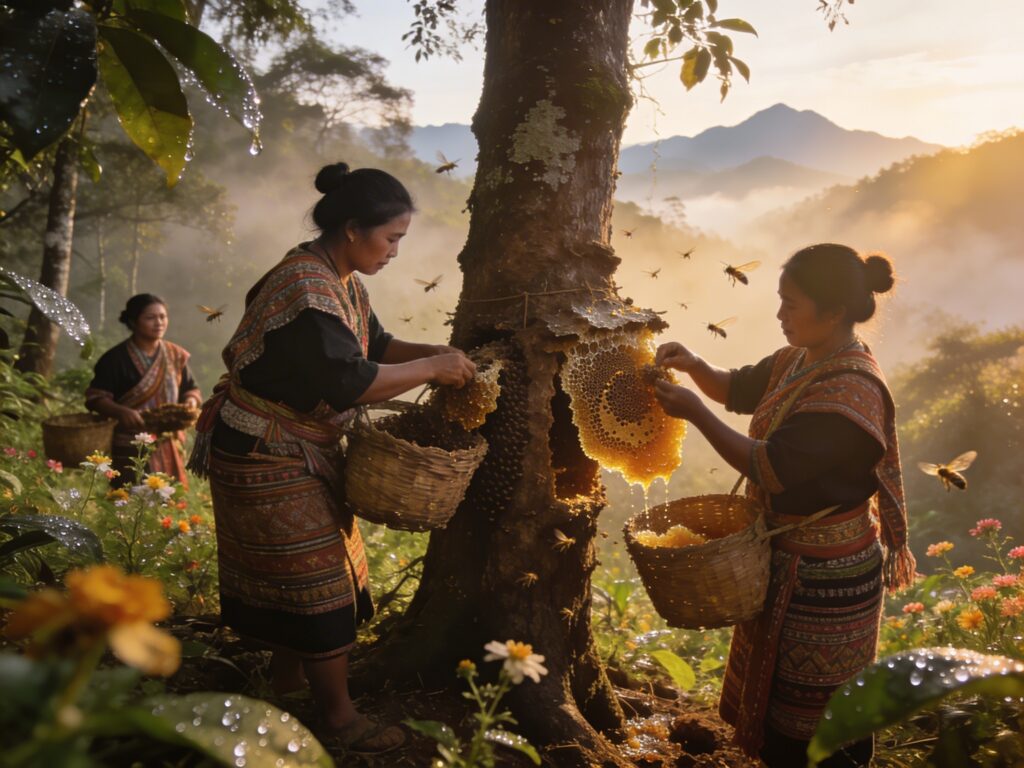
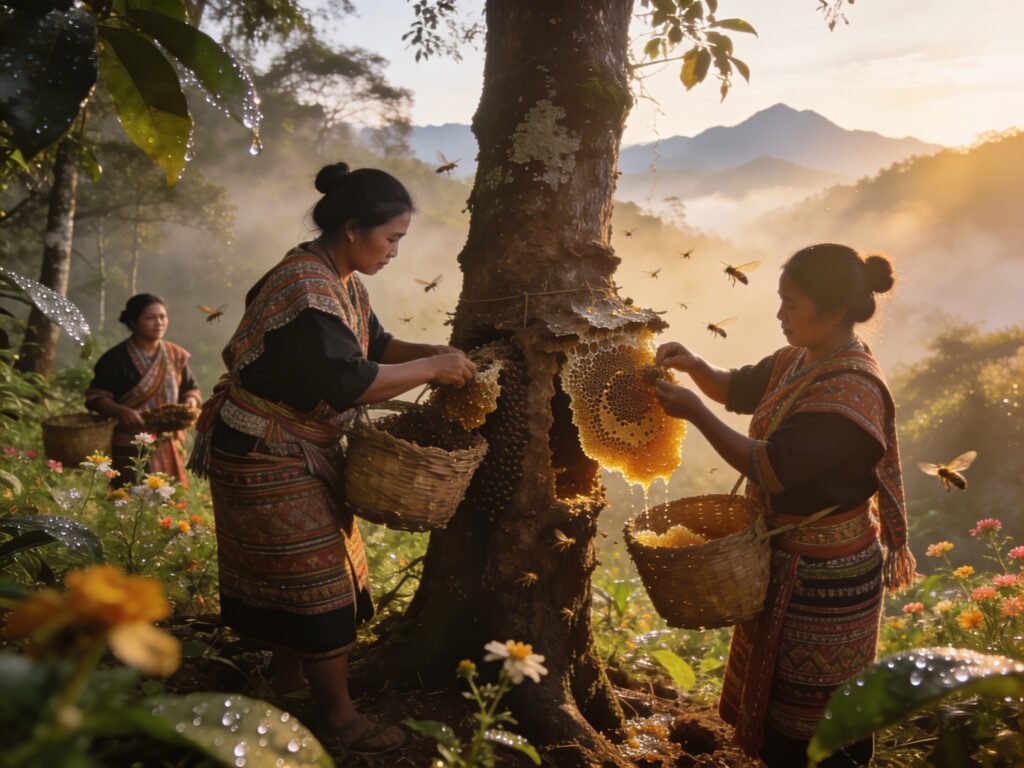
Before the tropical sun asserts its full strength, painting the sky in hues of pink and gold, a different kind of gold is being sought deep within the forests cradling Chiang Mai. This isn’t a treasure hunt for minerals, but a sacred, ancient practice: the gathering of wild forest honey, guided by the wisdom of Karen hill tribe communities. To join them at first light is to step into a world where nature dictates the rhythm and tradition holds profound respect.
**The Karen: Guardians of the Forest and Its Nectar**
For generations, the Karen people (Pga K’nyau) have lived in symbiotic harmony with the dense forests of Northern Thailand. Their deep ecological knowledge isn’t learned from books; it’s passed down through lived experience, woven into their cultural fabric. Beekeeping, specifically the harvesting of honey from wild colonies of the formidable giant honey bee (*Apis dorsata*), is a cornerstone of this relationship.
More Than Honey: A Cultural Keystone
For the Karen, wild honey isn’t merely a sweetener or a commodity; it’s integral to their way of life:
- Sustenance & Medicine: Honey provides vital carbohydrates and energy. It’s also used in traditional Karen remedies for coughs, sore throats, wounds, and general vitality.
- Spiritual Significance: Harvesting honey involves rituals and deep respect for the forest spirits (‘Phi’). Offerings are often made before a harvest to seek permission and protection.
- Forest Stewardship: Their sustainable harvesting methods – taking only what the hive can spare, never destroying the colony – ensure the bees thrive and the forest ecosystem remains healthy. This practice embodies true conservation.
**The Harvest: A Dance with Giants at Dawn**
Joining a Karen honey gathering expedition is an experience that awakens all senses and demands reverence. It typically unfolds like this:
The Silent Ascent
Your journey begins in the profound stillness of pre-dawn. Guided by Karen elders or experienced gatherers, you trek into the cool, mist-shrouded forest. The air is thick with the scent of damp earth and exotic flora. The only sounds are your footsteps and the awakening chorus of the jungle. The destination: towering trees, often cliff faces, where the giant honey bees build their massive, single-comb nests, sometimes meters long.
The Ritual of Smoke and Calm
As you approach the hive, visible high above, a palpable tension mixes with focused calm. The bees are most docile in the cool morning air, before the sun stirs them. Gatherers prepare bundles of smoldering green leaves (often from specific aromatic plants like lemongrass). The smoke isn’t meant to harm, but to gently mask alarm pheromones and encourage the bees to retreat deeper into the comb, gorging on honey – a natural defense mechanism.
Scaling the Heights with Ageless Skill
This is where breathtaking skill takes over. Using nothing but handcrafted bamboo ladders, ropes woven from forest vines, and astonishing agility honed over a lifetime, a gatherer ascends towards the buzzing colony. There’s no protective suit as we know it; often, just traditional clothing, sometimes with head coverings. Their confidence stems from deep understanding and a profound respect for the bees.
The Delicate Extraction
Reaching the comb, the gatherer works swiftly and precisely with a long bamboo pole or knife. Using smoke strategically, they carefully cut away sections of honeycomb rich with ripe nectar, ensuring the brood chamber (where the young bees are) remains untouched. The comb, dripping with fragrant, golden honey, is lowered in baskets. The harvest is selective and mindful – only surplus honey is taken, leaving ample for the colony’s survival.
The Taste of the Wild
Descending to the forest floor, the reward awaits. Fresh, warm honeycomb is shared. The taste is unlike anything store-bought: complex, floral, sometimes slightly smoky, carrying the essence of the forest – wild orchids, linden blossoms, seasonal fruits. It’s liquid gold, pure and unadulterated.
**Experiencing This Whisper of Tradition Responsibly**
Participating in a wild honey harvest is a rare privilege, not a typical tourist attraction. If you seek this profound experience:
- Seek Ethical Operators: Choose community-based tourism initiatives or NGOs that work *directly* with Karen villages. Ensure benefits flow fairly to the community and guides are respected locals.
- Respect is Paramount: Follow instructions meticulously. Stay quiet, move slowly, keep distance unless invited closer. Photography should be discreet and respectful – always ask permission.
- Understand the Seasonality: Harvesting typically occurs during the dry season (roughly November to May), but exact times depend on bee activity and flowering seasons – nature is the boss.
- Be Prepared: This involves pre-dawn starts, trekking on uneven terrain, and being in close proximity to stinging insects. Wear sturdy shoes, long sleeves/pants (lightweight but protective), a hat, and bring water. A headlamp is essential.
- Permits May Be Required: Ensure your tour operator handles necessary permits for accessing national park or community forest areas.
- Purchase Consciously: If buying honey, buy directly from the community cooperatives whenever possible to ensure fair compensation.
**Beyond the Honey: A Connection Forged**
Witnessing the Karen honey harvest is about far more than honey. It’s a masterclass in ancient wisdom, sustainable living, and profound respect for the natural world. It’s about seeing the forest not as a resource to exploit, but as a partner to nurture. The taste of the wild honey lingers, but the deeper resonance is the memory of humans moving in quiet harmony with giants at dawn, upholding a tradition whispered through generations, and the understanding that true sweetness comes from balance and respect. It’s a fragile, beautiful whisper from the heart of Chiang Mai’s forests, one worth listening to with the utmost reverence.