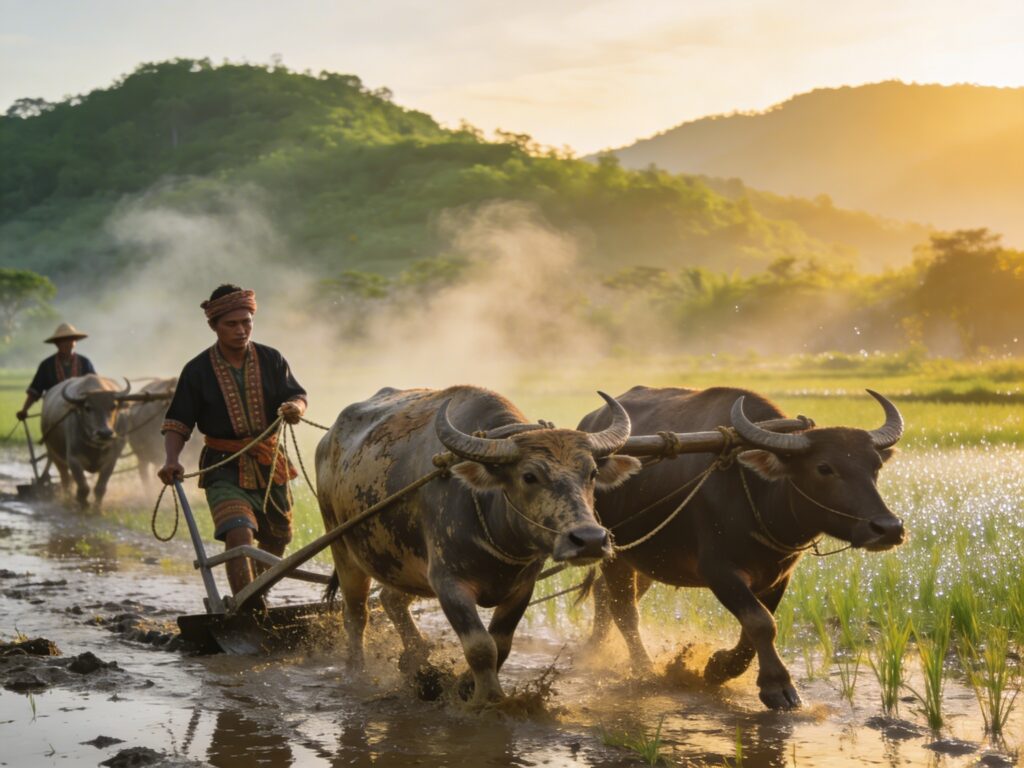
**Suphan Buri’s Buffalo Bonds: Guiding Plough Teams with Rice Farmers at Daybreak**
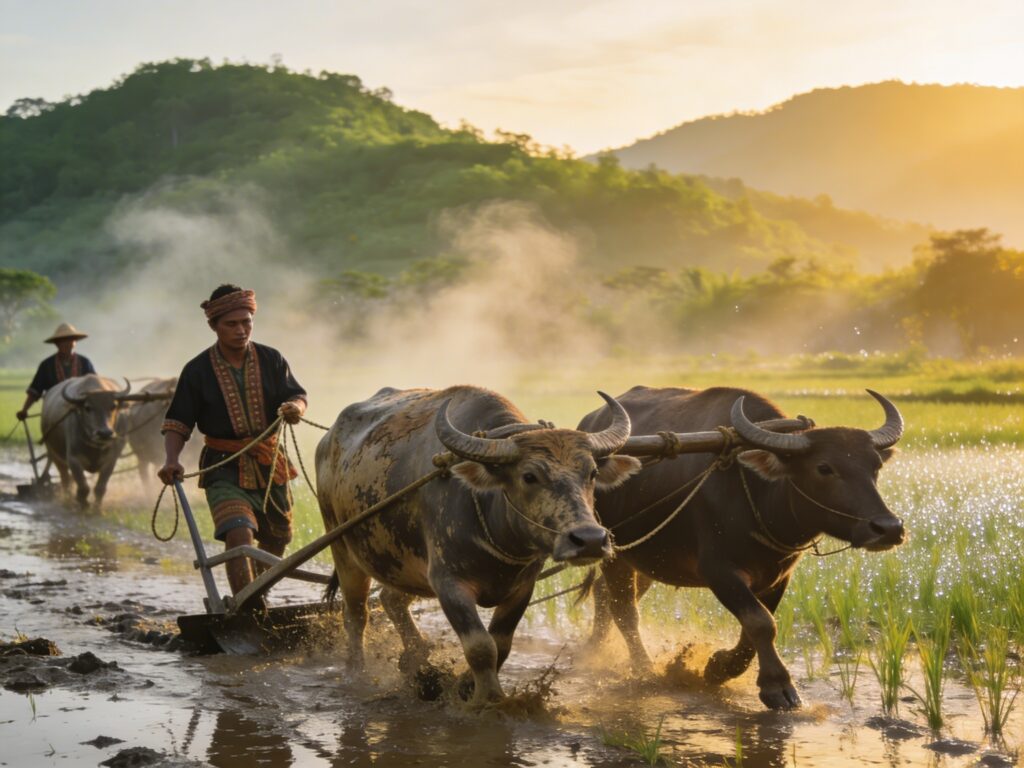
Whispers at Dawn: The Timeless Dance of Buffalo and Farmer in Suphan Buri
As the first streaks of rose-gold light pierce the mist over Suphan Buri’s emerald rice paddies, a symphony of splashing water and low, resonant calls begins. Here, in Thailand’s “Rice Bowl,” an ancient ritual unfolds daily—a testament to harmony between man, beast, and land. This is where Buffalo Bonds are forged, guiding plough teams through the fertile mud as farmers begin their sacred covenant with the earth.
The Living Legacy of Khwai Thai
For centuries, the Thai swamp buffalo (khwai) has been more than livestock—it’s a cultural icon. In Suphan Buri, these gentle giants with their crescent horns and soulful eyes are revered partners. Unlike mechanized farming, buffalo ploughing preserves soil structure and prevents compaction. Farmers speak of the buffalo’s intuitive understanding of the land: “They feel the earth’s pulse,” says veteran rice grower Pramuan Srisawat. “A tired buffalo slows down; a machine just breaks.”
The Choreography of Dawn Ploughing
Why daybreak? The cool morning air spares both farmer and buffalo from scorching heat, while the soft light reveals the field’s subtle contours. The process is a mesmerising ballet:
- The Connection: Farmers greet their buffalo with soft clicks and palm strokes—building trust before harnessing.
- The Harnessing: Hand-woven bamboo yokes (mai khab) distribute weight evenly across the buffalo’s shoulders.
- The Guidance: No reins are used. Farmers walk barefoot alongside, directing with vocal cues and taps of a slender bamboo rod.
- The Ploughing: Wooden ploughs slice through flooded fields, turning nutrient-rich mud while egrets trail behind, feasting on disturbed insects.
This method creates perfect seedbeds—uneven rows from buffalo trails allow water to circulate, nurturing young rice shoots.
Threads in a Cultural Tapestry
Buffalo bonds transcend practicality. They embody Buddhist principles of compassion and interdependence. Annual festivals like the Buffalo Racing Festival (October) celebrate their strength, while village elders share folklore of buffalo spirits guarding the fields. “My buffalo knows my voice like my child does,” smiles farmer Mali Kaewpanya. “When I’m sad, he nuzzles my hand—this bond is in our blood.”
Guardians of a Fading Heritage
Modernity threatens this tradition. Few youth choose farming, and tractors now dominate 70% of Thailand’s paddies. Yet Suphan Buri resists. NGOs and the Suphan Buri Buffalo Village offer training in traditional ploughing, while agritourism invites visitors to walk alongside plough teams at dawn. “We’re not just growing rice,” insists conservationist Anong Chaiyasit. “We’re growing heritage—one furrow at a time.”
As you stand in Suphan Buri’s dewy fields, watching farmer and buffalo move as one against the rising sun, you witness more than agriculture. You see a silent language of mutual respect—a 3,000-year-old promise between species, breathing life into Thailand’s golden grains and the soul of its heartland.